Loading...
Done
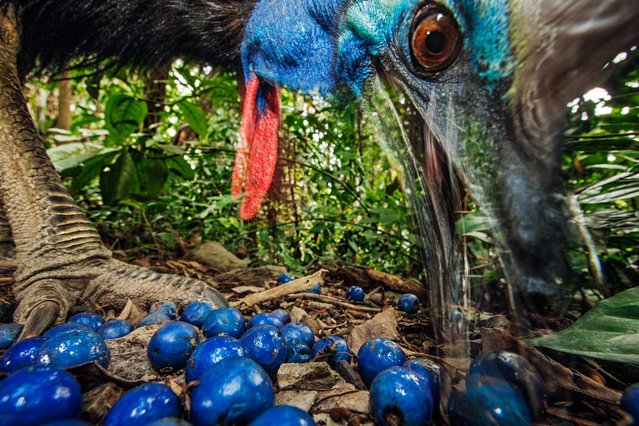
“Cassowaries are large, flightless birds related to emus and (more distantly) to ostriches, rheas, and kiwis”, writes Olivia Judson in the September issue of National Geographic magazine. (Photo by Christian Ziegler/National Geographic)

“Cassowaries are large, flightless birds related to emus and (more distantly) to ostriches, rheas, and kiwis”, writes Olivia Judson in the September issue of National Geographic magazine. How large? People-size: Adult males stand well over five foot five and top 110 pounds. Females are even taller, and can weigh more than 160 pounds. Dangerous when roused, they’re shy and peaceable when left alone. But even birds this big and tough are prey to habitat loss. The dense New Guinea and Australia rain forests where they live have dwindled. Today cassowaries might number 1,500 to 2,000. And because they help shape those same forests – by moving seeds from one place to another – “if they vanish”, Judson writes, “the structure of the forest would gradually change” too. (Photo by Christian Ziegler/National Geographic)
Details
06 Jan 2014 12:21:00
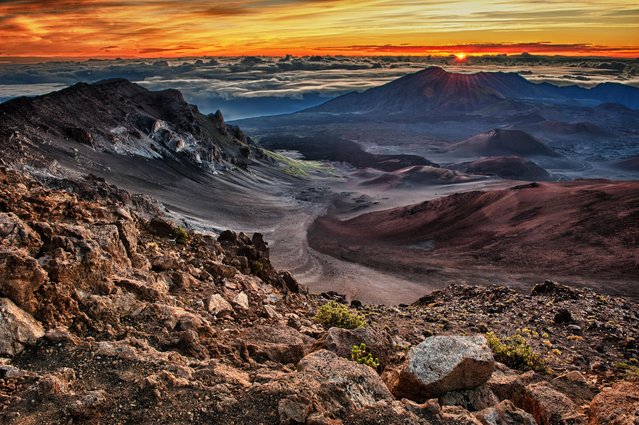
Sunrise over Haleakala Crater, Haleakala National Park, Maui, Hawaii on April 26th, 2011. (Photo by Robert Bush/Alamy Stock Photo)

Sunrise over Haleakala Crater, Haleakala National Park, Maui, Hawaii on April 26th, 2011. (Photo by Robert Bush/Alamy Stock Photo)
Details
20 Apr 2017 09:06:00
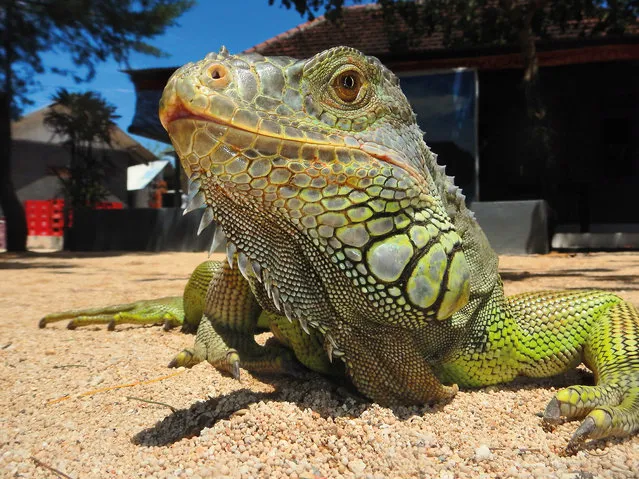
An iguana in Bali helped Julij Kopilović, age eight, from Slovenia, earn second runner-up in Amazing Animals. (Photo by Julij Kopilović/National Geographic)

An iguana in Bali helped Julij Kopilović, age eight, from Slovenia, earn second runner-up in Amazing Animals. (Photo by Julij Kopilović/National Geographic)
Details
04 Feb 2016 11:15:00
Buddy the dog peers from a vehicle before the start of a movie at a drive in cinema in Snagov, Romania, Monday, June 1, 2020. Romania further loosened the measures imposed during a nationwide lockdown in order to limit the spread of the COVID-19 infections, with museums, open air restaurants, cinemas and beaches opening for public on Monday. (Photo by Andreea Alexandru/AP Photo)

Buddy the dog peers from a vehicle before the start of a movie at a drive in cinema in Snagov, Romania, Monday, June 1, 2020. Romania further loosened the measures imposed during a nationwide lockdown in order to limit the spread of the COVID-19 infections, with museums, open air restaurants, cinemas and beaches opening for public on Monday. (Photo by Andreea Alexandru/AP Photo)
Details
21 Jun 2020 00:05:00
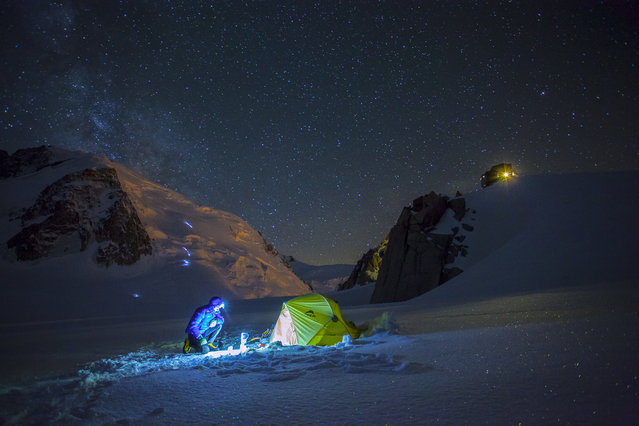
“A snapshot from mountaineer's life”. Have you ever wondered how does a mountaineer's day start? (Photo and caption by Kamil Tamiola/National Geographic Traveler Photo Contest)

“A snapshot from mountaineer's life”. Have you ever wondered how does a mountaineer's day start? I will give you a hint: you wake up at 3 am, set the stove, wake up your partner, pretend it is warm, quickly consume a high-calorie breakfast, watch your friends slowly ascending the icy slopes of your dream summit with their tiny head torches glimmering against perfectly blue ice, and hope for the good weather. One would ask: why all this trouble? The answer is easy: for the love of the adventure and the unknown. Location: Chamonix, Haute Savoye, France. (Photo and caption by Kamil Tamiola/National Geographic Traveler Photo Contest)

ATTENTION! All pictures are presented in high resolution. To see Hi-Res images – just TWICE click on any picture. In other words, click small picture – opens the BIG picture. Click BIG picture – opens VERY BIG picture.
Details
27 Jun 2013 12:47:00
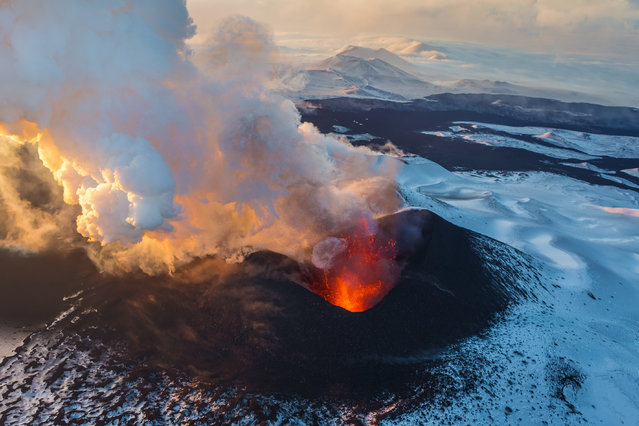
These are the explosive images of some of the world's most ASH-stonishing volcanic eruptions. Spectacular snaps capture lava spewing down the side of Kilauea, ash spitting from craters and plumes of smoke rising thousands of feet in the air. Here: Volcano Plosky Tolbachik, Kamchatcka, Russia. (Photo by Airpano/Caters News)

These are the explosive images of some of the world's most ASH-stonishing volcanic eruptions. Spectacular snaps capture lava spewing down the side of Kilauea, ash spitting from craters and plumes of smoke rising thousands of feet in the air. Russian non-profit AirPano travel the globe taking the breath-taking panoramic images, compiled in this series displaying their most stunning volcanic shoots. Included in the set – which spans four continents – are images from across the United States, Iceland, Russia, Ethiopia and Indonesia. To capture the 360-degree images, AirPano photographers spend around two hours in a helicopter, sending out drones to capture the action below. Here: Volcano Plosky Tolbachik, Kamchatcka, Russia. (Photo by Airpano/Caters News)
Details
15 Jul 2015 10:36:00
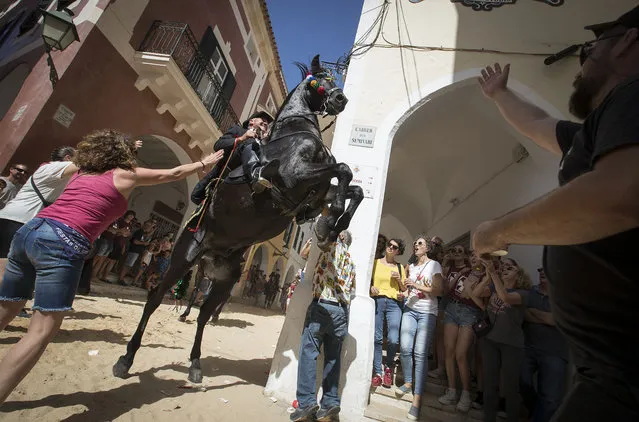
A horse rears in the crowd during the traditional San Juan (Saint John) festival in the town of Ciutadella, on the Balearic Island of Minorca, on the eve of Saint John's day on June 23, 2022. (Photo by Jaime Reina/AFP Photo)

A horse rears in the crowd during the traditional San Juan (Saint John) festival in the town of Ciutadella, on the Balearic Island of Minorca, on the eve of Saint John's day on June 23, 2022. (Photo by Jaime Reina/AFP Photo)
Details
10 Jul 2022 03:37:00
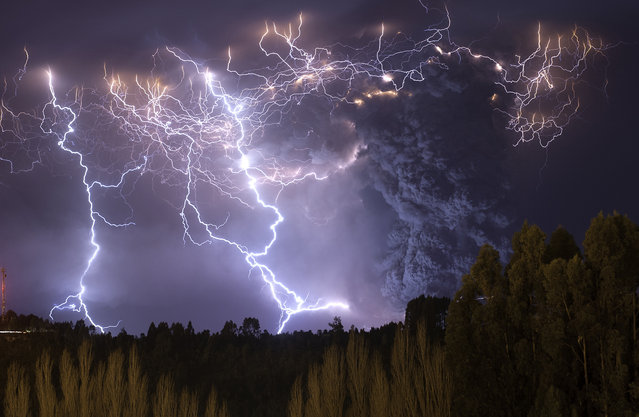
The eruption of Cordon Caulle began on June 4, 2011, located in the Region of Los Rios in Chile. For about 12 months, people and animals became accustomed to living with the daily fall of ash, which also caused problems in the air traffic in South America. The explosions and lightning during first days of the eruption could be seen from hundreds of miles around. This photograph was taken on the second night of eruption from the town of Lago Ranco. (Photo and caption by Francisco Negroni/National Geographic Traveler Photo Contest)

The eruption of Cordon Caulle began on June 4, 2011, located in the Region of Los Rios in Chile. For about 12 months, people and animals became accustomed to living with the daily fall of ash, which also caused problems in the air traffic in South America. The explosions and lightning during first days of the eruption could be seen from hundreds of miles around. This photograph was taken on the second night of eruption from the town of Lago Ranco. (Photo and caption by Francisco Negroni/National Geographic Traveler Photo Contest)

ATTENTION! All pictures are presented in high resolution. To see Hi-Res images – just TWICE click on any picture. In other words, click small picture – opens the BIG picture. Click BIG picture – opens VERY BIG picture.
Details
23 Jun 2013 11:24:00