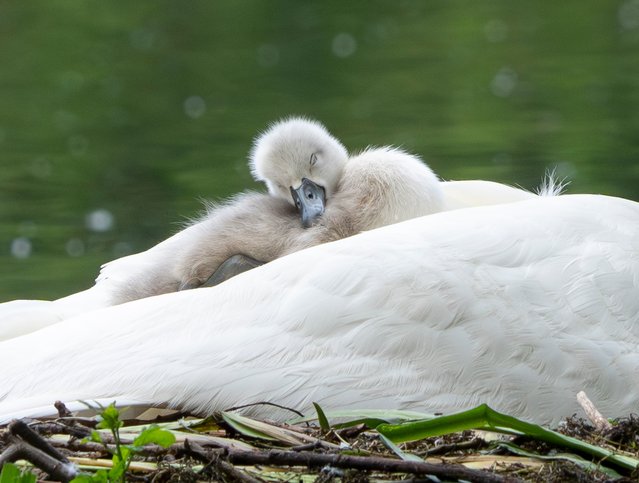
A cygnet keeps snug under its mother’s wing at Heronry Pond in Wanstead Park in east London in the last decade of May 2024. (Photo by Jeff Moore/The Times)
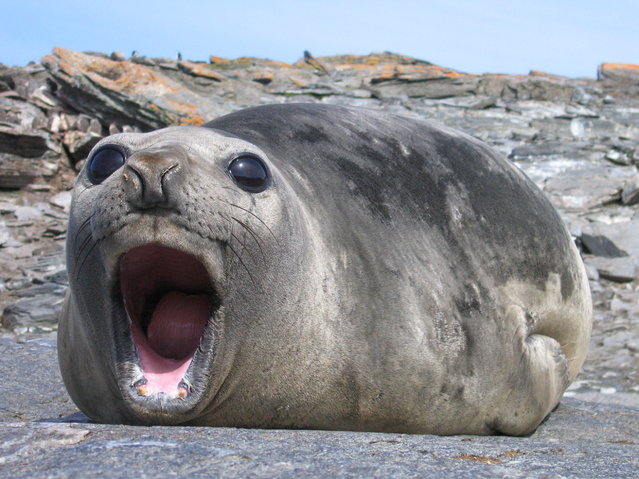
Weddell seal numbers in 2025 have declined sharply on Signy Island, part of the South Orkney Islands in the Southern Ocean, where British Antarctic Survey researchers have tracked seal populations for nearly 50 years to understand the impact of melting sea ice. (Photo by Michael Dunn/The Times)
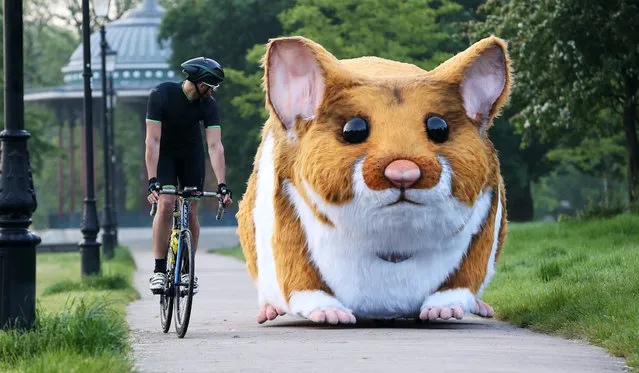
A twelve foot long giant hamster has surprised Londoners along the South Bank, Millennium Bridge and Clapham Common on May 26, 2016. A 4-metre pedal-powered mechanical model hamster, which has been created in the likeness of Jaffa the hamster, who is listed as one of the 10 oddest discoveries made by Kwik Fit technicians in customers’ cars. (Photo by Joe Pepler/Rex Features/Shutterstock)
“In anatomy, heterochromia refers to a difference in coloration, usually of the iris (but also of hair or skin). Although infrequently seen in humans, complete heterochromia is more frequently observed in other species, where it almost always involves one blue eye”. – Wikipedia (Photo by StooMathiesen)
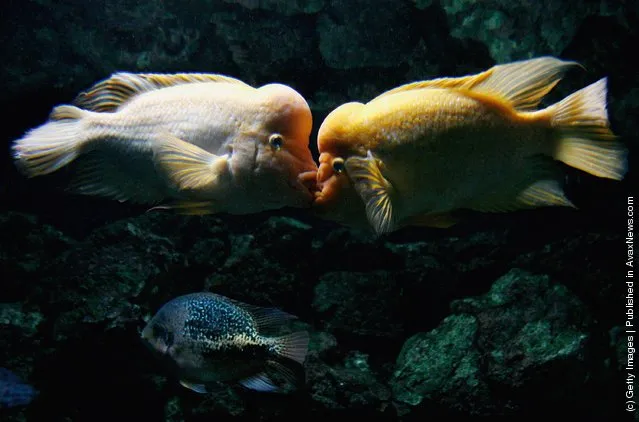
“Amphilophus citrinellus is a large cichlid fish endemic to the San Juan River and adjacent watersheds in Costa Rica and Nicaragua. In the aquarium trade A. citrinellus is often sold under the trade name of Midas cichlid. A. citrinellus are omnivorous and their diet consists of plant material, molluscs and smaller fish”. – Wikipedia
Photo: Two Midas Cichlid (lat: amphilophus citrinellus) fish are seen in an aquarium at Hellabrunn zoo on December 23, 2009 in Munich, Germany. (Photo by Alexandra Beier/Getty Images)
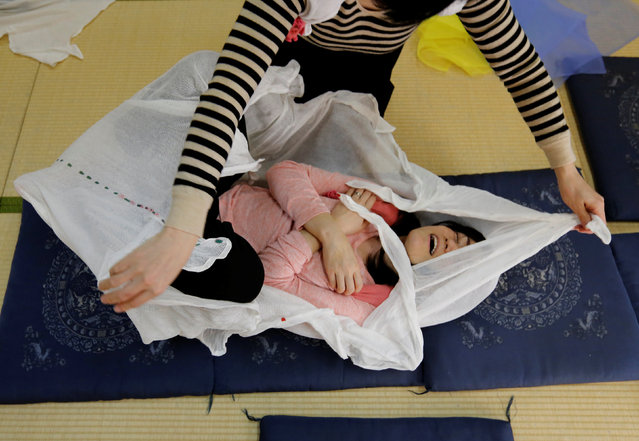
A woman reacts after performing Otonamaki, which translates as “adult wrapping”, a new form of therapy where people are wrapped in large swaddling cloth to alleviate posture problems and stiffness, at a session in Asaka, Saitama prefecture, Japan, February 4, 2017. (Photo by Toru Hanai/Reuters)