Loading...
Done
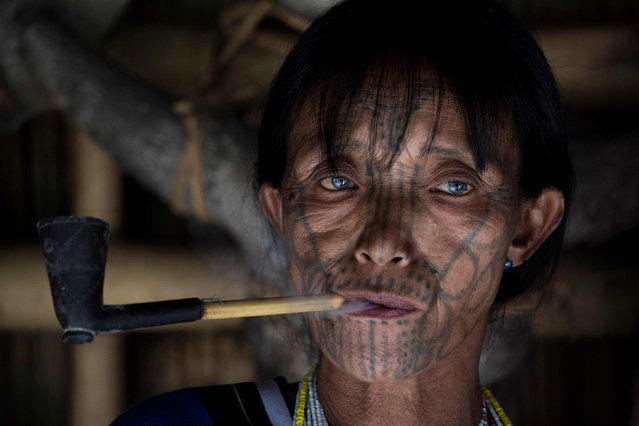
This photo taken on March 3, 2020 shows a tattooed Chin ethnic woman smoking at her house decorated with animal skulls in a village of Chin State, western Myanmar. (Photo by Sai Aung Main/AFP Photo)

This photo taken on March 3, 2020 shows a tattooed Chin ethnic woman smoking at her house decorated with animal skulls in a village of Chin State, western Myanmar. (Photo by Sai Aung Main/AFP Photo)
Details
30 May 2020 00:05:00
Visitors take photos of the fluorescent sea in the waters of Paishi Village, Dalian City, Liaoning Province, China, May 24, 2020, from the night of May 24 to the early morning of May 25, 2020. The fluorescent sea in dalian is caused by noctilucent algae in the sea water. (Photo by Costfoto/Barcroft Media via Getty Images)

Visitors take photos of the fluorescent sea in the waters of Paishi Village, Dalian City, Liaoning Province, China, May 24, 2020, from the night of May 24 to the early morning of May 25, 2020. The fluorescent sea in dalian is caused by noctilucent algae in the sea water. (Photo by Costfoto/Barcroft Media via Getty Images)
Details
05 Jun 2020 00:05:00
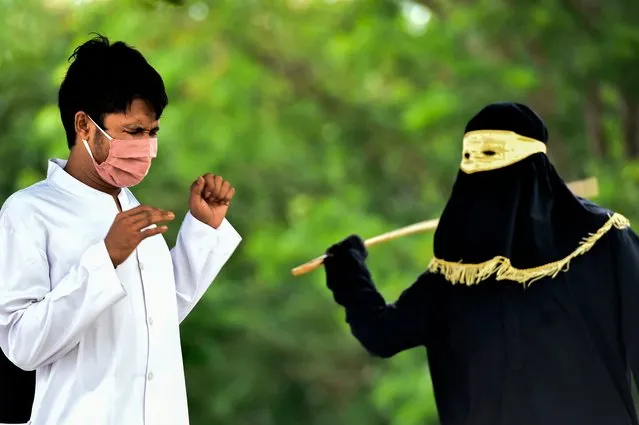
A man reacts as he receives 100 whippings by religious police as punishment for pre-marital sеx, outside a mosque in Jantho, Aceh province on June 5, 2020. A couple in Indonesia's conservative Aceh was publicly flogged 100 times each on June 5 after they were caught having pre-marital sеx, as one pleaded for an end to the painful punishment. Aceh is the only region in Muslim-majority Indonesia to impose Islamic law, which allows whipping for a range of charges. (Photo by Chaideer Mahyuddin/AFP Photo)

A man reacts as he receives 100 whippings by religious police as punishment for pre-marital sеx, outside a mosque in Jantho, Aceh province on June 5, 2020. A couple in Indonesia's conservative Aceh was publicly flogged 100 times each on June 5 after they were caught having pre-marital sеx, as one pleaded for an end to the painful punishment. Aceh is the only region in Muslim-majority Indonesia to impose Islamic law, which allows whipping for a range of charges. (Photo by Chaideer Mahyuddin/AFP Photo)
Details
12 Jun 2020 00:03:00
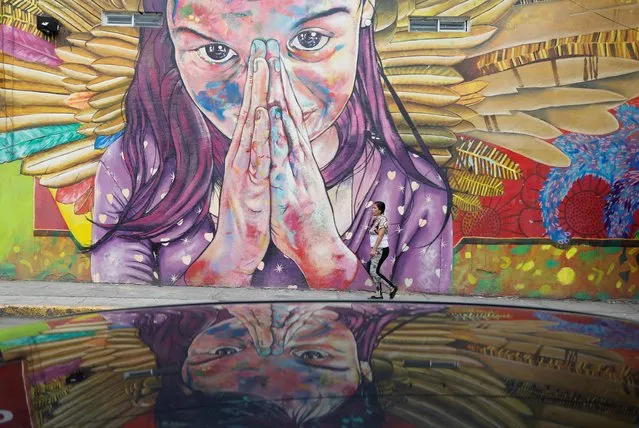
A woman is pictured in the municipality of Iztapalapa as the outbreak of the coronavirus continues in Mexico City on May 27, 2020. (Photo by Carlos Jasso/Reuters)

A woman is pictured in the municipality of Iztapalapa as the outbreak of the coronavirus continues in Mexico City on May 27, 2020. (Photo by Carlos Jasso/Reuters)
Details
13 Jun 2020 00:05:00
Cookie the cockapoo dog is enjoying herself on the beach by jumping over a sea defence as the sun shines at Heacham, West Norfolk, England on July 14, 2020. (Photo by Paul Marriott/Rex Features/Shutterstock)

Cookie the cockapoo dog is enjoying herself on the beach by jumping over a sea defence as the sun shines at Heacham, West Norfolk, England on July 14, 2020. (Photo by Paul Marriott/Rex Features/Shutterstock)
Details
19 Jul 2020 00:03:00
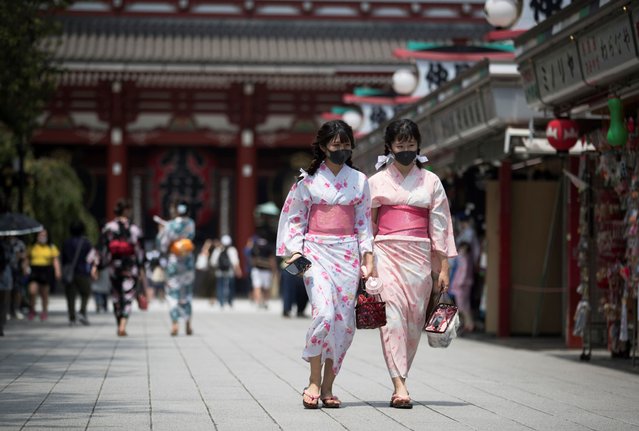
Two women in traditional kimonos wear face masks to help curb the spread of the coronavirus as they visit the Sensoji temple in Tokyo on Friday, August 7, 2020. (Photo by Hiro Komae/AP Photo)

Two women in traditional kimonos wear face masks to help curb the spread of the coronavirus as they visit the Sensoji temple in Tokyo on Friday, August 7, 2020. (Photo by Hiro Komae/AP Photo)
Details
03 Sep 2020 00:01:00
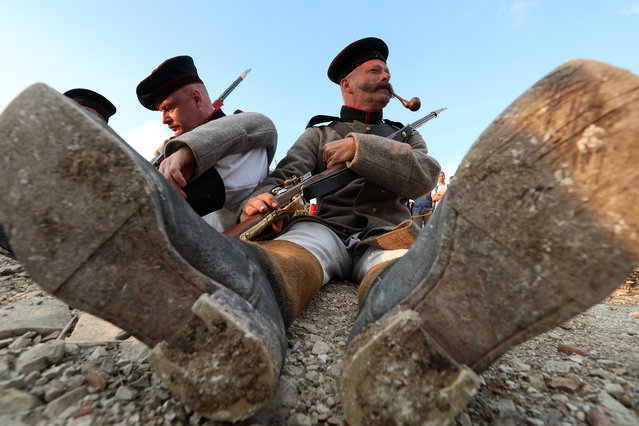
Enthusiasts participate in the historical re-enactment of the Sevastopol Fortress assault, which took place during the Crimean War of 1853-1856, at a military historical festival in Sevastopol, Crimea, September 5, 2020. (Photo by Alexey Pavlishak/Reuters)

Enthusiasts participate in the historical re-enactment of the Sevastopol Fortress assault, which took place during the Crimean War of 1853-1856, at a military historical festival in Sevastopol, Crimea, September 5, 2020. (Photo by Alexey Pavlishak/Reuters)
Details
21 Sep 2020 00:01:00
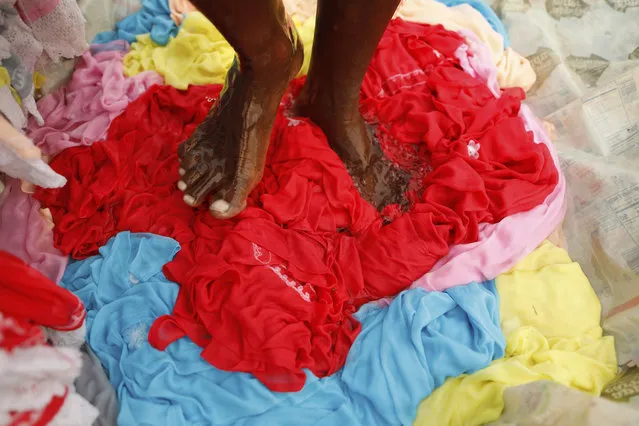
A dhobi, or a washerman washes cloths on the banks of the River Gomti in Lucknow, India, Saturday, September 12, 2020. Dhobis are traditional laundry workers who wash clothes by hand and dry them in the sun, an occupation which has been in existence for generations. Most cities in India have a Dhobi Ghat, or washermen's area, where the city's pile of clothes is laundered. This practice is still popular in India, despite of modern technology. Around 1,000 families work in Lucknow's Dhobi Ghat. However, in light of the novel coronavirus, their wages have decreased drastically. With each family earning around US$100-200 per month. (Photo by Rajesh Kumar Singh/AP Photo)

A dhobi, or a washerman washes cloths on the banks of the River Gomti in Lucknow, India, Saturday, September 12, 2020. Dhobis are traditional laundry workers who wash clothes by hand and dry them in the sun, an occupation which has been in existence for generations. Most cities in India have a Dhobi Ghat, or washermen's area, where the city's pile of clothes is laundered. This practice is still popular in India, despite of modern technology. Around 1,000 families work in Lucknow's Dhobi Ghat. However, in light of the novel coronavirus, their wages have decreased drastically. With each family earning around US$100-200 per month. (Photo by Rajesh Kumar Singh/AP Photo)

Details
25 Sep 2020 00:03:00