Loading...
Done
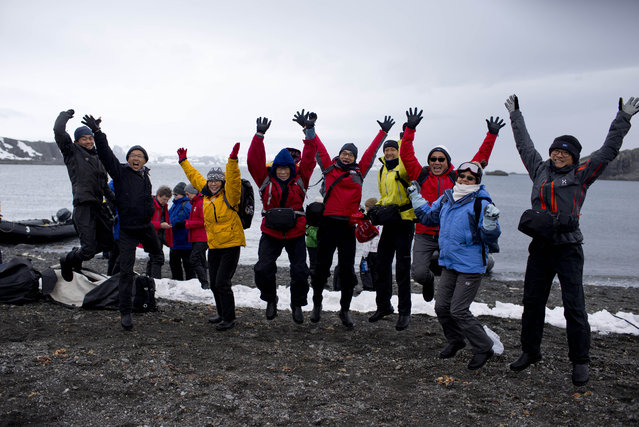
In this February 2, 2015 photo, tourists jump as they pose for a picture, after disembarking from the Ocean Nova cruise ship, on King George Island, Antarctica. This tourist season, which runs November through March, more than 37,000 visitors are expected to walk on the coldest continent on Earth, about 10 percent more than the year before. (Photo by Natacha Pisarenko/AP Photo)

In this February 2, 2015 photo, tourists jump as they pose for a picture, after disembarking from the Ocean Nova cruise ship, on King George Island, Antarctica. This tourist season, which runs November through March, more than 37,000 visitors are expected to walk on the coldest continent on Earth, about 10 percent more than the year before. (Photo by Natacha Pisarenko/AP Photo)
Details
22 Mar 2015 11:31:00
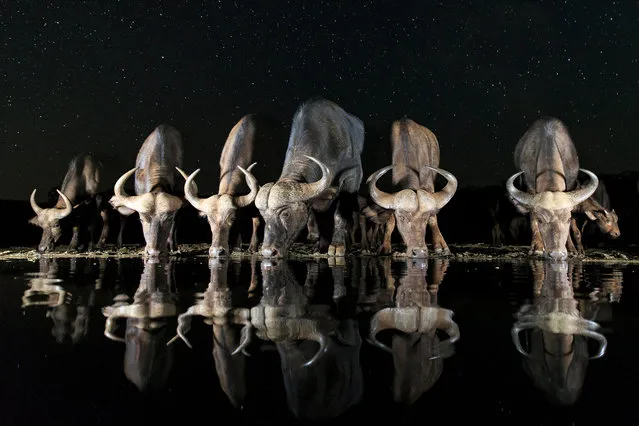
Wildlife category, open shortlist. “Buffaloes and stars”. This picture, taken at Zimanga game reserve in KwaZulu-Natal, South Africa, used an in-camera multiple exposure, with the first lit for the buffaloes and the second focused on the stars. (Photo and caption by Andreas Hemb/2017 Sony World Photography Awards)

Wildlife category, open shortlist. “Buffaloes and stars”. This picture, taken at Zimanga game reserve in KwaZulu-Natal, South Africa, used an in-camera multiple exposure, with the first lit for the buffaloes and the second focused on the stars. (Photo and caption by Andreas Hemb/2017 Sony World Photography Awards)
Details
01 Mar 2017 00:03:00
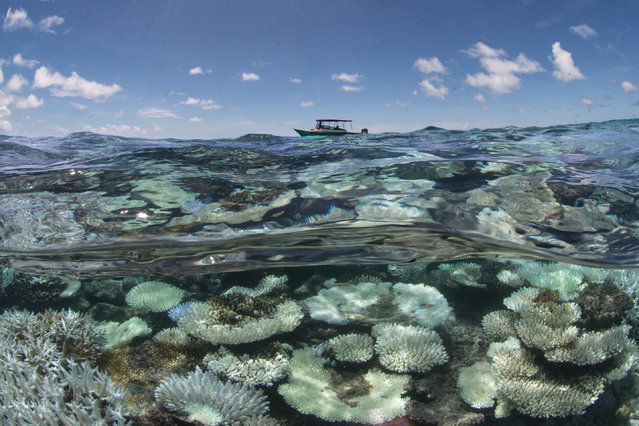
In this May 2016 photo released by The Ocean Agency/XL Catlin Seaview Survey, a boat sails near a coral reef that has been bleached white by heat stress in the Maldives. (Photo by The Ocean Agency/XL Catlin Seaview Survey via AP Photo)

In this May 2016 photo released by The Ocean Agency/XL Catlin Seaview Survey, a boat sails near a coral reef that has been bleached white by heat stress in the Maldives. oral reefs, unique underwater ecosystems that sustain a quarter of the world's marine species and half a billion people, are dying on an unprecedented scale. Scientists are racing to prevent a complete wipeout within decades. (Photo by The Ocean Agency/XL Catlin Seaview Survey via AP Photo)
Details
14 Mar 2017 00:05:00
People walk on the street in Samara, Russia on July 18, 2017. (Photo by David Mdzinarishvili/Reuters)

People walk on the street in Samara, Russia on July 18, 2017. (Photo by David Mdzinarishvili/Reuters)
Details
28 Jul 2017 09:43:00
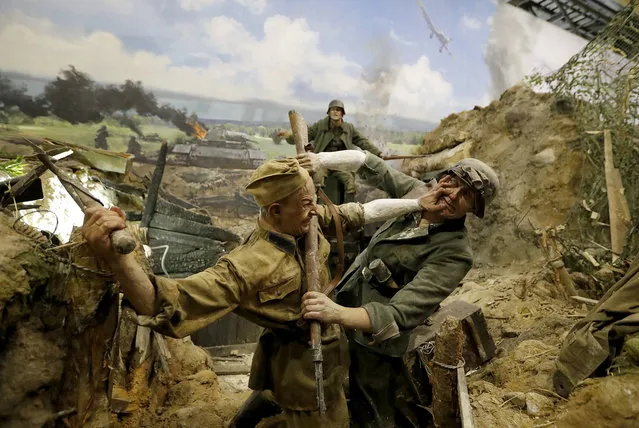
A scene showing one of the first trench battles is prepared for the opening of the 3D Panorama exhibition “Memory talks. The road through war” in the former Sevcabel port in St. Petersburg, Russia, 16 September 2019. (Photo by Anatoly Maltsev/EPA/EFE)

A scene showing one of the first trench battles is prepared for the opening of the 3D Panorama exhibition “Memory talks. The road through war” in the former Sevcabel port in St. Petersburg, Russia, 16 September 2019. Various 3D dioramas – containing genuine wartime items such as aircraft, tanks and artillery in original size – allow visitors to walk through scenes from the beginning to the end of WWII without any museum barriers. The exhibition opens from 19 September 2019 to May 2020. (Photo by Anatoly Maltsev/EPA/EFE)
Details
19 Sep 2019 00:01:00
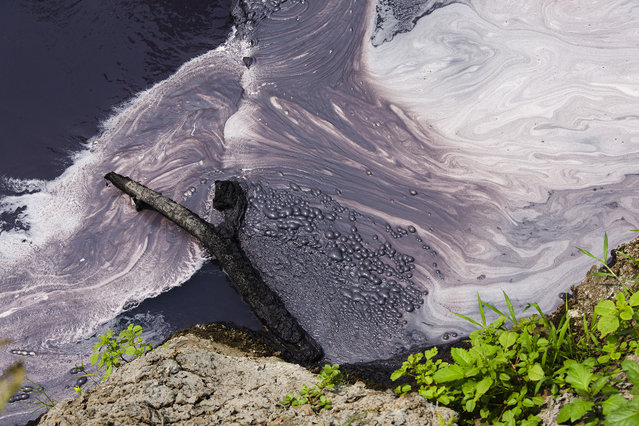
Factory waste including dyes from the many textile factories in the region drain into a tributary of the Citarum river on August 27, 2018 outside Bandung, Java, Indonesia. (Photo by Ed Wray/Getty Images)

Factory waste including dyes from the many textile factories in the region drain into a tributary of the Citarum river on August 27, 2018 outside Bandung, Java, Indonesia. (Photo by Ed Wray/Getty Images)
Details
06 Sep 2018 00:03:00
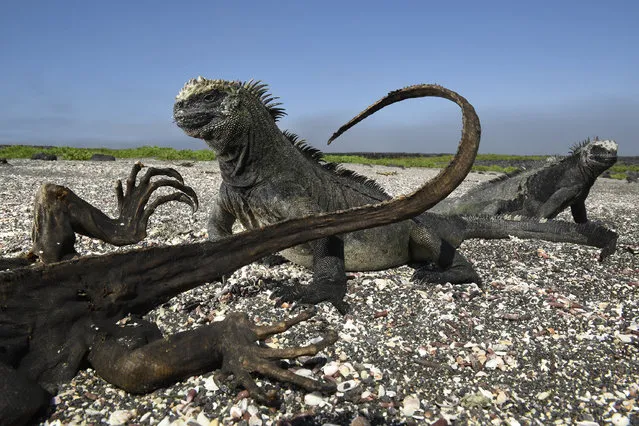
Galapagos – Rocking the Cradle: Four major ocean currents converge along the Galapagos archipelago, creating the conditions for an extraordinary diversity of animal life, April 25, 2016. The islands are home to at least 7,000 flora and fauna species, of which 97 percent of the reptiles, 80 percent of the land birds, 50 percent of the insects and 30 percent of the plants are endemic. The local ecosystem is highly sensitive to the changes in temperature, rainfall and ocean currents that characterize the climatic events known as El Niño and La Niña. These changes cause marked fluctuations in weather and food availability. Many scientists expect the frequency of El Niño and La Niña to increase as a result of climate change, making the Galapagos a possible early-warning location for its effects. (Photo by Thomas P. Peschak for National Geographic/World Press Photo)

Galapagos – Rocking the Cradle: Four major ocean currents converge along the Galapagos archipelago, creating the conditions for an extraordinary diversity of animal life, April 25, 2016. The islands are home to at least 7,000 flora and fauna species, of which 97 percent of the reptiles, 80 percent of the land birds, 50 percent of the insects and 30 percent of the plants are endemic. (Photo by Thomas P. Peschak for National Geographic/World Press Photo)
Details
16 Apr 2018 00:01:00
Annual celebration of Dinagyang festival of Iloilo, Philippines. (Photo by Raniel Jose Castañeda/Sony World Photography Awards)

Annual celebration of Dinagyang festival of Iloilo, Philippines. (Photo by Raniel Jose Castañeda/Sony World Photography Awards)
Details
21 Sep 2016 09:56:00