Loading...
Done
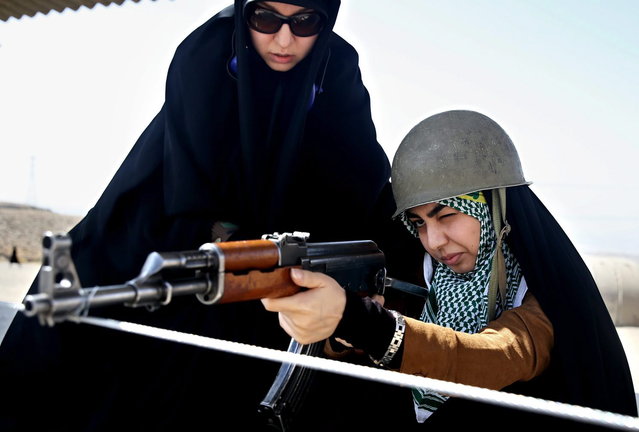
In this Thursday, August 22, 2013 photo, a female member of the Basij paramilitary militia aims a rifle as a trainer looks over her shoulder in Tehran, Iran. (Photo by Ebrahim Noroozi/AP Photo)

With a presence in nearly every city and town across Iran, the paramilitary Basij volunteer corps has an ever-increasing influence on life in the Islamic Republic. Authorities created the Basij, which means mobilization in Persian, just after the country's 1979 Islamic Republic. It is part of Iran's powerful Revolutionary Guard. Photo: In this Thursday, August 22, 2013 photo, a female member of the Basij paramilitary militia aims a rifle as a trainer looks over her shoulder in Tehran, Iran. (Photo by Ebrahim Noroozi/AP Photo)
Details
17 Jan 2014 09:19:00
Takeoka Chisaka, Hiroshima, Japan. “One morning in August 1945, I was walking home from the night shift at a factory in Hiroshima. As I reached my door, there was a huge explosion. When I came to, my head was bleeding and I had been blasted 30m away”. (Photo and caption by Sasha Maslov)

Takeoka Chisaka, Hiroshima, Japan. “One morning in August 1945, I was walking home from the night shift at a factory in Hiroshima. As I reached my door, there was a huge explosion. When I came to, my head was bleeding and I had been blasted 30m away. The atomic bomb had detonated. When I found my mother, her eyes were badly burned. A doctor said they had to come out, but he didn’t have the proper tools so used a knife instead. It was hellish. I became a peace-worker after the war. In the 1960s, at a meeting at the UN, I met one of the people who created the atomic bomb. He apologised”. (Photo and caption by Sasha Maslov)
Details
11 May 2015 11:56:00
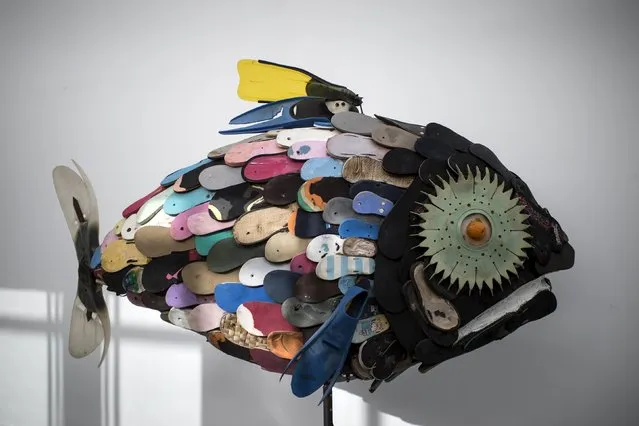
A sculpture of a fish made from waste products collected from the sea is displayed during the exhibition Keep The Oceans Clean by art collective Skeleton Sea, at the Torre Madariaga Biodiversity Centre in Busturia, Spain, May 17, 2015. (Photo by Vincent West/Reuters)

A sculpture of a fish made from waste products collected from the sea is displayed during the exhibition Keep The Oceans Clean by art collective Skeleton Sea, at the Torre Madariaga Biodiversity Centre in Busturia, Spain, May 17, 2015. Skeleton Sea, a group of surfers and artists, recycle waste collected from the world's oceans to create artworks and draw attention to the dangers faced from overfishing, pollution and oil spills. (Photo by Vincent West/Reuters)
Details
19 May 2015 11:16:00
Makeup Artist Laura Jenkinson Part 2

An inventive make-up artist has started using her chin as a canvas for unique paintings of popular cartoon characters. Using her own mouth as the teeth and lips of her subjects, stunning Laura Jenkinson, 25, paints around them using theatrical make-up to create the pint-sized portraits. Shrek, Finding Nemo’s Dory and the Genie from Aladdin have all featured in the series of incredible pictures that she has spent a year putting together. Her pictures have gone viral on facebook and Instagram where her posts regularly receive more than 1500 likes. Here, Bugs Bunny from “Looney Tunes” is depicted on Jenkinson. (Photo by Laura Jenkinson/Caters News)


See also: Part1
Details
24 Jun 2015 09:02:00
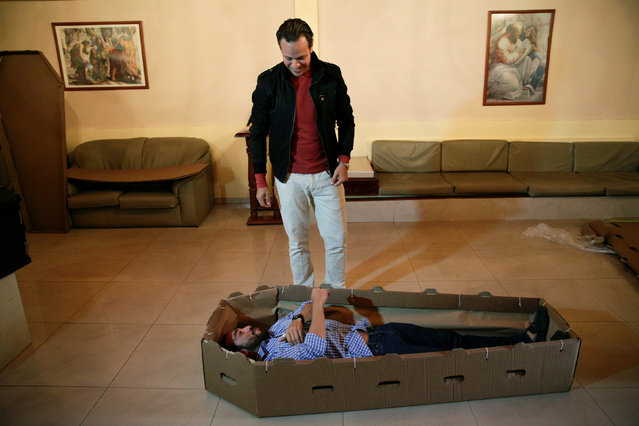
Elio Angulo (bottom C) lies inside a cardboard coffin next to Alejandro Blanchard as they introduce their product to potential customers at a mortuary in Valencia, in the state of Carabobo, Venezuela August 25, 2016. (Photo by Marco Bello/Reuters)

Elio Angulo (bottom C) lies inside a cardboard coffin next to Alejandro Blanchard as they introduce their product to potential customers at a mortuary in Valencia, in the state of Carabobo, Venezuela August 25, 2016. When Venezuelan entrepreneurs Alejandro Blanchard and Elio Angulo decided to create cardboard coffins, they were looking for an ecological selling point to compete against classic wood and brass caskets. Three years on, with the oil-rich country mired in deep economic crisis, their “bio-coffins” are becoming a viable option because of high prices for wooden coffins and shortages of brass ones. (Photo by Marco Bello/Reuters)
Details
27 Aug 2016 11:18:00
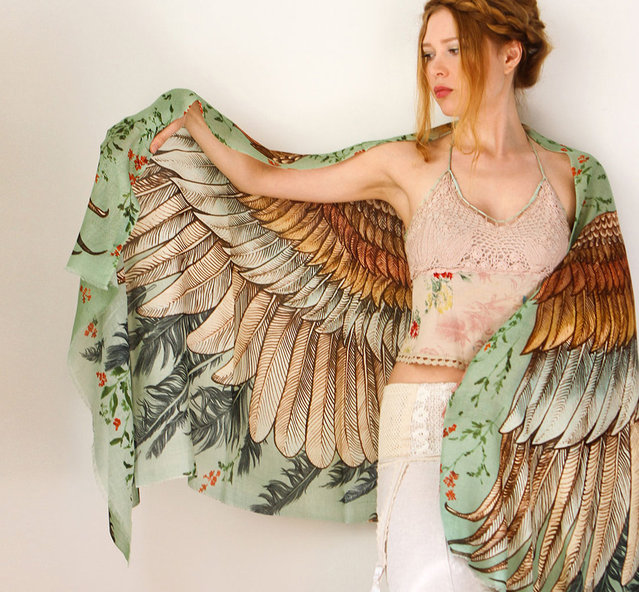
Shovava Wing Scarves By Roza Khamitova

Roza Khamitova was born into a family of artists in Kazakhstan. After finishing design school in Manhattan, New York, she was working in fashion industry for about 8 years. As a visual artist Roza had always drawn most of her inspiration from the natural world around her in the mountains of Kazakhstan. In 2011 she launched Shovava, her personal line of women’s clothing based on her hand drawn paintings and prints of the animals, plants and patterns found in nature. Roza was enchanted by the beauty of wings, its structure and symbolism. First, she sketches big wide-spread wings on paper with a light pencil, adds black ink to create a three-dimensional feel and fills with stunning watercolors.
Details
06 Dec 2015 10:42:00
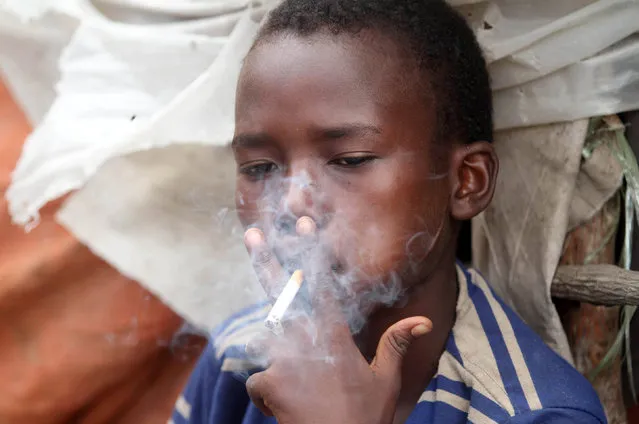
Abdulahi Yaroow, 13, smokes a cigarette while chewing khat at the same time in Mogadishu August 10, 2014. (Photo by Thomas Mukoya/Reuters)

Abdulahi Yaroow, 13, smokes a cigarette while chewing khat at the same time in Mogadishu August 10, 2014. Grown on plantations in the highlands of Kenya and Ethiopia, tonnes of khat, or qat, dubbed “the flower of paradise” by its users, are flown daily into Mogadishu airport, to be distributed from there in convoys of lorries to markets across Somalia. Britain, whose large ethnic Somali community sustained a lucrative demand for the leaves, banned khat from July as an illegal drug. This prohibition jolted the khat market, creating a supply glut in Somalia and pushing down prices, to the delight of the many connoisseurs of its amphetamine-like high. (Photo by Thomas Mukoya/Reuters)
Details
28 Aug 2014 10:35:00
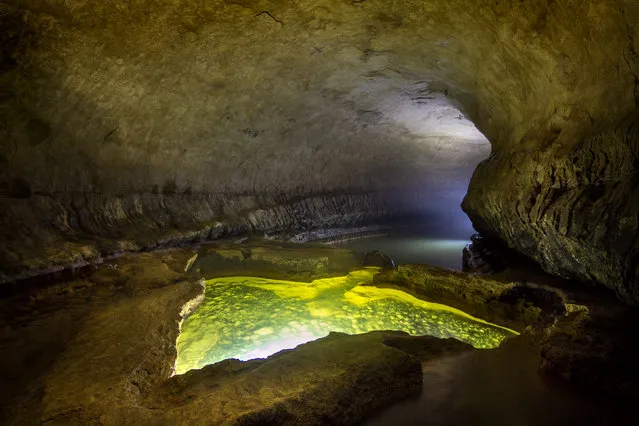
A large pool of water inside one of the tunnels. (Photo by Vladimir Mulde/Caters News)

These otherworldly images give a rare glimpse inside caves barely ever seen by the human eye. With its peculiar pools of water and strange colored sediments, the bizarre looking tunnels of the Shakuranskaya cave could be a set straight out of a science fiction film. Found in the disputed region of Abkhazia, around 75 miles outside of Sochi, Russia, it is rumored the incredible underground chambers were formed after a huge earthquake struck the area in 1892. After causing part of a nearby mountain to collapse into the Amtkel River, it is thought the dam-like affect has created a series of interconnecting underground tunnels. Here: a large pool of water inside one of the tunnels. (Photo by Vladimir Mulde/Caters News)
Details
07 Nov 2014 12:45:00