Loading...
Done
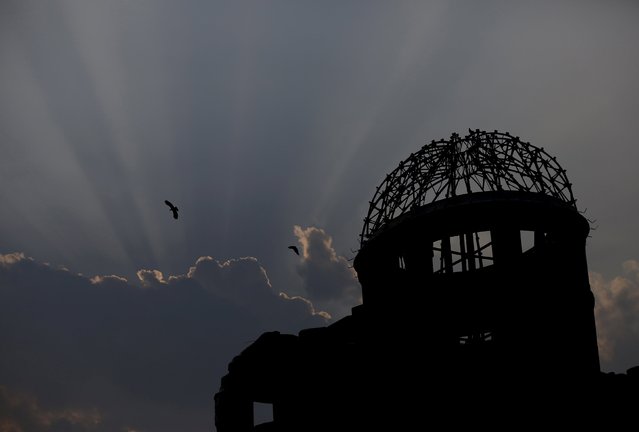
Birds fly over the Atomic Bomb Dome in Hiroshima, western Japan July 29, 2015. On August 6, 1945, the U.S. dropped the atomic bomb on Hiroshima, killing about 140,000 by the end of the year in a city of 350,000 residents, in the world's first nuclear attack. (Photo by Issei Kato/Reuters)

Birds fly over the Atomic Bomb Dome in Hiroshima, western Japan July 29, 2015. On August 6, 1945, the U.S. dropped the atomic bomb on Hiroshima, killing about 140,000 by the end of the year in a city of 350,000 residents, in the world's first nuclear attack. Three days later, a second atomic bomb was dropped on Nagasaki. Influenced by the shadows scorched into outdoor surfaces by the heat of the blasts 70 years ago, Reuters photographer Issei Kato pays homage to survivors, residents and historic buildings in both cities in a personal project that captures the shadows of today. (Photo by Issei Kato/Reuters)
Details
04 Aug 2015 12:01:00
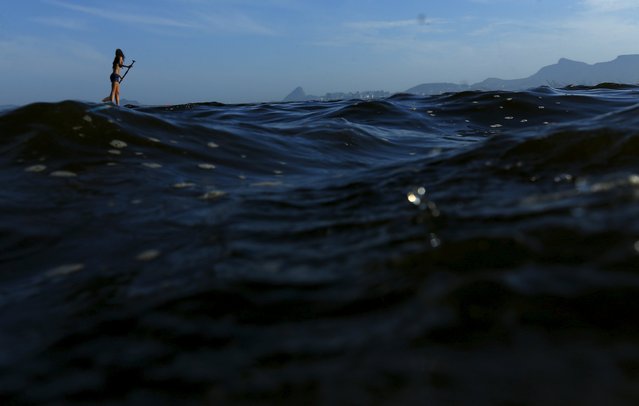
A girl paddles on her stand-up board on the waters of Guanabara bay at Bica beach in Rio de Janeiro Brazil, January 10, 2016. (Photo by Ricardo Moraes/Reuters)

A girl paddles on her stand-up board on the waters of Guanabara bay at Bica beach in Rio de Janeiro Brazil, January 10, 2016. Few features capture the beauty, or the problems, of one of the world's most dramatic urban landscapes like Guanabara Bay - the finger-like inlet that forms the shoreline and harbor for Rio de Janeiro. The bay, which carves into southeast Brazil from the Atlantic Ocean, literally gave Rio its name when Portuguese mariners mistook it for a “rio”, or “river”. Four centuries later, the bay is preparing to welcome another sort of seafarer – Olympic sailors, who will navigate the bay when the 2016 Rio Olympics kick off in August. (Photo by Ricardo Moraes/Reuters)
Details
28 Apr 2016 12:13:00
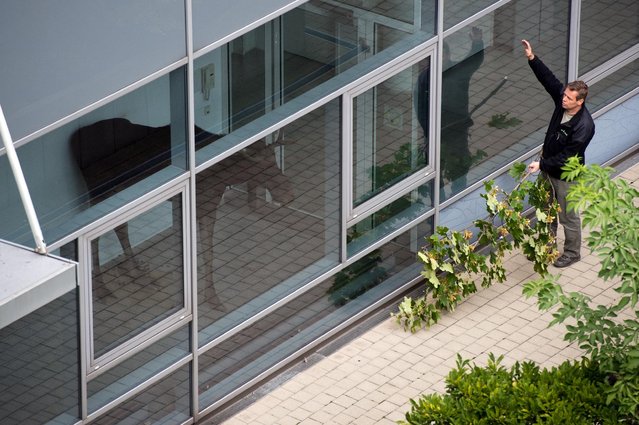
A zoo employee waves at a young moose in an administration building of Siemens in Dresden, Germany, Monday August 25, 2014. (Photo by Arno Burgi/AP Photo/DPA)

A young moose stands behind a window in an administration building of Siemens in Dresden, Germany Monday August 25, 2014. Police are trying to capture a moose on the loose in the eastern German city of Dresden. A spokesman for Dresden police says the young bull walked into the offices of German industrial giant Siemens on Monday and got stuck behind a glass wall. Marko Laske says officers and wildlife are trying to shoo the moose into a container so he can be taken to the local zoo. Moose are rare in Germany and the animal is likely to have come from neighboring Poland. (Photo by Arno Burgi/AP Photo/DPA)
Details
28 Aug 2014 10:55:00
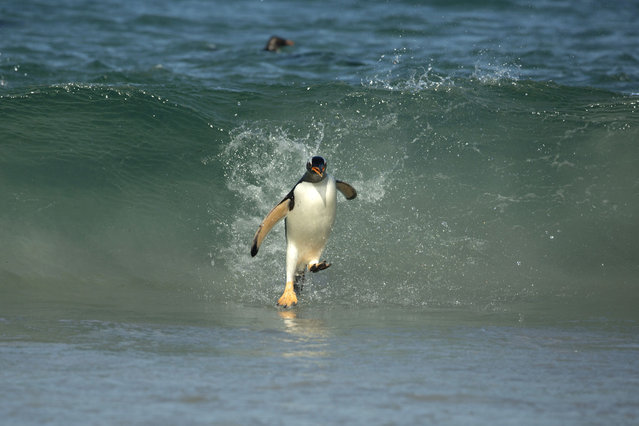
These surfing penguins are making waves as they glide gracefully across the ocean.They are showcasing their talent as they arrive on the East Coast beach of New Island in the Falklands.The penguins are of the gentoo species, characterised by their bright orange bills and the distinctive white stripes on their heads. Here: a lone penguin balancing cooly on a single foot as it catches a wave. (Photo by Shanu Subra/Solent News/SIPA Press)

These surfing penguins are making waves as they glide gracefully across the ocean.They are showcasing their talent as they arrive on the East Coast beach of New Island in the Falklands.The penguins are of the gentoo species, characterised by their bright orange bills and the distinctive white stripes on their heads. The dazzling images were captured by amateur photographer Shanu Subra, during a 26 day ecology expedition. Here: a lone penguin balancing cooly on a single foot as it catches a wave. (Photo by Shanu Subra/Solent News/SIPA Press)
Details
25 Nov 2014 10:55:00
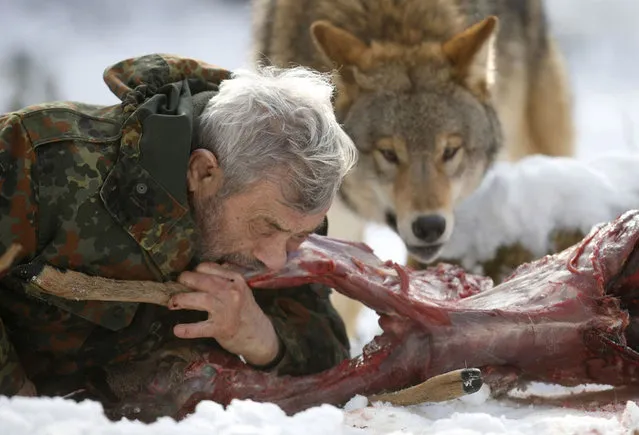
The Wolf Man

Wolfspark Werner Freund is a wolf sanctuary spread over 25 acres in western Germany. It is home to 29 wolves -- six distinct packs hailing from Europe, Siberia, Canada, the Arctic, and Mongolia. Researcher Werner Freund, 79, a former German paratrooper, established the sanctuary in 1972 and has raised more than 70 animals there over the last 40 years. He acquired the wolves as cubs from zoos or animal parks and has reared them mostly by hand. Werner has also taken to living closely with his wolves, behaving as an alpha male to earn their acceptance and respect. Reuters photographer Lisi Niesner recently spent some time with Freund and his wolves, capturing the interactions between these old friends.
Details
31 Jan 2013 15:50:00
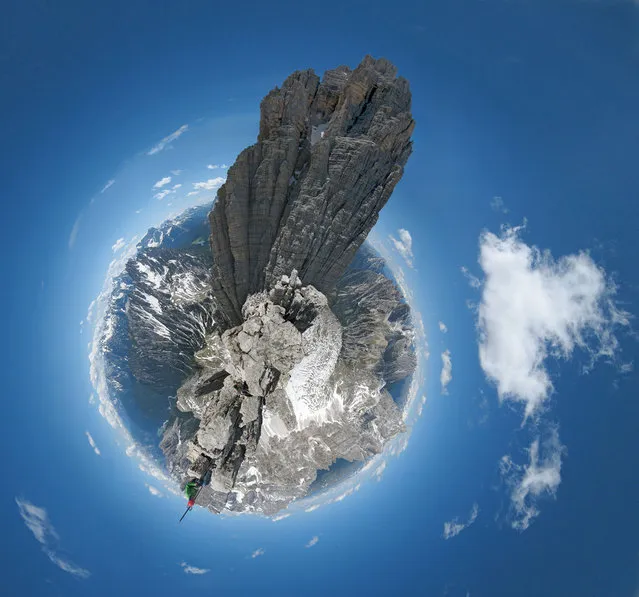
“Taken at the tiny summit of Cima Piccola in the the Tre Cima group in the Dolomites, Italy. The large peak is Cima Grande Some remote peaks have a summit register, and my climbing partner Steve can be seen signing this in the bottom of the picture”. (“Little Planets” Project. Photo and comment by Dan Arkle)

These are the amazing panoramic photographs that look like little planets. They were taken by photographer Dan Arkle, 34, from Sheffield, UK. He said: “On a sharp summit, you feel literally on top of the world, with dramatic views in all directions, including straight down. I tried using conventional photography to capture this feeling, but even with a wide angle lens I couldnt get all the view in the image”. Here: “Taken at the tiny summit of Cima Piccola in the the Tre Cima group in the Dolomites, Italy. The large peak is Cima Grande Some remote peaks have a summit register, and my climbing partner Steve can be seen signing this in the bottom of the picture”. (“Little Planets” Project. Photo and comment by Dan Arkle)
Details
06 Jun 2015 09:52:00
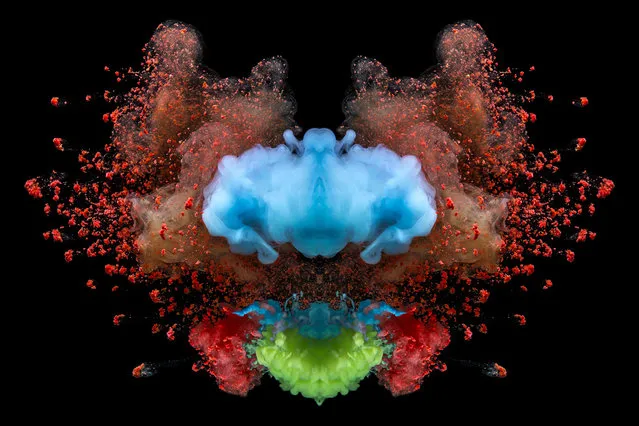
Brian Tomlinsons ink artwork. (Photo by Brian Tomlinsons/Caters News Agency)

These ink-redible, explosive masterpieces are like say-what-you see inkblots tests only in water. The vibrant colors burst from Brian Tomlinsons works, appearing as though they may be coloured ash clouds from an erupting volcano, rather than simply everyday substances. By doing so, Brian challenges viewers to identify what images can be imagined when mixing one fluid with another. In order to shoot the series, entitled Liquid Ink Art, Brain, 40, drops different coloured inks into a fish tank full of water before capturing high-speed shots with a flash. Here: Brian Tomlinsons ink artwork. (Photo by Brian Tomlinsons/Caters News Agency)
Details
15 Jun 2017 08:32:00
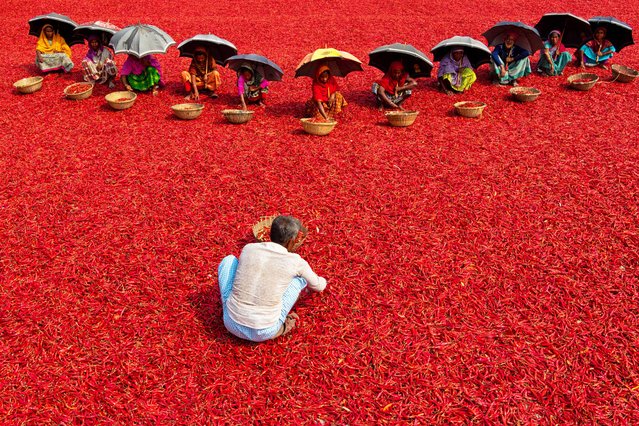
Rows of workers shelter under umbrellas from the scorching heat as they painstakingly sort through a red carpet of millions of chilli peppers in Bogra, Bangladesh on October 3, 2023. They sort the rotten and broken chilli peppers out to separate the poor quality ones which won't sell. In a line, the pickers who are paid less than £3 for a 10-hour shift slowly move forward with their baskets to separate the bad from the good after the chilies have been dried in the sun for a week. The dried & sorted chillies are then packaged and taken to the local market where they are brought mainly by companies to be made into chilli powder. The workers sort them in a warm environment, with temperatures reaching up to 45°C. More than 5,000 people work in almost 100 chilli farms in the Bogra district of Bangladesh to supply local spice companies with chillies for their recipes. Known as “Lal Morich” to the locals, chilli peppers are a major part of Bengali cuisine and are used as part of a combination of spices for various meat dishes, including chicken and beef. (Photo by Joy Saha/Rex Features/Shutterstock)

Rows of workers shelter under umbrellas from the scorching heat as they painstakingly sort through a red carpet of millions of chilli peppers in Bogra, Bangladesh on October 3, 2023. They sort the rotten and broken chilli peppers out to separate the poor quality ones which won't sell. In a line, the pickers who are paid less than £3 for a 10-hour shift slowly move forward with their baskets to separate the bad from the good after the chilies have been dried in the sun for a week. (Photo by Joy Saha/Rex Features/Shutterstock)
Details
21 Oct 2023 04:04:00