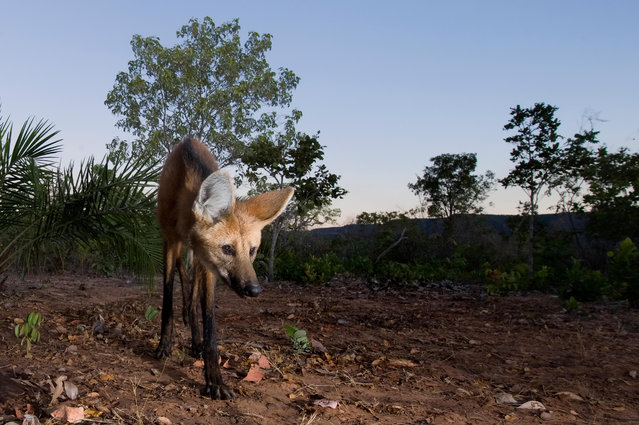
Global wildlife populations will decline by 67% by 2020 unless urgent action is taken to reduce human impact on species and ecosystems, warns the biennial Living Planet Index report from WWF (World Wide Fund for Nature) and ZSL (Zoological Society of London). From elephants to eels, here are some of the wildlife populations most affected by human activity. Here: The maned wolf is among the large mammals in the Brazilian Cerrado that are threatened by the increasing conversion of grasslands into farmland for grazing and growing crops. (Photo by Ben Cranke/Nature Picture Library/Alamy Stock Photo)
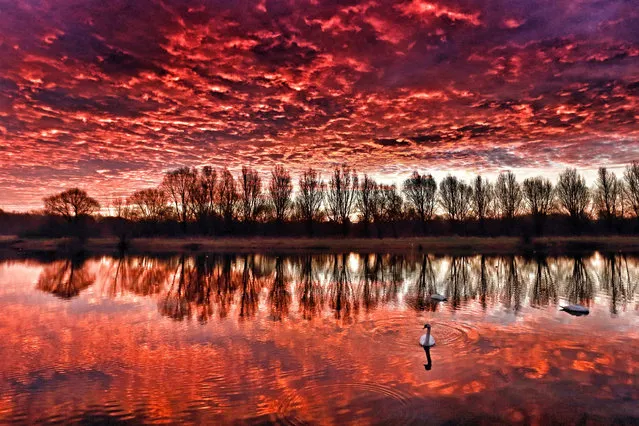
The sky looked on fire this morning, as it made the clouds glow red, just before sunrise at Peterborough Rowing Lake, in Nene Park, UK on January 18, 2017. (Photo by Paul Marriott/Rex Features/Shutterstock)
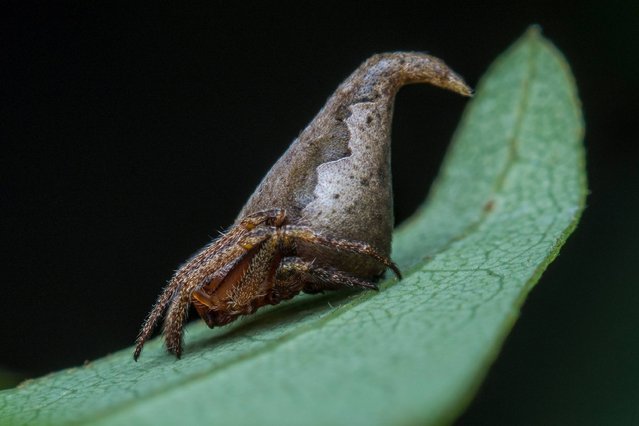
In this handout photograph received from Sumukha J.N on December 15, 2016, the newly-discovered spider Eriovixia Gryffindori sits on a leaf in the Kans in India's Western Ghats. (Photo by Sumukha J.N./AFP Photo)
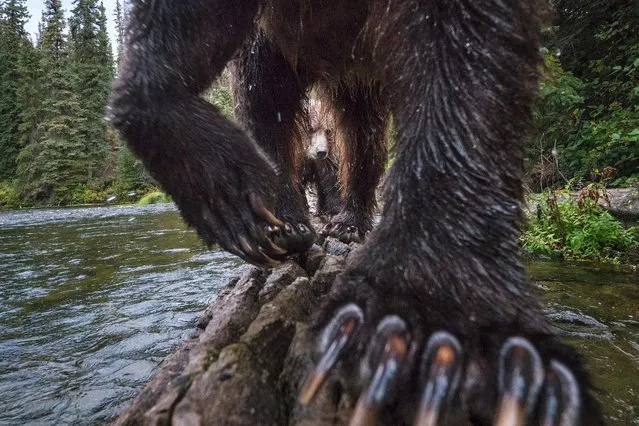
The fourth annual BigPicture Natural World Photography Competition aims to celebrate the diversity of life on Earth, and encourages people to protect and conserve it. Here: “The Salmon Catchers”. Terrestrial Wildlife. To capture this view of a mother grizzly bear and her cub, photographer Peter Mather set up a camera trap on a log that he knew the bears tended to traverse while fishing for salmon, in the Yukon River watershed in Canada. (Photo by Peter Mather/BigPicture Natural World Photography Competition 2017)
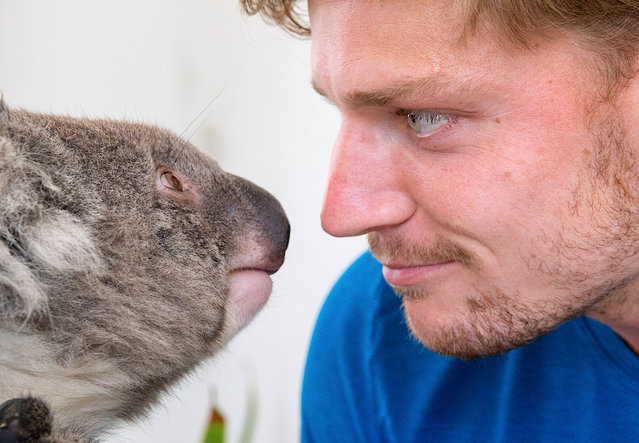
David Goffin of Belgium meets a koala during a promotional event for the Australian Open tennis tournament at Melbourne Park on January 17, 2018. (Photo by Fiona Hamilton/Reuters/Tennis Australia)
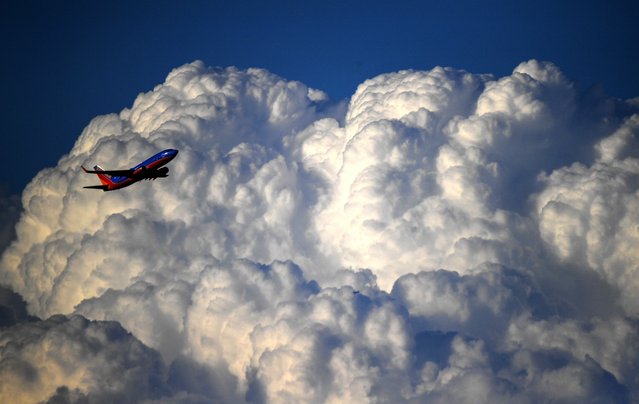
A Southwest Airlines jet takes off from Reagan National Airport with a thunderhead to the east on June 20, 2017 in Alexandria, VA. (Photo by Jonathan Newton/The Washington Post)