Loading...
Done
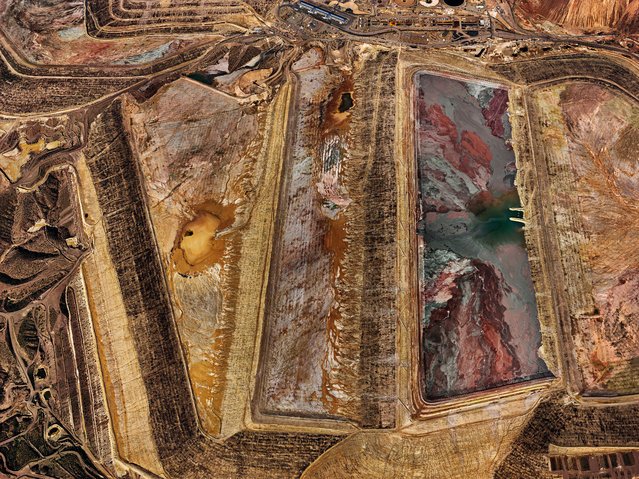
Morenci Mine #2, Clifton, Arizona, USA, 2012. (Photo by Edward Burtynsky/Metivier Gallery, Toronto/Flowers Gallery, London)

The Photo London Master of Photography award is given annually to a leading contemporary photographer. A special exhibition shows new and rarely seen images from Burtynsky’s portfolio. Here: Morenci Mine #2, Clifton, Arizona, USA, 2012. (Photo by Edward Burtynsky/Metivier Gallery, Toronto/Flowers Gallery, London)
Details
07 Feb 2018 06:43:00
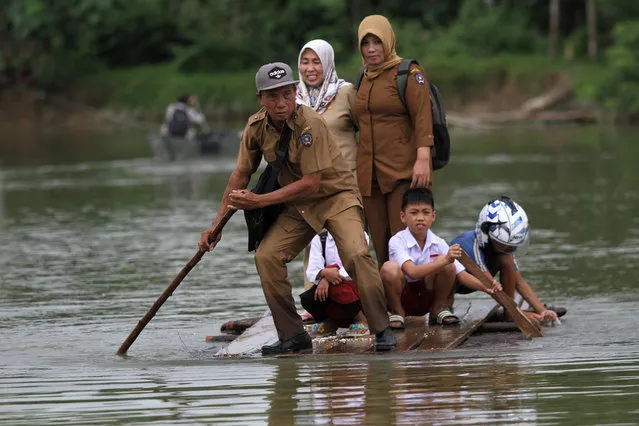
A group of teachers and their student use makeshift raft as they cross the street during flood that hit Ranomeeto Barat village in Konawe Selatan, Sulawesi island, Indonesia, July 10, 2018. (Photo by Jojon/Reuters/Antara Foto)

A group of teachers and their student use makeshift raft as they cross the street during flood that hit Ranomeeto Barat village in Konawe Selatan, Sulawesi island, Indonesia, July 10, 2018. (Photo by Jojon/Reuters/Antara Foto)
Details
12 Jul 2018 00:03:00
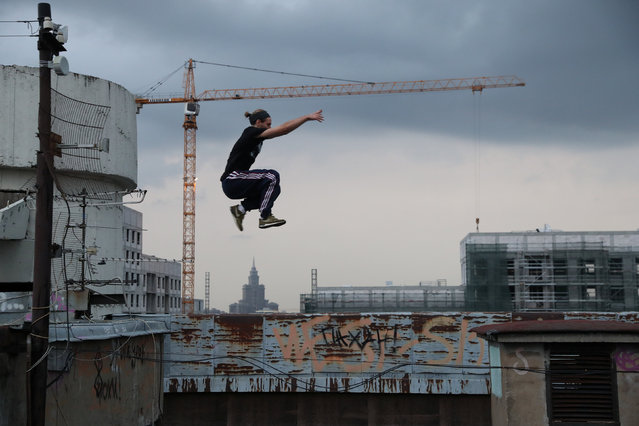
Urban explorer Vad Him of Rudex team jumps whilst on a rooftop in Moscow, Russia, August 14, 2017. (Photo by Maxim Shemetov/Reuters)

To an outsider, their passion is at times illegal and often on the verge of life and death. But climbing rooftops of high-rise buildings and exploring abandoned facilities is in the blood of these young Muscovites. The small group calls itself “Rudex”, which stands for “roof and decay exploration”, and is akin a Western youth craze known as urbex or “urban exploration” of man-made structures. Here: Urban explorer Vad Him of Rudex team jumps whilst on a rooftop in Moscow, Russia, August 14, 2017. (Photo by Maxim Shemetov/Reuters)
Details
25 Sep 2017 06:36:00
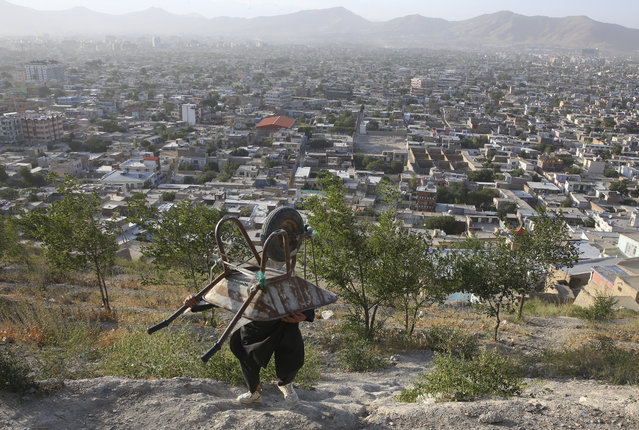
An Afghan boy carries his wheelbarrow in Kabul, Afghanistan, Monday, August 5, 2019. (Photo by Rafiq Maqbool/AP Photo)

An Afghan boy carries his wheelbarrow in Kabul, Afghanistan, Monday, August 5, 2019. (Photo by Rafiq Maqbool/AP Photo)
Details
21 Aug 2019 00:01:00
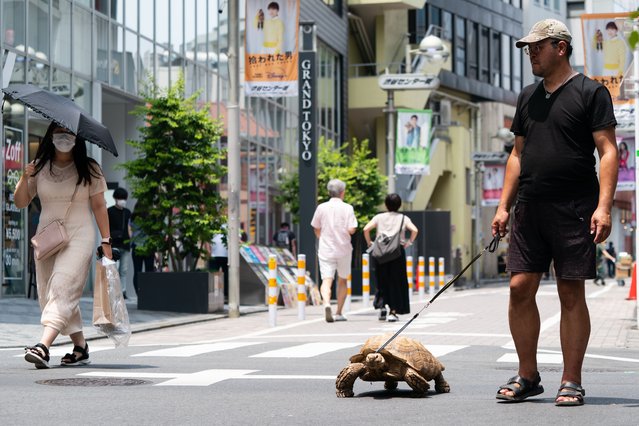
A man takes his pet African spurred tortoise called Lupin for a walk during a heatwave in Tokyo, Japan on July 3, 2022. (Photo by Masatoshi Okauchi/Rex Features/Shutterstock)

A man takes his pet African spurred tortoise called Lupin for a walk during a heatwave in Tokyo, Japan on July 3, 2022. (Photo by Masatoshi Okauchi/Rex Features/Shutterstock)
Details
18 Jul 2022 04:59:00
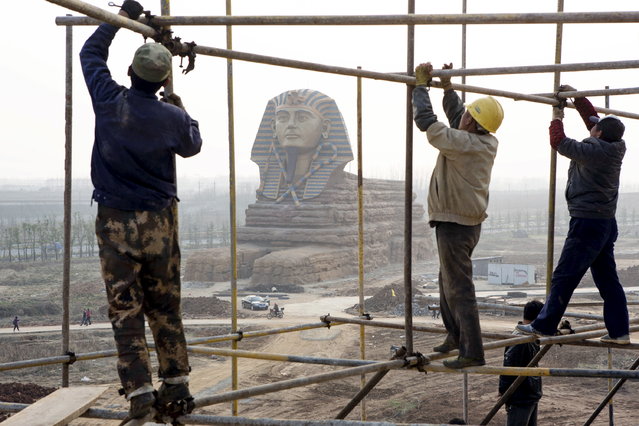
Laborers work on scaffolding near a full-scale replica of the Sphinx at an unfinished movie and animation tourism theme park, in Chuzhou, Anhui province, March 27, 2015. (Photo by Reuters/China Daily)

Laborers work on scaffolding near a full-scale replica of the Sphinx at an unfinished movie and animation tourism theme park, in Chuzhou, Anhui province, March 27, 2015. (Photo by Reuters/China Daily)
Details
22 Apr 2016 12:39:00
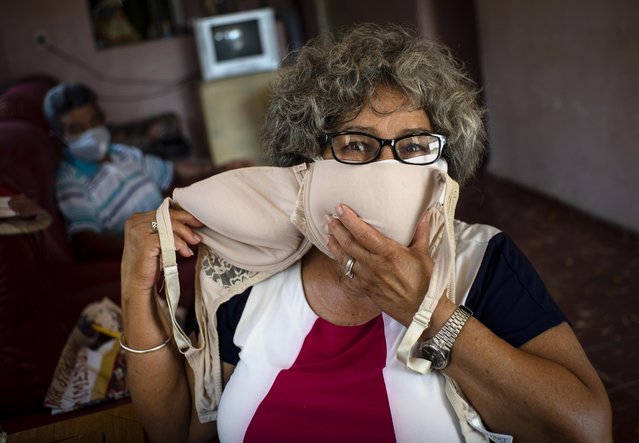
Idania Espanola, 63, poses for a photo showing a bra that she will adapt into two face masks, amid the spread of the new coronavirus in Cojimar, Cuba, east of Havana, Tuesday, March 31, 2020. (Photo by Ramon Espinosa/AP Photo)

Idania Espanola, 63, poses for a photo showing a bra that she will adapt into two face masks, amid the spread of the new coronavirus in Cojimar, Cuba, east of Havana, Tuesday, March 31, 2020. (Photo by Ramon Espinosa/AP Photo)
Details
03 Jul 2020 00:01:00
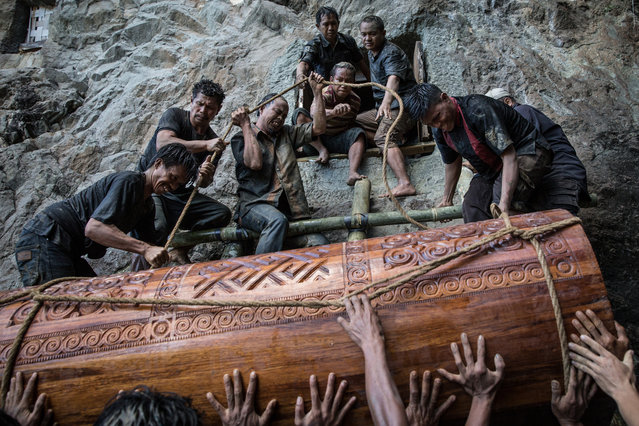
It is said that Torajans are people who “live to die”. For this Indonesian ethnic group, funerals are such extravagant events that they sometimes attract tourists. Families can postpone burials years (and the deceased are considered sick and hosted at home until the funeral) until the family can raise enough money and gather as many relatives as possible. And then it’s a jubilant multiday social event with a parade, dances and animal sacrifices. Agung Parameswara photographed these funerary practices when he traveled to South Sulawesi province, where the Torajans live. But often, their funeral isn’t the last time the dead are seen. In August, crypts are opened, coffins are slid back out and bodies delicately unsheathed. This tender ritual is known as Ma’Nene, which is customarily performed every few years. (Photo by Agung Parameswara/The Washington Post)

It is said that Torajans are people who “live to die”. For this Indonesian ethnic group, funerals are such extravagant events that they sometimes attract tourists. Families can postpone burials years (and the deceased are considered sick and hosted at home until the funeral) until the family can raise enough money and gather as many relatives as possible. And then it’s a jubilant multiday social event with a parade, dances and animal sacrifices. Agung Parameswara photographed these funerary practices when he traveled to South Sulawesi province, where the Torajans live. (Photo by Agung Parameswara/The Washington Post)
Details
06 Oct 2016 09:15:00