Loading...
Done
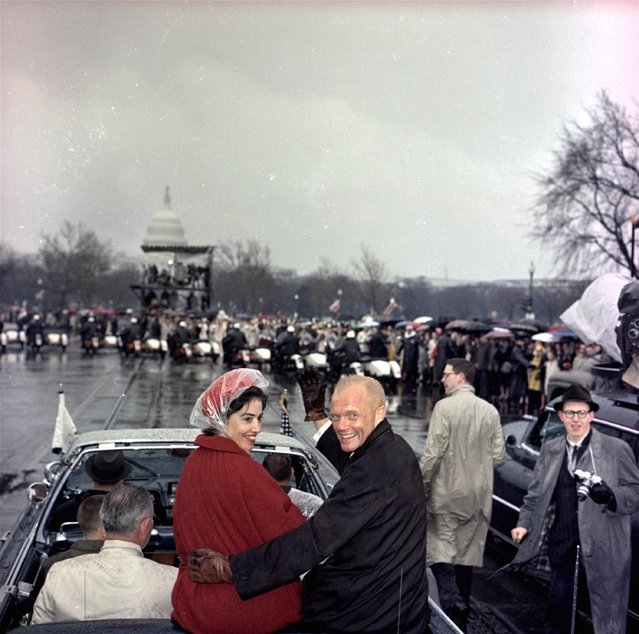
In this February 26, 1962 file photo, Mercury astronaut John Glenn, and his wife, Annie, ride in the back of an open car with Vice-President Johnson during a parade in Glenn's honor in Washington. The Capitol is seen in the background. Glenn, the first American to orbit Earth who later spent 24 years representing Ohio in the Senate, died Thursday, Dec. 8, 2016, at the age of 95. (Photo by AP Photo)

In this February 26, 1962 file photo, Mercury astronaut John Glenn, and his wife, Annie, ride in the back of an open car with Vice-President Johnson during a parade in Glenn's honor in Washington. The Capitol is seen in the background. Glenn, the first American to orbit Earth who later spent 24 years representing Ohio in the Senate, died Thursday, Dec. 8, 2016, at the age of 95. (Photo by AP Photo)
Details
09 Dec 2016 11:35:00
Russian artist Maria Gasanova adjusts her make-up as she finishes “The Siberian Beauty” body art work from her “The Alive Painting” series before the opening ceremony of the Cultural Universiade as part of preparation for the 2019 Winter Universiade Krasnoyarsk, in the Siberian city of Krasnoyarsk, Russia, December 9, 2016. (Photo by Ilya Naymushin/Reuters)

Russian artist Maria Gasanova adjusts her make-up as she finishes “The Siberian Beauty” body art work from her “The Alive Painting” series before the opening ceremony of the Cultural Universiade as part of preparation for the 2019 Winter Universiade Krasnoyarsk, in the Siberian city of Krasnoyarsk, Russia, December 9, 2016. (Photo by Ilya Naymushin/Reuters)
Details
10 Dec 2016 09:06:00
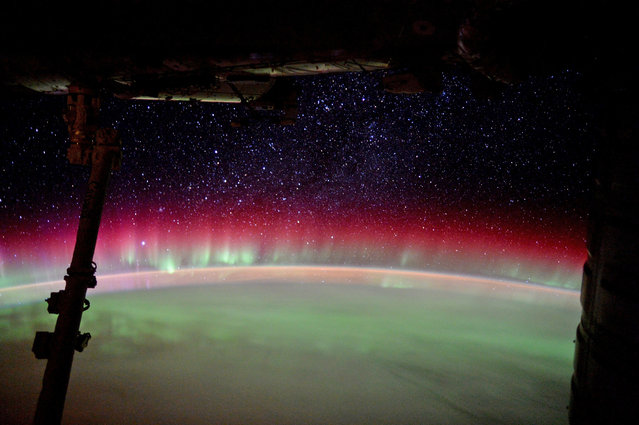
ESA astronaut Tim Peake posted this stunning image on his social media channels, commenting: “Station passed through magnificent aurora Australis last night”. Tim is set to return to Earth on 18 June 2016, bringing his six-month Principia mission to the ISS to an end. During his stay he performed more than 30 scientific experiments for ESA and taking part in numerous others from ESA's international partners. ESA and the UK Space Agency have partnered to develop many exciting educational activities around the Principia mission, aimed at sparking the interest of young children in science and space. (Photo by Tim Peake/ESA/NASA)

ESA astronaut Tim Peake posted this stunning image on his social media channels, commenting: “Station passed through magnificent aurora Australis last night”. Tim is set to return to Earth on 18 June 2016, bringing his six-month Principia mission to the ISS to an end. During his stay he performed more than 30 scientific experiments for ESA and taking part in numerous others from ESA's international partners. ESA and the UK Space Agency have partnered to develop many exciting educational activities around the Principia mission, aimed at sparking the interest of young children in science and space. (Photo by Tim Peake/ESA/NASA)
Details
31 Dec 2016 10:21:00
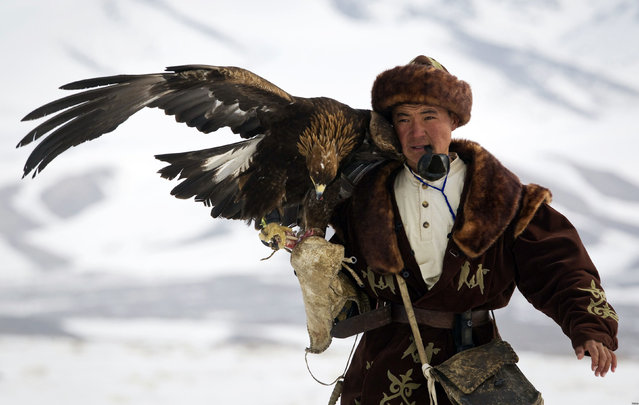
A Kazakh hunter walks with his tamed golden eagle during an annual hunting competition in Chengelsy Gorge, some 150 km (93 miles) east of Almaty February 22, 2013. (Photo by Shamil Zhumatov/Reuters)

A Kazakh hunter walks with his tamed golden eagle during an annual hunting competition in Chengelsy Gorge, some 150 km (93 miles) east of Almaty February 22, 2013. (Photo by Shamil Zhumatov/Reuters)
Details
05 Mar 2013 13:20:00
Sgt. William Olas Bee, a U.S. Marine from the 24th Marine Expeditionary Unit, has a close call after Taliban fighters opened fire near Garmsir in Helmand Province of Afghanistan, May 18, 2008. (Photo by Goran Tomasevic/Reuters)

Sgt. William Olas Bee, a U.S. Marine from the 24th Marine Expeditionary Unit, has a close call after Taliban fighters opened fire near Garmsir in Helmand Province of Afghanistan, May 18, 2008. (Photo by Goran Tomasevic/Reuters)
Details
24 Sep 2014 12:07:00
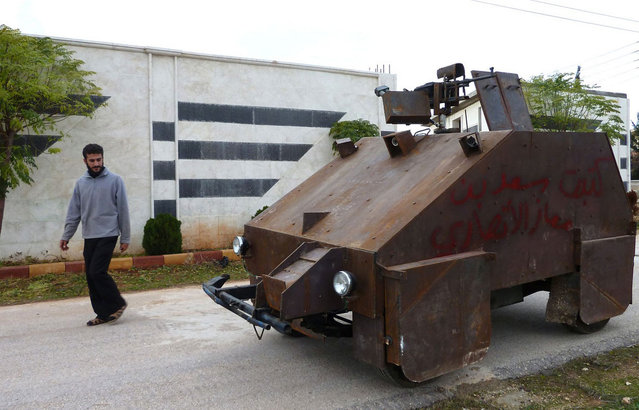
A Syrian rebel walks past Sham 2, a homemade armored vehicle, in Bishqatin, Syria, on December 8, 2012. From a distance it looks rather like a big rusty metal box but closer inspection reveals a homemade armored vehicle waiting to be deployed. Sham II, named after ancient Syria, is built from the chassis of a car and touted by rebels as “100 percent made in Syria”. (Photo by Herve Bar/AFP Photo)

A Syrian rebel walks past Sham 2, a homemade armored vehicle, in Bishqatin, Syria, on December 8, 2012. From a distance it looks rather like a big rusty metal box but closer inspection reveals a homemade armored vehicle waiting to be deployed. Sham II, named after ancient Syria, is built from the chassis of a car and touted by rebels as “100 percent made in Syria”. (Photo by Herve Bar/AFP Photo)
Details
03 Sep 2013 09:30:00
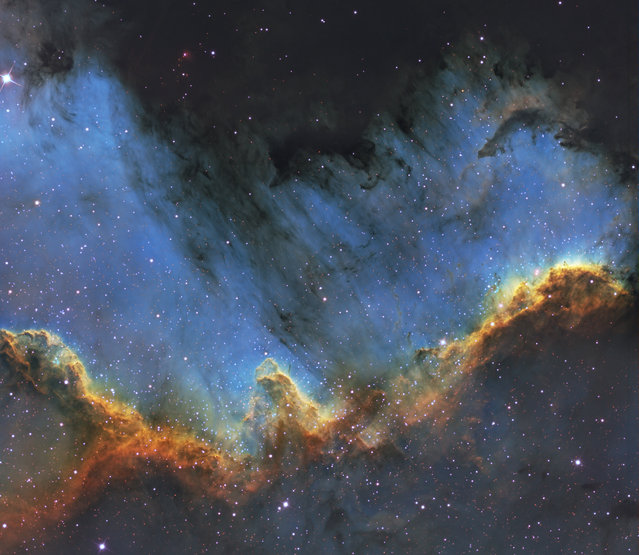
The Cygnus Wall is in the southern  area of NGC7000 also known as the North America Nebula. It is approximately 1800 light years from Earth, and is in the constellation Cygnus. The Wall is an energized shock front and contains the most concentrated star formations in the nebula. The size of the North America Nebula is about 4 full moons. (Bill Snyder)

Amateur astronomer Bill Snyder has been involved with astrophotography since 2007. Photo: The Cygnus Wall is in the southern area of NGC7000 also known as the North America Nebula. It is approximately 1800 light years from Earth, and is in the constellation Cygnus. The Wall is an energized shock front and contains the most concentrated star formations in the nebula. The size of the North America Nebula is about 4 full moons. (Photo and caption by Bill Snyder)
Details
30 Oct 2013 09:15:00
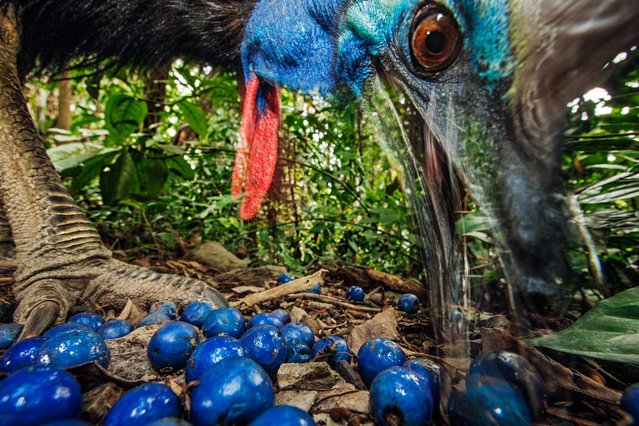
“Cassowaries are large, flightless birds related to emus and (more distantly) to ostriches, rheas, and kiwis”, writes Olivia Judson in the September issue of National Geographic magazine. (Photo by Christian Ziegler/National Geographic)

“Cassowaries are large, flightless birds related to emus and (more distantly) to ostriches, rheas, and kiwis”, writes Olivia Judson in the September issue of National Geographic magazine. How large? People-size: Adult males stand well over five foot five and top 110 pounds. Females are even taller, and can weigh more than 160 pounds. Dangerous when roused, they’re shy and peaceable when left alone. But even birds this big and tough are prey to habitat loss. The dense New Guinea and Australia rain forests where they live have dwindled. Today cassowaries might number 1,500 to 2,000. And because they help shape those same forests – by moving seeds from one place to another – “if they vanish”, Judson writes, “the structure of the forest would gradually change” too. (Photo by Christian Ziegler/National Geographic)
Details
06 Jan 2014 12:21:00