Loading...
Done
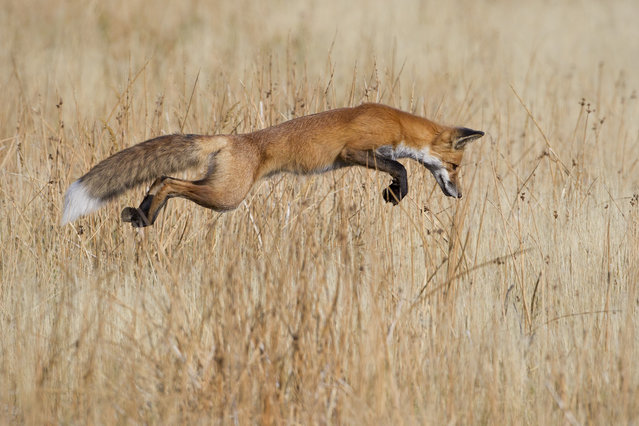
Canada: “Lucky pounce”. (Photo by Connor Stefanison/Wildlife Photographer of the Year 2013)

The winners of The London’s Natural History Museum's prestigious Wildlife Photographer of the Year for 2013 have finally been unveiled. Selected from almost 43,000 entries from 96 countries, the winners offer a glimpse of the stunning array of natural beauty on our planet. Photo: Canada: “Lucky pounce”. “Anticipating the pounce – that was the hardest part”, says Connor, who had come to Yellowstone National Park, Wyoming, USA, in search of wildlife as much as the spectacular landscape. He had found this fox, his first ever, on his last day in the park. It was so absorbed in hunting that Connor had plenty of time to get out of the car and settle behind a rock. It quartered the grassland, back and forth, and then started staring intently at a patch of ground, giving Connor just enough warning of the action to come. When it sprung up, Connor got his shot. And when it landed, the fox got his mouse. (Photo by Connor Stefanison/Wildlife Photographer of the Year 2013)
Details
17 Oct 2013 08:12:00
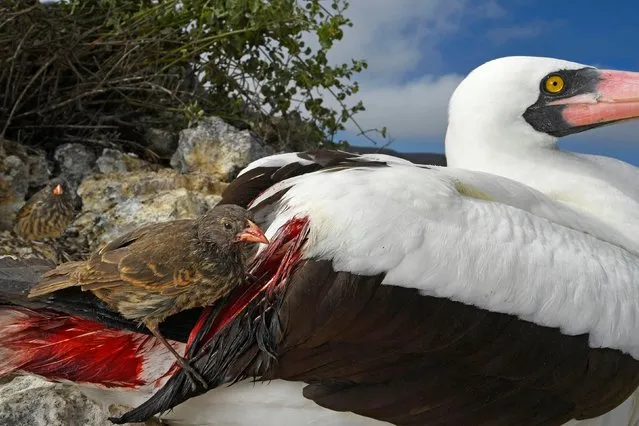
Bloodthirsty by Thomas P Peschak, Germany/South Africa — winner, Behaviour: birds. When rations run short on Wolf Island, in the remote northern Galápagos, the sharp-beaked ground finches become vampires. Their sitting targets are Nazca boobies and other large birds. The finches rely on a scant diet of seeds and insects, which regularly dries up, so they drink blood to survive. ‘I’ve seen more than half a dozen finches drinking from a single Nazca booby,’ says Tom. Rather than leave their nests the boobies tolerate the vampires, and the blood loss doesn’t seem to cause permanent harm. (Photo by Thomas P Peschak/2018 Wildlife Photographer of the Year)

Bloodthirsty by Thomas P. Peschak, Germany/South Africa — winner, Behaviour: birds. When rations run short on Wolf Island, in the remote northern Galápagos, the sharp-beaked ground finches become vampires. Their sitting targets are Nazca boobies and other large birds. The finches rely on a scant diet of seeds and insects, which regularly dries up, so they drink blood to survive. ‘I’ve seen more than half a dozen finches drinking from a single Nazca booby,’ says Tom. Rather than leave their nests the boobies tolerate the vampires, and the blood loss doesn’t seem to cause permanent harm. (Photo by Thomas P. Peschak/2018 Wildlife Photographer of the Year)
Details
19 Oct 2018 00:05:00
Two models sit in an acrylic “ZF-Car” from the German manufacturer of the same name at the Automechanika automotive service industry trade fair in Frankfurt am Main, Germany, 12 September 2016. The Automechanika Fair runs from 13 to 17 September 2016. (Photo by Boris Rössler/EPA)

Two models sit in an acrylic “ZF-Car” from the German manufacturer of the same name at the Automechanika automotive service industry trade fair in Frankfurt am Main, Germany, 12 September 2016. The Automechanika Fair runs from 13 to 17 September 2016. (Photo by Boris Rössler/EPA)
Details
13 Sep 2016 10:17:00
Emily Ratajkowski is seen at “Jimmy Kimmel Live” on August 07, 2017 in Los Angeles, California. (Photo by Rex Features/Shutterstock)

Emily Ratajkowski is seen at “Jimmy Kimmel Live” on August 07, 2017 in Los Angeles, California. (Photo by Rex Features/Shutterstock)
Details
14 Aug 2017 06:50:00
A wax figure of U.S. actress Scarlett Johansson stands outside Madame Tussauds New York attraction shortly after the figure was unveiled in Times Square in New York, July 30, 2015. (Photo by Mike Segar/Reuters)

A wax figure of U.S. actress Scarlett Johansson stands outside Madame Tussauds New York attraction shortly after the figure was unveiled in Times Square in New York, July 30, 2015. (Photo by Mike Segar/Reuters)
Details
31 Jul 2015 11:50:00
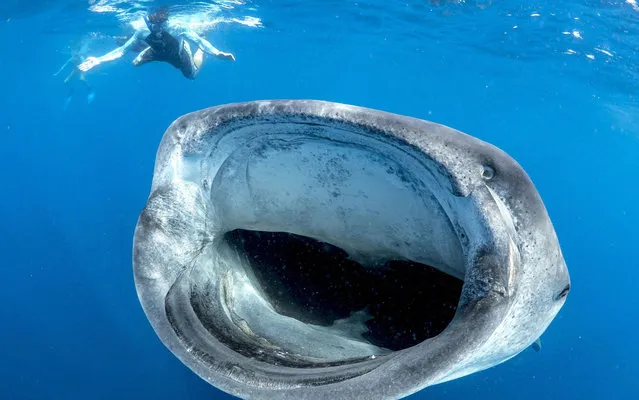
Marine biologist Simon Pierce, who studies whale sharks, happened to be in the right place at the right time to capture amazing photo off Cancun, Mexico. (Photo by Simon Pierce/Mercury Press/Caters News)

Marine biologist Simon Pierce, who studies whale sharks, happened to be in the right place at the right time to capture amazing photo off Cancun, Mexico. (Photo by Simon Pierce/Mercury Press/Caters News)
Details
09 Feb 2014 12:45:00
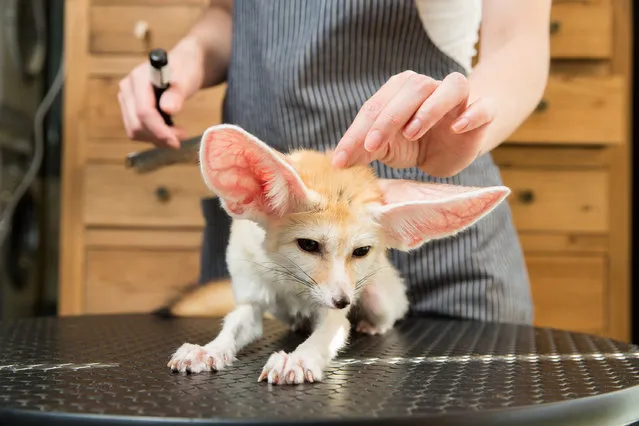
A fennec fox (Vulpes zerda) is groomed in a pet store in central Beijing. Native to the Sahara in North Africa, the species became a popular pet after being depicted as a character in Disney’s 2016 animated movie Zootopia. Individuals can cost between $2,000–$3,000. (Photo by Sean Gallagher/The Guardian)

A dramatic rise in owning exotic pets in China is fuelling global demand for threatened species. The growing trade in alligators, snakes, monkeys, crocodiles and spiders is directly linked to species loss in some of the world’s most threatened ecosystems. Here: A fennec fox (Vulpes zerda) is groomed in a pet store in central Beijing. Native to the Sahara in North Africa, the species became a popular pet after being depicted as a character in Disney’s 2016 animated movie Zootopia. Individuals can cost between $2,000–$3,000. (Photo by Sean Gallagher/The Guardian)
Details
23 Sep 2017 08:04:00
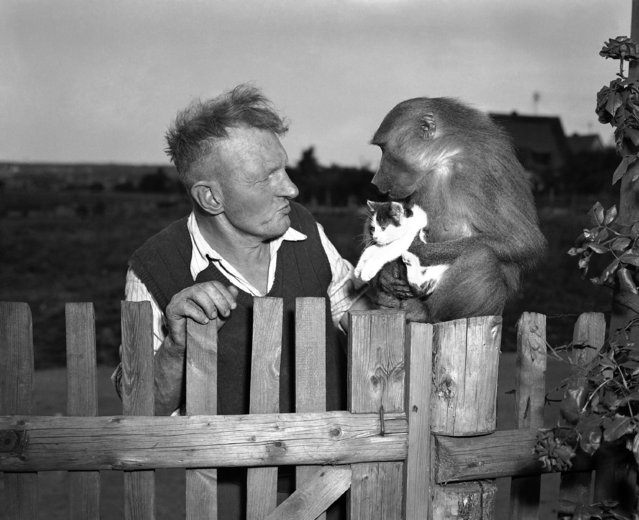
Leonhard Nienbling is shown with his 6-month old pet baboon Jackl, who holds a 6-month old kitten, its playmate, June 29, 1952. Niebling has quite an animal collection at his home in Zirndorf, Germany. (Photo by Heinrich Sanden/AP Photo)

Leonhard Nienbling is shown with his 6-month old pet baboon Jackl, who holds a 6-month old kitten, its playmate, June 29, 1952. Niebling has quite an animal collection at his home in Zirndorf, Germany. (Photo by Heinrich Sanden/AP Photo)
Details
26 Sep 2017 09:08:00