The Prince Albert Cairn, built in 1862 by Queen Victoria, is surrounded by snow and ice, near Balmoral, Aberdeenshire, Scotland, Friday November 22, 2024. (Photo by Jane Barlow/PA Wire via AP Photo)
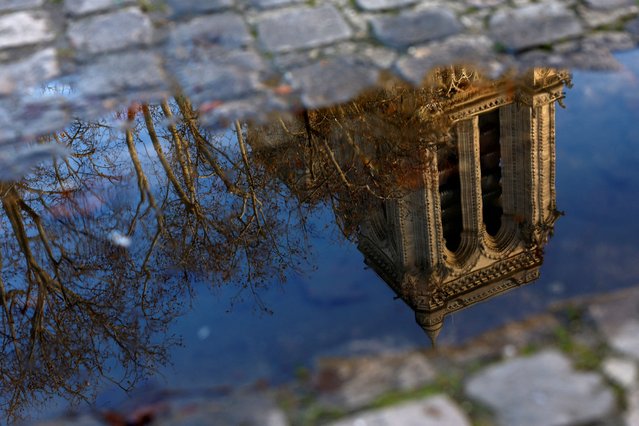
The towers of the Notre-Dame de Paris Cathedral, which was ravaged by a fire in 2019, are reflected in a puddle ahead of the reopening ceremonies, in Paris, France, on December 4, 2024. (Photo by Stephanie Lecocq/Reuters)
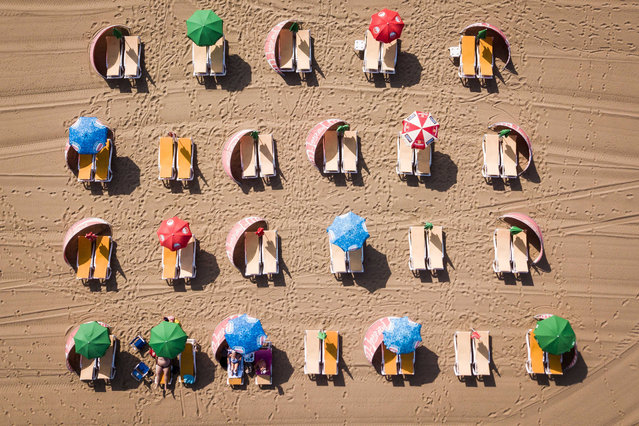
An image taken with a drone shows beach umbrellas and deck chairs as beachgoers enjoy the hot weather in Scheveningen, the Netherlands, 24 July 2019. The Royal Dutch Meteorological Institute has issued an official warning due to high temperatures affecting the country as well as Western Europe. (Photo by Sem van der Wal/EPA/EFE)
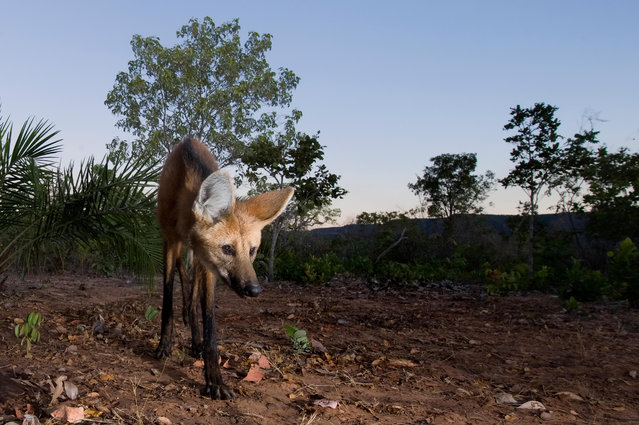
Global wildlife populations will decline by 67% by 2020 unless urgent action is taken to reduce human impact on species and ecosystems, warns the biennial Living Planet Index report from WWF (World Wide Fund for Nature) and ZSL (Zoological Society of London). From elephants to eels, here are some of the wildlife populations most affected by human activity. Here: The maned wolf is among the large mammals in the Brazilian Cerrado that are threatened by the increasing conversion of grasslands into farmland for grazing and growing crops. (Photo by Ben Cranke/Nature Picture Library/Alamy Stock Photo)