Loading...
Done
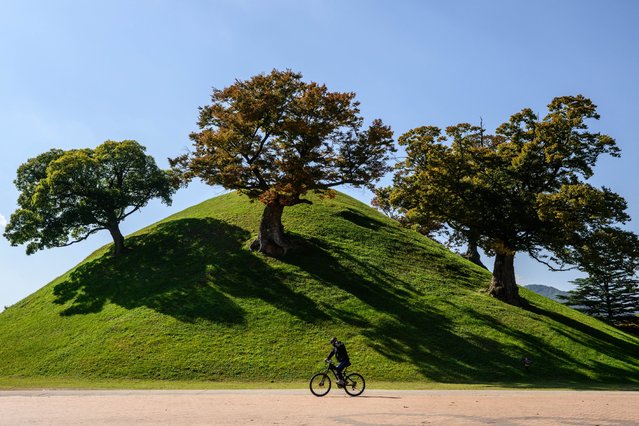
A cyclist rides past a tumulus tomb in Gyeongju, South Korea on November 1, 2025. (Photo by Anthony Wallace/AFP Photo)

A cyclist rides past a tumulus tomb in Gyeongju, South Korea on November 1, 2025. (Photo by Anthony Wallace/AFP Photo)
Details
04 Dec 2025 02:56:00
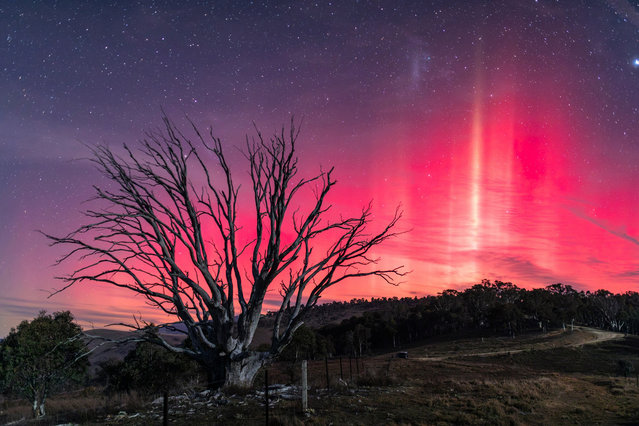
Paul Kerr was able to capture this stunning vista of the aurora australis from Canberra, New Zealand on June 1, 2025. (Photo by Paul Kerr/Hold Still Photography)

Paul Kerr was able to capture this stunning vista of the aurora australis from Canberra, New Zealand on June 1, 2025. (Photo by Paul Kerr/Hold Still Photography)
Details
22 Dec 2025 08:30:00
Fireworks are seen during New Year's celebrations in Tirana, Albania, on December 31, 2024. (Photo by Florion Goga/Reuters)

Fireworks are seen during New Year's celebrations in Tirana, Albania, on December 31, 2024. (Photo by Florion Goga/Reuters)
Details
14 Apr 2026 03:06:00


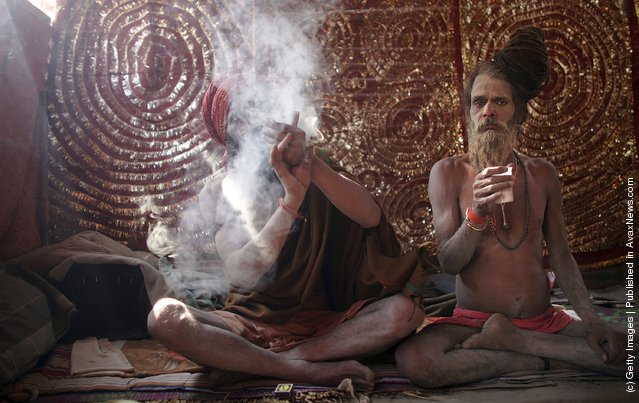
“Kumbh Mela is a mass Hindu pilgrimage in which Hindus gather at the Ganges river. The normal Kumbh Mela is celebrated every 3 years, the Ardh (half) Kumbh Mela is celebrated every six years at Haridwar and Prayag, the Purna (complete) Kumbh takes place every twelve years, at four places (Prayag (Allahabad), Haridwar, Ujjain, and Nashik). The Maha (great) Kumbh Mela which comes after 12 “Purna Kumbh Melas”, or 144 years, is held at Allahabad.

The last Ardh Kumbh Mela was held over a period of 45 days beginning in January 2007, more than 70 million Hindu pilgrims took part in the Ardh Kumbh Mela at Prayag, and on January 15, the most auspicious day of the festival of Makar Sankranti, more than 5 million participated. The previous Maha Kumbh Mela, held in 2001, was attended by around 60 million people, making it at the time the largest gathering anywhere in the world in recorded history”. – Wikipedia

Photo: Sadhus (holy men) smoke at their camp near the ritual site at Sangam, the confluence of the Ganges, Yamuna and mythical Saraswati rivers during the Ardh Kumbh Mela festival (Half Pitcher festival) January 18, 2007 in Allahabad, India. Millions of Hindu pilgrims have flocked to the largest religious gathering in the world which lasts for 45 days in northern India. The festival commemorates the mythical conflict between gods and demons over a pitcher filled with the “nectar of immortality”. Devotees believe that taking a holy dip in the Ganges at this time washes away their sins and paves the path to salvation. (Photo by Mario Tama/Getty Images)
Details
30 Jun 2011 10:27:00
A woman is helped with adorning her hair with jewelry, part of the traditional clothing known as “Pollera”, before the annual Thousand Polleras parade in Las Tablas, in the province of Los Santos January 10, 2015. According to local residents, the Pollera dates back to the 18th century and was worn by the Spanish lower classes. (Photo by Carlos Jasso/Reuters)

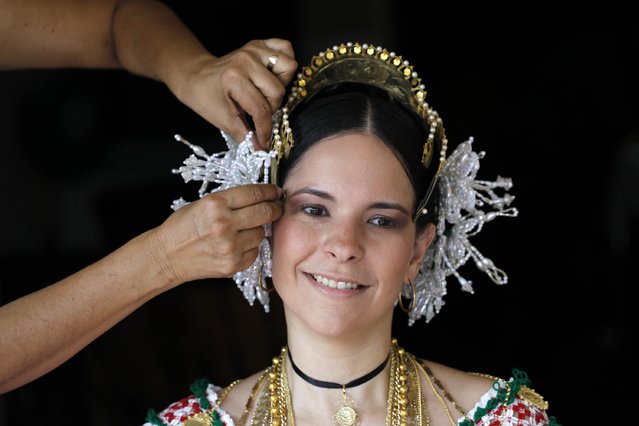
A woman is helped with adorning her hair with jewelry, part of the traditional clothing known as “Pollera”, before the annual Thousand Polleras parade in Las Tablas, in the province of Los Santos January 10, 2015. According to local residents, the Pollera dates back to the 18th century and was worn by the Spanish lower classes. Today, it has become the Panamanian national costume. The dress is made entirely by hand and the jewellery worn is pure gold and worth thousands of dollars. (Photo by Carlos Jasso/Reuters)
Details
12 Jan 2015 15:46:00
In this photo taken Wednesday, April 30, 2014, a dragonfly sits on the nose of a Gharial, rare crocodile-like creatures, in the River Chambal near Bhopepura village in the northern Indian state of Uttar Pradesh. The narrow 250-mile stretch of the Chambal is a place of crocodiles and jackals, of river dolphins and the occasional wolf. Hundreds of species of birds, storks, geese, babblers, larks, falcons and so many more, nest along the river. (Photo by Altaf Qadri/AP Photo)

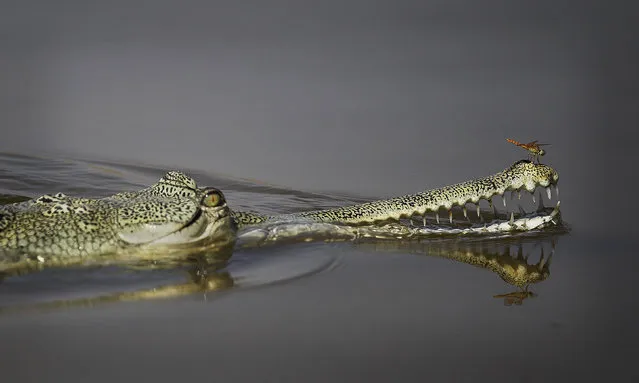
In this photo taken Wednesday, April 30, 2014, a dragonfly sits on the nose of a Gharial, rare crocodile-like creatures, in the River Chambal near Bhopepura village in the northern Indian state of Uttar Pradesh. The narrow 250-mile stretch of the Chambal is a place of crocodiles and jackals, of river dolphins and the occasional wolf. Hundreds of species of birds, storks, geese, babblers, larks, falcons and so many more, nest along the river. Endangered birds lay small speckled eggs in tiny pits they dig in the sandbars. Gharials, rare crocodile-like creatures that look like they swaggered out of the Mesozoic Era, are commonplace here and nowhere else. (Photo by Altaf Qadri/AP Photo)
Details
23 Feb 2015 12:55:00
Members of the Legio X Fretensis (Malta) re-enactment group take part in a display of ancient Roman army life at Fort Rinella in Kalkara, outside Valletta, March 22, 2015. The event “Romanus”, organised by the Malta Heritage Trust, consisted of talks, hands-on displays, static exhibitions of weapons and equipment, food and wine tasting and large-scale re-enactments depicting different forms of Roman warfare in the field. (Photo by Darrin Zammit Lupi/Reuters)

Members of the Legio X Fretensis (Malta) re-enactment group take part in a display of ancient Roman army life at Fort Rinella in Kalkara, outside Valletta, March 22, 2015. The event “Romanus”, organised by the Malta Heritage Trust, consisted of talks, hands-on displays, static exhibitions of weapons and equipment, food and wine tasting and large-scale re-enactments depicting different forms of Roman warfare in the field. (Photo by Darrin Zammit Lupi/Reuters)
Details
23 Mar 2015 10:20:00
A man from the Dani tribe cuts the head of a pig after cooked by traditional way which is use burned hot stones at Obia Village on August 9, 2014 in Wamena, Papua, Indonesia. The stone-age Dani tribe live a traditional existence in the Baliem Valley, which is situated 1600 metres above sea level in the heart of the Cyclops Mountains. (Photo by Agung Parameswara/Getty Images)

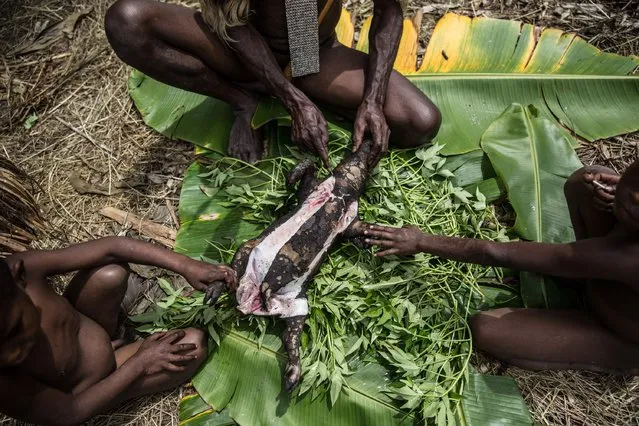
A man from the Dani tribe cuts the head of a pig after cooked by traditional way which is use burned hot stones at Obia Village on August 9, 2014 in Wamena, Papua, Indonesia. The stone-age Dani tribe live a traditional existence in the Baliem Valley, which is situated 1600 metres above sea level in the heart of the Cyclops Mountains. (Photo by Agung Parameswara/Getty Images)
Details
14 Aug 2014 10:30:00