Loading...
Done
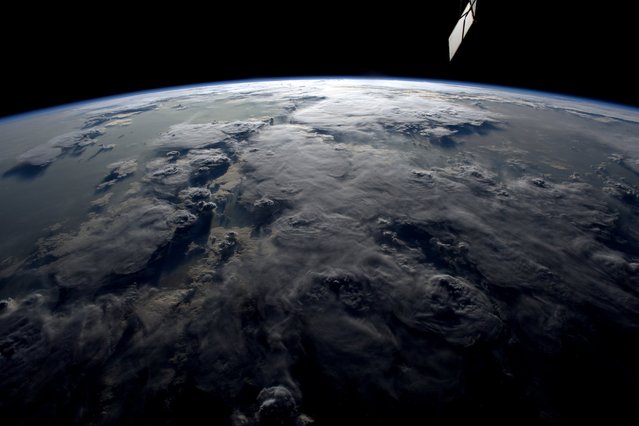
European Space Agency astronaut Tim Peake will return home after a six-month long mission on the International Space Station,on June 18, 2016. Peake was the first British ESA astronaut to visit the ISS and captured hundreds of photographs of the Earth during his mission. Here: “Lots of sun-glint right now during our whole orbit – we haven't seen a sunset for over 3 days”, he wrote. (Photo by Tim Peake/ESA/NASA)

European Space Agency astronaut Tim Peake will return home after a six-month long mission on the International Space Station,on June 18, 2016. Peake was the first British ESA astronaut to visit the ISS and captured hundreds of photographs of the Earth during his mission. Here: “Lots of sun-glint right now during our whole orbit – we haven't seen a sunset for over 3 days”, he wrote. (Photo by Tim Peake/ESA/NASA)
Details
18 Jun 2016 13:08:00
Some of the best entries so far in the 2016 Insight Astronomy Photographer of the Year competition. There are two weeks left to enter, and the winners will be announced in September. Here: Aurora over Laksvatn Fjord, Laksvatn, Norway. The aurora borealis dances in the skies over the town of Laksvatn, with the Milky Way to the left. The image is a single shot with no compositing, only post-processing to bring out the aurora, and some colour corrections. (Photo by Matt Walford/National Maritime Museum)

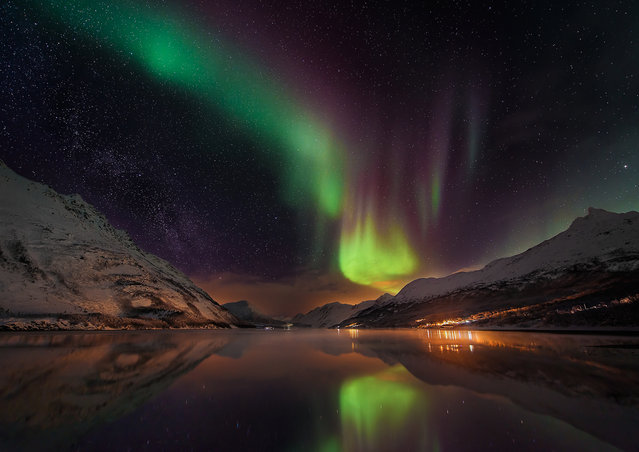
Some of the best entries so far in the 2016 Insight Astronomy Photographer of the Year competition. There are two weeks left to enter, and the winners will be announced in September. Here: Aurora over Laksvatn Fjord, Laksvatn, Norway. The aurora borealis dances in the skies over the town of Laksvatn, with the Milky Way to the left. The image is a single shot with no compositing, only post-processing to bring out the aurora, and some colour corrections. The photographer Matt Walford said: “I love the way the northern lights look like they are just wistfully dancing over the fjord, framed by the mountains on either side”. (Photo by Matt Walford/National Maritime Museum)
Details
01 Jul 2016 12:13:00
In this July 10, 2014 photo, Chris Minore, of Orange, Conn., performs the under chop technique at the Adirondack Woodsmen's School at Paul Smith's College in Paul Smiths, N.Y. Eighteen young students in matching gray sports shirts took part recently in a weeklong crash course on old-school lumberjack skills such as sawing, chopping, ax throwing, log boom running and pole climbing. (Photo by Mike Groll/AP Photo)

In this July 10, 2014 photo, Chris Minore, of Orange, Conn., performs the under chop technique at the Adirondack Woodsmen's School at Paul Smith's College in Paul Smiths, N.Y. Eighteen young students in matching gray sports shirts took part recently in a weeklong crash course on old-school lumberjack skills such as sawing, chopping, ax throwing, log boom running and pole climbing. (Photo by Mike Groll/AP Photo)
Details
20 Jul 2014 11:00:00
Dhofar Region, Oman. Much of Oman is desert, but the Arabian Sea coast in the Dhofar region represents a startling difference in climate. This coastal region catches the monsoon rains, or khareef, during the summer months. Drenching rains fall primarily on the mountainous ridge that separates the lush, fertile areas along the coast from the arid interior, recharging streams, waterfalls and springs that provide plentiful water supplies in the fertile lowlands for the remainder of the year. Image taken by Landsat 5 on April 2, 2005. (Photo by USGS/NASA)

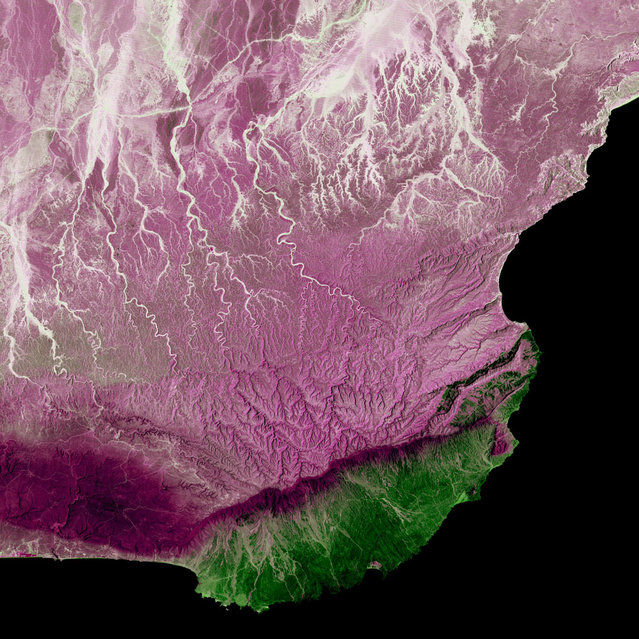
Dhofar Region, Oman. Much of Oman is desert, but the Arabian Sea coast in the Dhofar region represents a startling difference in climate. This coastal region catches the monsoon rains, or khareef, during the summer months. Drenching rains fall primarily on the mountainous ridge that separates the lush, fertile areas along the coast from the arid interior, recharging streams, waterfalls and springs that provide plentiful water supplies in the fertile lowlands for the remainder of the year. Image taken by Landsat 5 on April 2, 2005. (Photo by USGS/NASA)
Details
25 Dec 2012 11:13:00
The aurora borealis, also known as the northern lights, glow in the sky over St Mary's Lighthouse in Whitley Bay on the North East coast, UK on Friday, May 10, 2024. (Photo by Owen Humphreys/PA Images via Getty Images)

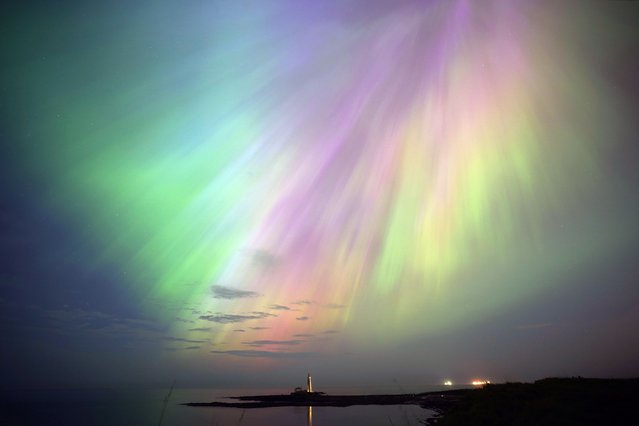
The aurora borealis, also known as the northern lights, glow in the sky over St Mary's Lighthouse in Whitley Bay on the North East coast, UK on Friday, May 10, 2024. (Photo by Owen Humphreys/PA Images via Getty Images)
Details
15 May 2024 05:25:00
The Knights of Middle England equestrian stunt display team perform ahead of the first match on July 13, 2024. The British Beach Polo Championships, or “sand polo”, returns to the exclusive Sandbanks peninsula near Poole, Dorset. Spectators can appreciate the horsemanship, speed and gladiatorial nature of polo at the largest beach polo event in the world. (Photo by Max Willcock/Bournemouth News)

The Knights of Middle England equestrian stunt display team perform ahead of the first match on July 13, 2024. The British Beach Polo Championships, or “sand polo”, returns to the exclusive Sandbanks peninsula near Poole, Dorset. Spectators can appreciate the horsemanship, speed and gladiatorial nature of polo at the largest beach polo event in the world. (Photo by Max Willcock/Bournemouth News)
Details
15 Aug 2024 03:59:00
The queens pose for a photo together during RuPaul's Drag Race S18 Premiere Event at Aqua New York on December 09, 2025 in New York City. (Photo by Santiago Felipe/Getty Images for MTV)

The queens pose for a photo together during RuPaul's Drag Race S18 Premiere Event at Aqua New York on December 09, 2025 in New York City. (Photo by Santiago Felipe/Getty Images for MTV)
Details
19 Dec 2025 09:31:00
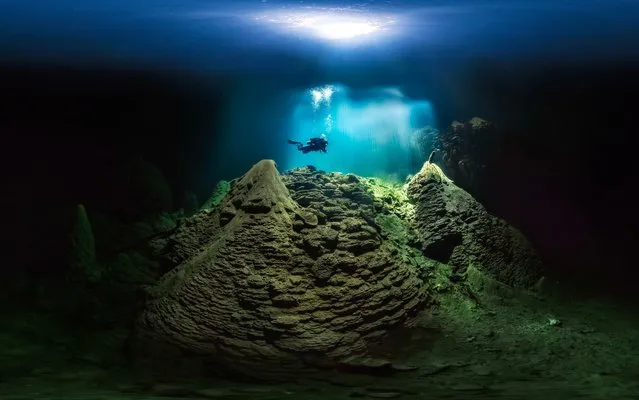
Cave Diver, Anhumas Abyss, Bonito, Brazil: The Anhumas Abyss is an underground cavern with a crystal-clear lake below, more than 260 feet (79 m) deep. A visitor must enter through a narrow opening at the top of the chamber and rappel into the cave. Snorkeling and scuba diving in the lake reveal amazing scenery. Distinctive, conical limestone stalagmites and stalactites occupy the lake and the surrounding area, some reaching 65 feet (20 m) high. “One must rappel about 235 feet (72 m) to get down into this deep lake. The photo was taken at a depth of 50 feet (15 m). It was a challenge to create the image because of the high contrast, plus the diver could not see into the darkness, making communication impossible”. (Photo by Marcio Cabral/Nature’s Best Photography Awards 2017)

Cave Diver, Anhumas Abyss, Bonito, Brazil: The Anhumas Abyss is an underground cavern with a crystal-clear lake below, more than 260 feet (79 m) deep. A visitor must enter through a narrow opening at the top of the chamber and rappel into the cave. Snorkeling and scuba diving in the lake reveal amazing scenery. Distinctive, conical limestone stalagmites and stalactites occupy the lake and the surrounding area, some reaching 65 feet (20 m) high. (Photo by Marcio Cabral/Nature’s Best Photography Awards 2017)
Details
26 Oct 2017 08:10:00