Loading...
Done
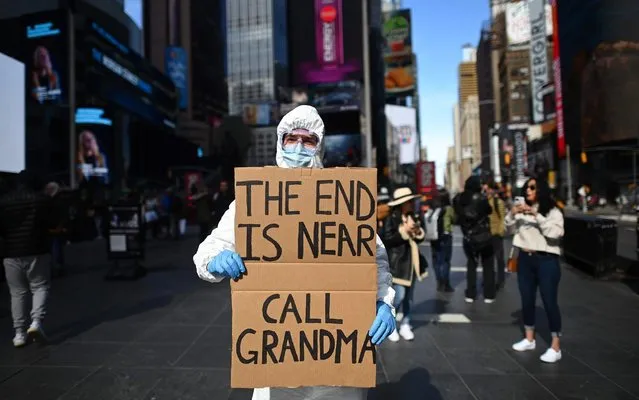
A man wearing a hazmat suit and a mask holds a sign reading “The end is near – call grandma” at Times Square on March 14, 2020 in New York City. The World Health Organization said March 13, 2020 it was not yet possible to say when the COVID-19 pandemic, which has killed more than 5,000 people worldwide, will peak. “It's impossible for us to say when this will peak globally”, Maria Van Kerkhove, who heads the WHO's emerging diseases unit, told a virtual press conference, adding that “we hope that it is sooner rather than later”. (Photo by Johannes Eisele/AFP Photo)

A man wearing a hazmat suit and a mask holds a sign reading “The end is near – call grandma” at Times Square on March 14, 2020 in New York City. The World Health Organization said March 13, 2020 it was not yet possible to say when the COVID-19 pandemic, which has killed more than 5,000 people worldwide, will peak. “It's impossible for us to say when this will peak globally”, Maria Van Kerkhove, who heads the WHO's emerging diseases unit, told a virtual press conference, adding that “we hope that it is sooner rather than later”. (Photo by Johannes Eisele/AFP Photo)
Details
16 Mar 2020 00:07:00
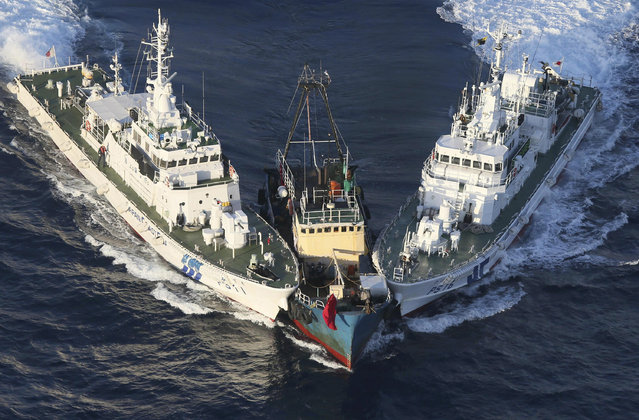
A boat, center, is surrounded by Japan Cost Guard's patrol boats after some activists descended from the boat on Uotsuri Island, one of the islands of Senkaku in Japanese and Diaoyu in Chinese, in East China Sea Wednesday, Aug. 15, 2012. (Photo by Yomiuri Shimbun/Masataka Morita/AP Photo)

A boat, center, is surrounded by Japan Cost Guard's patrol boats after some activists descended from the boat on Uotsuri Island, one of the islands of Senkaku in Japanese and Diaoyu in Chinese, in East China Sea Wednesday, Aug. 15, 2012. Regional tensions flared on the emotional anniversary of Japan's World War II surrender as activists from China and South Korea used Wednesday's occasion to press rival territorial claims, prompting 14 arrests by Japanese authorities. The 14 people had traveled by boat from Hong Kong to the disputed islands controlled by Japan but also claimed by China and Taiwan. (Photo by Yomiuri Shimbun/Masataka Morita/AP Photo)
Details
18 Sep 2012 09:02:00


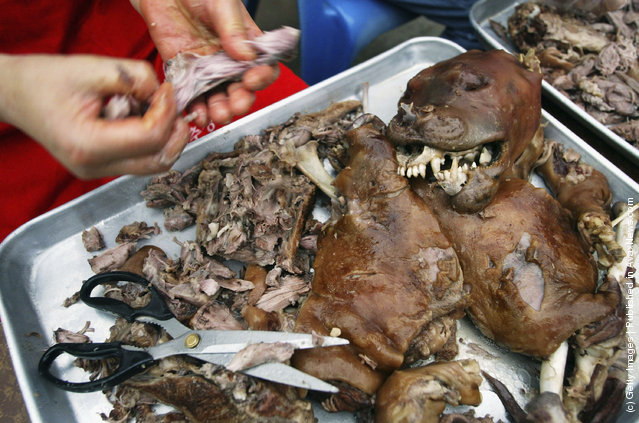
“Dog meat refers to edible parts and the flesh derived from (predominantly domestic) dogs. Human consumption of dog meat has been recorded in many parts of the world, including ancient China, ancient Mexico, and ancient Rome. According to contemporary reports, dog meat is consumed in a variety of countries such as Switzerland, China, Vietnam, the Philippines, and Korea. In addition, dog meat has also been used as survival food in times of war and/or other hardships”. – Wikipedia

Photo: A chef prepares dog meat at a restaurant on July 4, 2005 in Gwacheon, South Korea. Dog meat is a traditional dish in Korea dating back to the Samkuk period (period of the three kingdoms BC 57 – AD 668). Although many recipes existed historically for dog meat, now chefs only make soups, or dishes using boiled or roasted meat. Koreans traditionally eat dog meat on the hottest day of the summer, for it's reputed benefits of virility, invigoration and health. (Photo by Chung Sung-Jun/Getty Images)
Details
24 Jul 2011 13:21:00
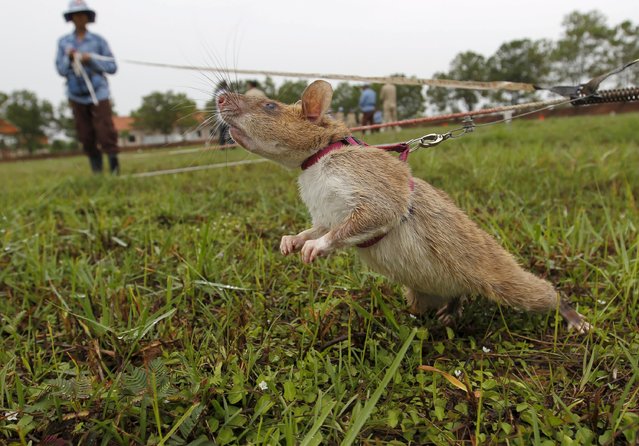
A rat being trained by the Cambodian Mine Action Centre (CMAC) is pictured on an inactive landmine field in Siem Reap province July 9, 2015. Gambian pouched rats were deployed to Cambodia from Tanzania in April by a Belgian non-profit organization, APOPO, to help clear mines. (Photo by Samrang Pring/Reuters)

A rat being trained by the Cambodian Mine Action Centre (CMAC) is pictured on an inactive landmine field in Siem Reap province July 9, 2015. Gambian pouched rats were deployed to Cambodia from Tanzania in April by a Belgian non-profit organization, APOPO, to help clear mines. They've been trained since they were 4 weeks old. Cambodia is still littered with landmines after emerging from decades of civil war, including the 1970s Khmer Rough “Killing Fields” genocide, leaving it with one of the world's highest disability rates. APOPO has used the rodents for mine-clearing projects in several countries, including Angola, Mozambique, Thailand, Laos, and Vietnam. (Photo by Samrang Pring/Reuters)
Details
14 Jul 2015 13:35:00
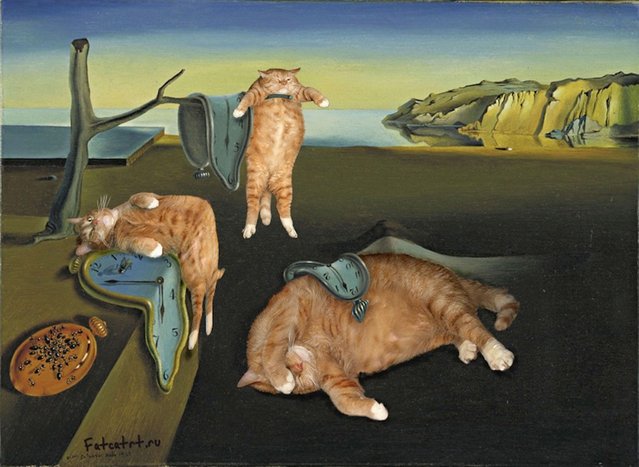
Cats in Art by Russian digital artist Svetlana Petrova. (Photo by Svetlana Petrova/Zarathustra the Cat)

A Russian digital artist Svetlana Petrova has taken her love of cats to the next level – by adding her furry friend to some of the world's greatest artwork. Svetlana has placed photos of her tabby, called Zarathustra, posing alongside the most well-known pieces in history for her UK exhibition. (Photo by Svetlana Petrova/Zarathustra the Cat)
Details
16 Jun 2014 09:58:00
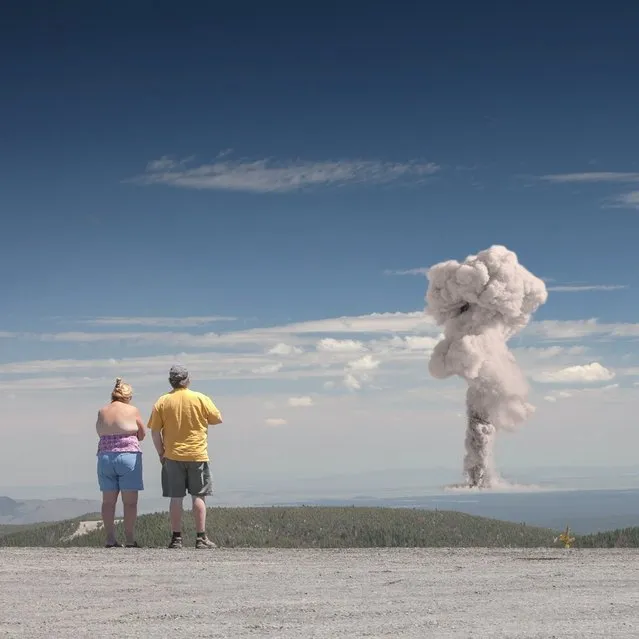
Atomic Overlook by Clay Lipsky

Clay Lipsky has created a great series called Atomic Overlook. The project takes terribly boring scenic shots and combines them with some exciting nuclear testing. “Tourists will line up for anything and I always found humor in vacation destinations that are nothing but a bunch of people looking into a great abyss”, he says. “I understand the allure of a beautiful landscape, but as the world’s population grows so do the lines to view the “nothingness”. Atomic Overlook flips the script on that and gives new purpose to those suntanned masses”. (Photo by Clay Lipsky)
Details
29 Sep 2012 08:27:00
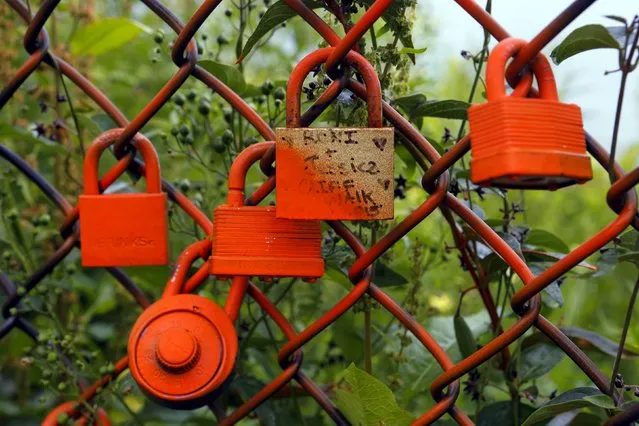
Locks hang on a fence along the Cliff Walk in Newport, Rhode Island July 14, 2015. (Photo by Brian Snyder/Reuters)

Locks hang on a fence along the Cliff Walk in Newport, Rhode Island July 14, 2015. They say the whole world loves a lover, but in Newport, Rhode Island, at least, not everyone is fond of the so-called “love locks” that sweethearts are leaving along the resort city's famed seaside Cliff Walk. Hundreds of the padlocks left behind by tourists as romantic tokens now cover sections of a chain-link fence along the route. Each is meant to represent the bond lovers shared during their visit. By custom, the key is thrown away. (Photo by Brian Snyder/Reuters)
Details
15 Jul 2015 09:48:00
A man performs ablution using water at an old fountain before performing prayers in the old city of Algiers Al Casbah, Algeria December 3, 2015. (Photo by Zohra Bensemra/Reuters)

A man performs ablution using water at an old fountain before performing prayers in the old city of Algiers Al Casbah, Algeria December 3, 2015. The Algiers Casbah is a UNESCO World heritage site that includes the Sidi Ramdane mosque and former fortress, 10 centuries old. Decay from the passing years, as well as earthquake damage in 2003, leads some to consider a move to modern apartments with financial backing from the government. Others refuse to leave a neighbourhood they have called home for decades. (Photo by Zohra Bensemra/Reuters)
Details
22 Jan 2016 11:00:00