Revelers from Grande Rio Samba School perform during the night of the Carnival parade at the Sambadrome, in Rio de Janeiro, Brazil, on February 12, 2024. (Photo by Tita Barros/Reuters)
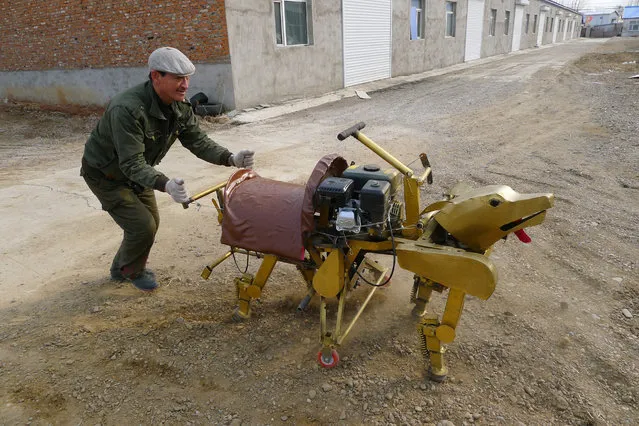
A man presents a self-made robot that local media reported is able to carry a person, in Heihe, Heilongjiang province, China, April 5, 2017. (Photo by Reuters/China Daily)
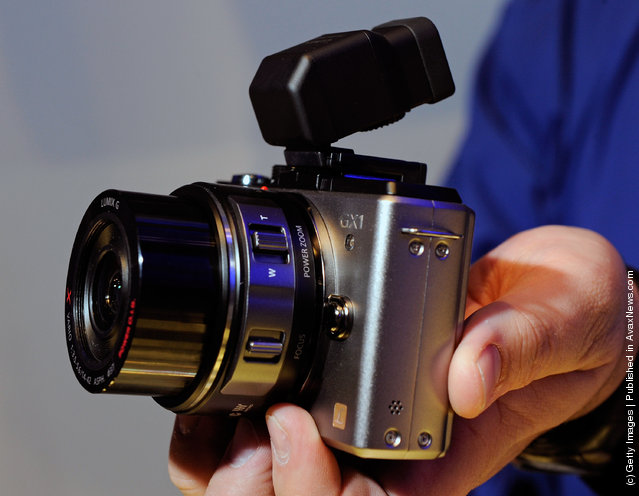
The Lumix GX1 single lens reflex (SLR) camera with 14-42 mm powerzoom lens is displayed at the Panasonic booth at the 2012 International Consumer Electronics Show at the Las Vegas Convention Center January 10, 2012 in Las Vegas, Nevada. The new camera comes with an external viewfinder and flash and an ISO up to 12,800. The camera as shown sells for USD 949; the camera body alone is USD 799. (Photo by Ethan Miller/Getty Images)
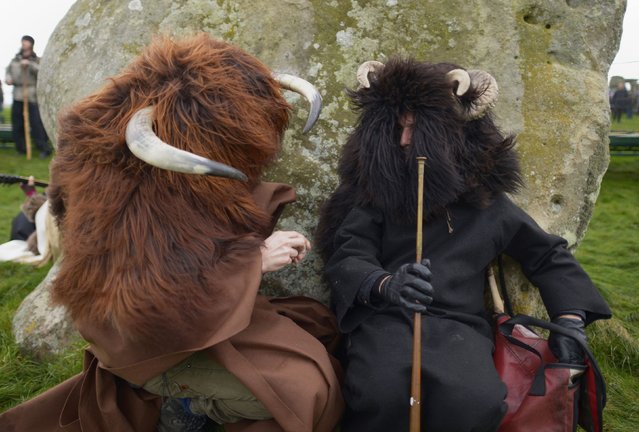
Two people wearing animal costumes join others as people gather to celebrate the Winter Solstice at Stonehenge in England Tuesday December 22, 2015. The winter solstice is celebrated by many people around the world as the beginning of the return of the sun. (Photo by Ben Birchall/PA Wire via AP Photo)
Lilly Caron, 8, of Bridgeton, Maine, Jason Homchick, of San Diego, and Lilly's father Jason Caron, (obscured), ride the Sky Swing at Seacoast Adventure, Thursday, July 14, 2016, in Wyndham, Maine. The 100-foot-tall swing gives riders the combined thrills of sky diving and hang gliding. (Photo by Robert F. Bukaty/AP Photo)
“The Carnival Triumph finally made port on Thursday night, after what should have been an idyllic four-day cruise turned into a grueling week-long ordeal for more than 3,000 passengers and 1,000 crew. Some kissed the ground as they disembarked the ship, while others swore never to go on another cruise again. Many spoke of the well-documented unsanitary conditions on board the 272-metre Triumph, which lost power in the Gulf of Mexico on Sunday”. – Tom Dart and Adam Gabbatt via Guardian
Photo: Kendall Jenkins of Houston kisses the ground after stepping off the Carnival ship Triumph (Photo by AP Photo)
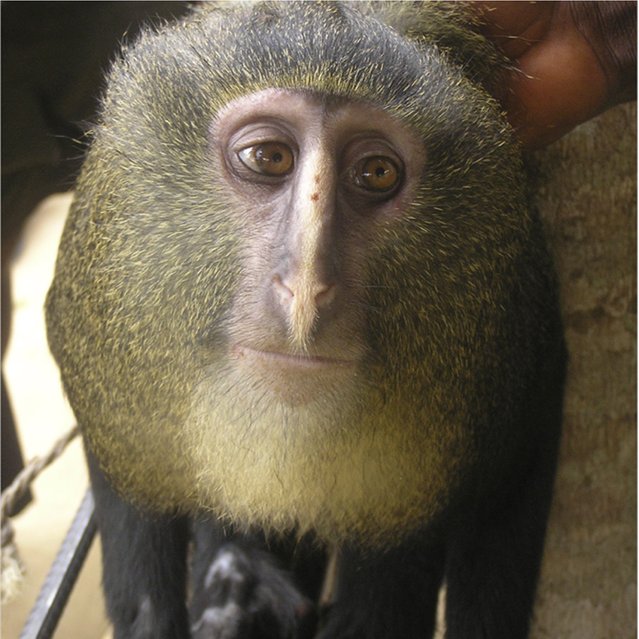
A new species of monkey found in the Democratic Republic of the Congo and identified as Lesula (Cercopithecus lomamiensis) is seen in this undated photograph from an article published September 12, 2012 in the science journal PLOS One. The monkey was first seen in 2007 by researchers John and Terese Hart of the Peabody Museum of Natural History at Yale Research Project. The finding of C. lomamiensis represents only the second new species of African monkey to be discovered in the past 28 years, according to the research article. (Photo by Hart J. A., Detwiler K. M., Gilbert C. C./Reuters)