Loading...
Done
Flying With Umbrella By Adrian Limani

Adrian Limani is an Albanian self-taught photographer,he was born in a small town in Serbia inhabited with Albanians called Presevo.From his childhood he was given after design,technology & multimedia.Adrian Limani have been a photographer almost all his life.
Details
03 Mar 2014 11:58:00
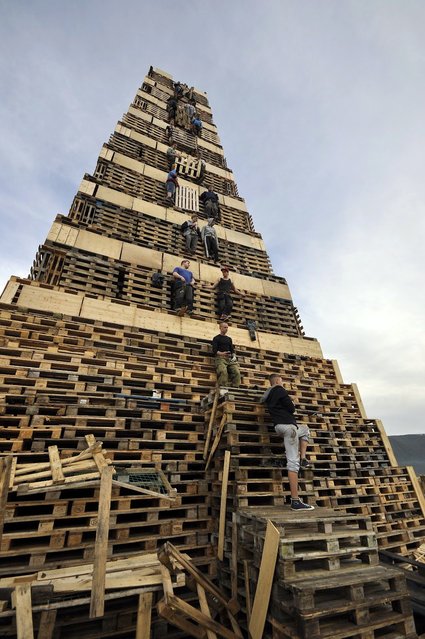
The Biggest Bonfire in the World: Slinningsbålet. Alesund, Norway. (Photo by Trond Folkestad Fredriksen)

“To see the world’s biggest bonfire you’ll have to visit Alesund, Norway, where wood pallets are stacked over 40 meters (131 ft) high on an artificial island”. (Photo by Trond Folkestad Fredriksen)
Details
11 Jan 2013 11:42:00
The 'Famous Political Figures' by Ahmad Kushha

Famous Political Figures by Ahmad Kushha is a series of illustrations that feature world leaders that have been shrunken down to look like cartoon characters with huge eyes.
Details
17 Jun 2013 09:20:00


The Last Bell (we mean the bell that informs the pupils about the beginning or the ending of the lessons) is the traditional feast of the Russian pupils who leave the school. The Last School Bell feast occurs in the end of May, when the school year has already finished, but the final examinations have not begun yet. (Read more...)
Details
02 Jun 2011 13:39:00


Eight-year-old Niu Dongfang trains at the No. 2 Beijing Shuangqiao School January 13, 2005 in Beijing, China. Most of students in the gymnastics school have to study more than five years from as young as age six before they become athletes. (Photo by Guang Niu/Getty Images)
Details
19 Jul 2011 11:25:00
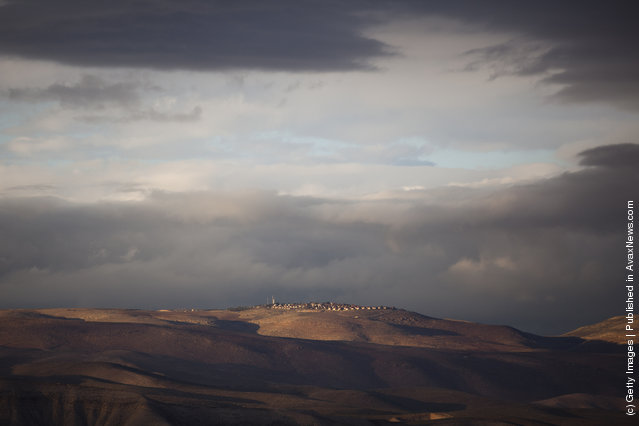
General Views Of Israeli Settlements

A general view of the Israeli settlement of Maale Michmash on January 17, 2012 in the West Bank. Israeli-Palestinian talks have been stalled for more than three years over the issue of Israeli settlement construction. (Photo by Uriel Sinai/Getty Images)
Details
19 Jan 2012 08:53:00
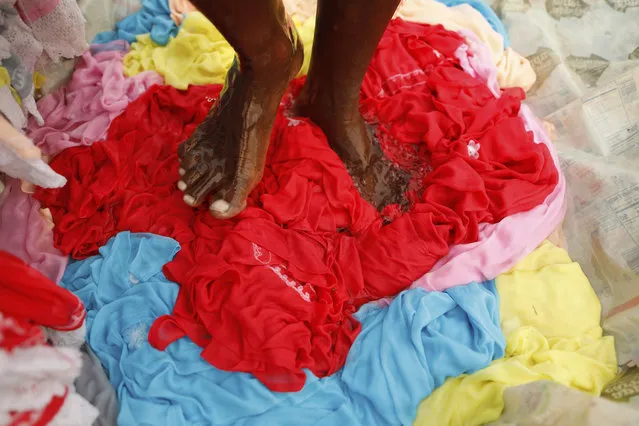
A dhobi, or a washerman washes cloths on the banks of the River Gomti in Lucknow, India, Saturday, September 12, 2020. Dhobis are traditional laundry workers who wash clothes by hand and dry them in the sun, an occupation which has been in existence for generations. Most cities in India have a Dhobi Ghat, or washermen's area, where the city's pile of clothes is laundered. This practice is still popular in India, despite of modern technology. Around 1,000 families work in Lucknow's Dhobi Ghat. However, in light of the novel coronavirus, their wages have decreased drastically. With each family earning around US$100-200 per month. (Photo by Rajesh Kumar Singh/AP Photo)


A dhobi, or a washerman washes cloths on the banks of the River Gomti in Lucknow, India, Saturday, September 12, 2020. Dhobis are traditional laundry workers who wash clothes by hand and dry them in the sun, an occupation which has been in existence for generations. Most cities in India have a Dhobi Ghat, or washermen's area, where the city's pile of clothes is laundered. This practice is still popular in India, despite of modern technology. Around 1,000 families work in Lucknow's Dhobi Ghat. However, in light of the novel coronavirus, their wages have decreased drastically. With each family earning around US$100-200 per month. (Photo by Rajesh Kumar Singh/AP Photo)
Details
25 Sep 2020 00:03:00
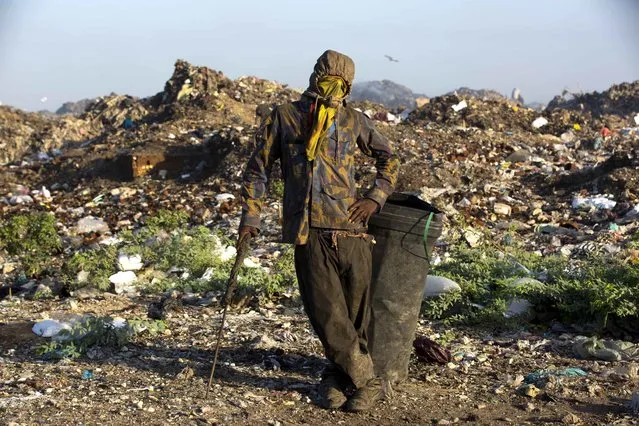
In this August 24, 2018 photo, Changlair Aristide pauses for a portrait, wearing his protective clothing, including an old U.N. peacekeeper's jacket he found in the trash, before scavenging the Truitier landfill in the Cite Soleil slum of Port-au-Prince, Haiti. Before 2004, Aristide recalled having enough money to splurge on shoes, T-shirts and pants, but this year he could not buy his kids anything new for the school year. “Life is like that, up and down”, Aristide said. “They'll go to school anyway, even if I have to sell my pig. I love them”. (Photo by Dieu Nalio Chery/AP Photo)

In this August 24, 2018 photo, Changlair Aristide pauses for a portrait, wearing his protective clothing, including an old U.N. peacekeeper's jacket he found in the trash, before scavenging the Truitier landfill in the Cite Soleil slum of Port-au-Prince, Haiti. Before 2004, Aristide recalled having enough money to splurge on shoes, T-shirts and pants, but this year he could not buy his kids anything new for the school year. “Life is like that, up and down”, Aristide said. “They'll go to school anyway, even if I have to sell my pig. I love them”. (Photo by Dieu Nalio Chery/AP Photo)
Details
03 Oct 2018 00:03:00