Loading...
Done
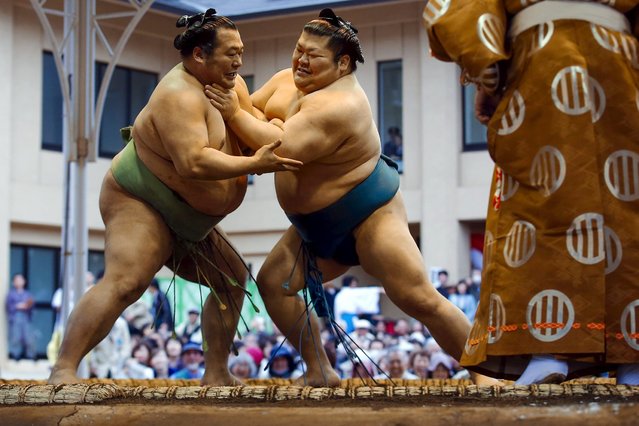
Sumo wrestlers compete during the “Honozumo” ceremonial sumo tournament at the Yasukuni Shrine in Tokyo April 3, 2015. (Photo by Thomas Peter/Reuters)

Sumo wrestlers compete during the “Honozumo” ceremonial sumo tournament at the Yasukuni Shrine in Tokyo April 3, 2015. (Photo by Thomas Peter/Reuters)
Details
21 May 2015 12:11:00
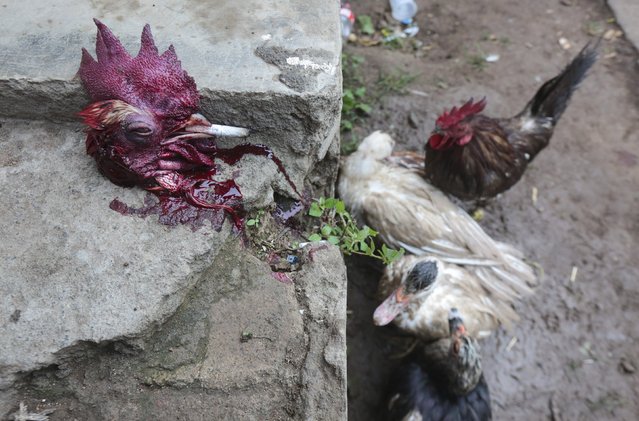
The head of a decapitated rooster is pictured after a rooster run, during celebrations in honour of San Juan Bautista in San Juan de Oriente town, Nicaragua, June 26, 2015. The rooster runs, where horse-riders try to pull the head off live roosters, symbolize the beheading of John the Baptist. (Photo by Oswaldo Rivas/Reuters)

The head of a decapitated rooster is pictured after a rooster run, during celebrations in honour of San Juan Bautista in San Juan de Oriente town, Nicaragua, June 26, 2015. The rooster runs, where horse-riders try to pull the head off live roosters, symbolize the beheading of John the Baptist. (Photo by Oswaldo Rivas/Reuters)
Details
28 Jun 2015 12:45:00
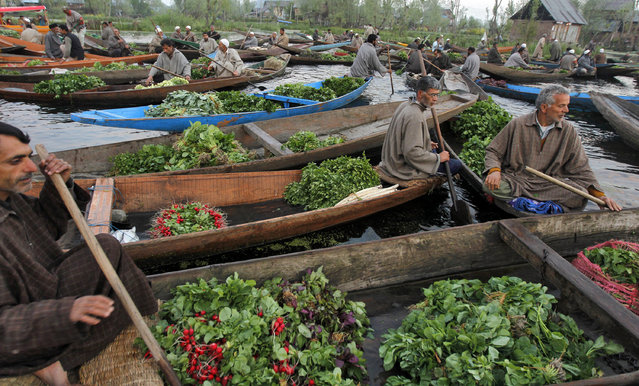
Kashmiri vegetable vendors assemble at a floating market in the interiors of the Dal Lake in Srinagar April 17, 2012. (Photo by Danish Ismail/Reuters)

Kashmiri vegetable vendors assemble at a floating market in the interiors of the Dal Lake in Srinagar April 17, 2012. (Photo by Danish Ismail/Reuters)
Details
03 Jul 2015 13:11:00
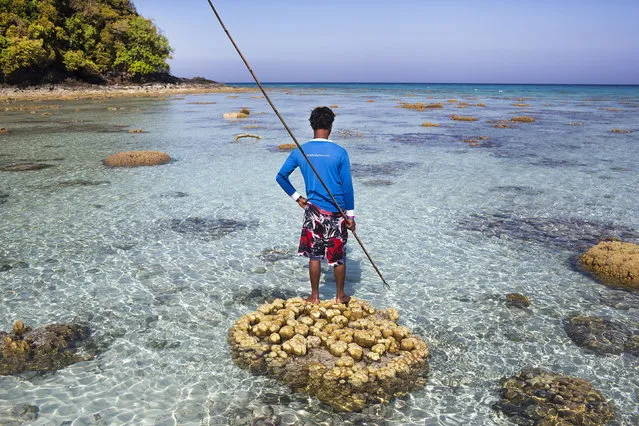
Hook, an indigenous Moken man, holds a three-pronged throwing spear and searches for fish in the waters of Ko Surin National Park. March 1, 2013 – Ko Surin, Thailand. (Photo by Taylor Weidman/zReportage via ZUMA Press)

“For centuries, the Moken sea nomads have traveled the islands between Thailand and Myanmar fishing and foraging for food on the sea floor. Throughout the Mergui Archipelago, Moken migrate in flotillas of Kabangs (traditional boat of the Moken people), stopping at different islands and beaches. Expert freedivers, the Moken have adapted physically to an aquatic life, developing unique characteristics that let them see better and hold their breath longer while underwater”. – Taylor Weidman. Photo: Hook, an indigenous Moken man, holds a three-pronged throwing spear and searches for fish in the waters of Ko Surin National Park. March 1, 2013 – Ko Surin, Thailand. (Photo by Taylor Weidman/zReportage via ZUMA Press)
Details
24 Mar 2014 06:45:00
Vintage G.I. Joe figurers are on display at the 2003 Hasbro International G.I. Joe Collectors' Convention June 27, 2003 in Burlingame, California. Hundreds of G.I. Joe fans from around the country are attending the convention to buy, sell and trade G.I. Joe and military action figures. (Photo by Justin Sullivan/Getty Images)

“G.I. Joe is a line of action figures produced by the toy company Hasbro. The term G.I. stands, in popular usage, for Government Issued and after the First World War became a generic term for U.S. soldiers. The origin of the term dates to World War I, when much of the equipment issued to U.S. soldiers was stamped “G.I.”, meaning that it was made from galvanized iron. The development of G.I. Joe led to the coining of the term “action figure”. G.I. Joe's appeal to children has made it an American icon among toys”. – Wikipedia. Photo: Vintage G.I. Joe figurers are on display at the 2003 Hasbro International G.I. Joe Collectors' Convention June 27, 2003 in Burlingame, California. (Photo by Justin Sullivan/Getty Images)
Details
27 Mar 2014 07:46:00
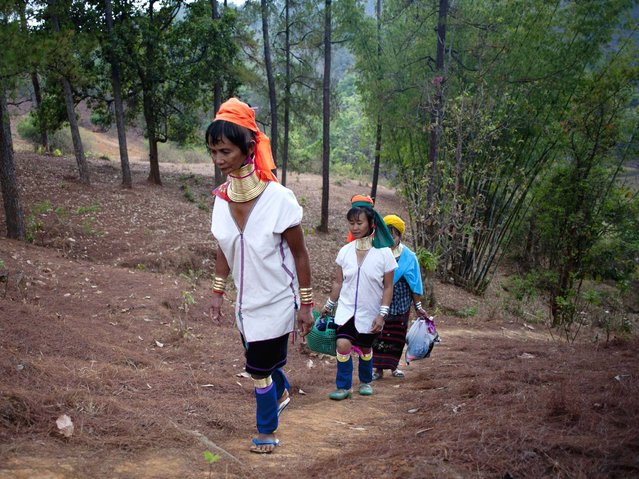
One of the theories says that the coils originate from the desire to look more attractive by exaggerating sexual dimorphism, as women have more slender necks than men. (Photo by Ye Aung Thu/AFP Photo)

This photo taken on April 16, 2014 shows ethnic Kayan women wearing traditional clothes and bronze rings around tbeir neck in Panpet village, Demoso township in Kayah state, eastern Myanmar. Some ethnic Kayan women, also known as Padaung, begin wearing the bronze rings on their neck and legs from a young age. Usually they start wearing six to ten rings when they are five to ten-years-old and then they put on one more ring a year for years after then. (Photo by Ye Aung Thu/AFP Photo)
Details
23 Apr 2014 08:56:00
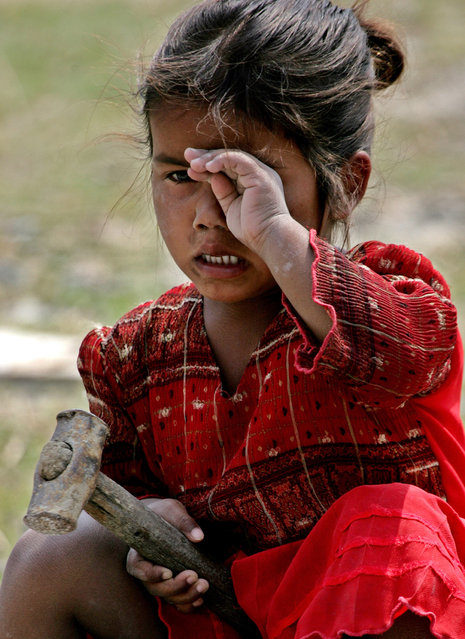
5-year-old Rina Kumari rubs her eye while cracking stones on the banks of Mahananda river in Siliguri, northeast India, March 5, 2005. Over 400 million people in India live below the internationally agreed poverty line (living on less than US $1 per day). According to estimates, several hundred thousand children work as labourers and beg on the streets in India. Photo taken on March 5, 2005. (Photo by Desmond Boylan/Reuters)

5-year-old Rina Kumari rubs her eye while cracking stones on the banks of Mahananda river in Siliguri, northeast India, March 5, 2005. Over 400 million people in India live below the internationally agreed poverty line (living on less than US $1 per day). According to estimates, several hundred thousand children work as labourers and beg on the streets in India. (Photo by Desmond Boylan/Reuters)
Details
13 Jun 2014 12:07:00
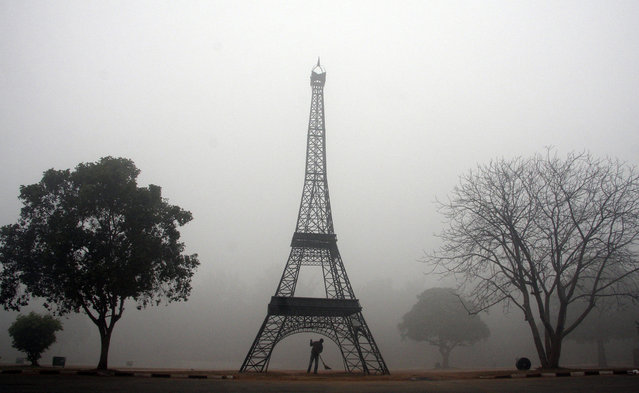
India: A sweeper cleans the side of a road near a replica of the Eiffel Tower amid heavy fog in the early morning in the northern Indian city of Chandigarh January 18, 2010. (Photo by Ajay Verma/Reuters)

India: A sweeper cleans the side of a road near a replica of the Eiffel Tower amid heavy fog in the early morning in the northern Indian city of Chandigarh January 18, 2010. (Photo by Ajay Verma/Reuters)
Details
27 Jun 2014 10:21:00