Loading...
Done
Of all the species affected by river regulation in Australia, the ibis is one of the few that has changed its behaviour and moved to coastal cities. (Photo by Rick Stevens/The Guardian)

Tip turkey, dumpster chook, rubbish raptor – the Australian white ibis goes by many unflattering names. But it is a true urban success story, scavenging to survive in cities across Australia as wetlands have been lost. Wildlife photographer Rick Stevens captured them in Sydney. Here: Of all the species affected by river regulation in Australia, the ibis is one of the few that has changed its behaviour and moved to coastal cities. (Photo by Rick Stevens/The Guardian)
Details
11 Apr 2018 00:03:00
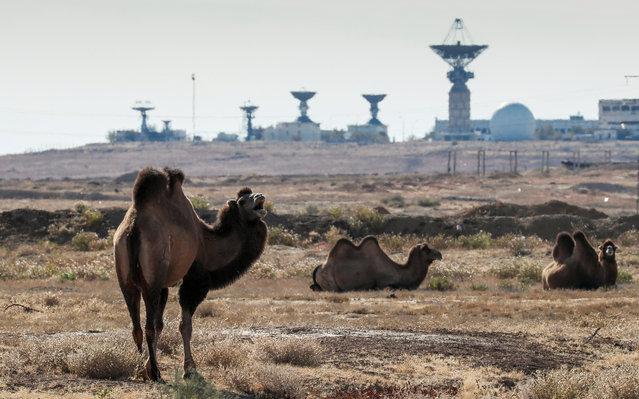
Camels graze in front of a spacecraft tracking station ahead of the Soyuz MS-10 upcoming launch at the Baikonur Cosmodrome, Kazakhstan, October 9, 2018. (Photo by Shamil Zhumatov/Reuters)

Camels graze in front of a spacecraft tracking station ahead of the Soyuz MS-10 upcoming launch at the Baikonur Cosmodrome, Kazakhstan, October 9, 2018. (Photo by Shamil Zhumatov/Reuters)
Details
23 May 2021 07:56:00
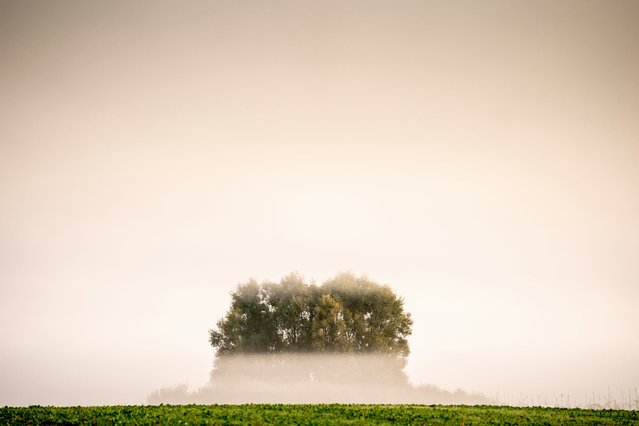
A view of trees shrouded in fog on a late summer morning between Tureby and Slimminge on Zealand, Denmark, 10 September 2021. (Photo by Mads Claus Rasmussen/EPA/EFE)

A view of trees shrouded in fog on a late summer morning between Tureby and Slimminge on Zealand, Denmark, 10 September 2021. (Photo by Mads Claus Rasmussen/EPA/EFE)
Details
12 Nov 2021 08:59:00
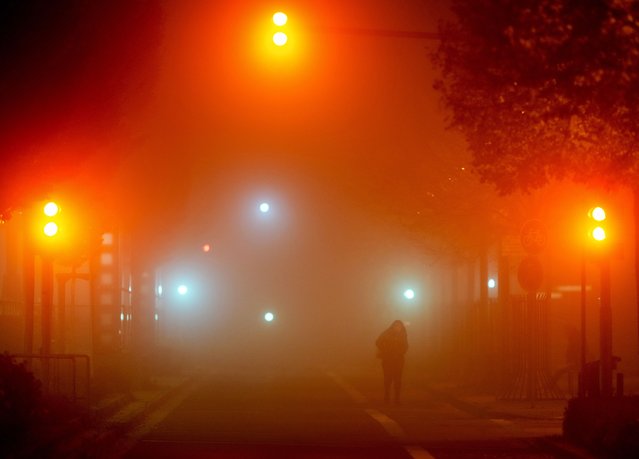
A woman crosses the street on a foggy morning in Frankfurt, Germany, Friday, October 29, 2021. (Photo by Michael Probst/AP Photo)

A woman crosses the street on a foggy morning in Frankfurt, Germany, Friday, October 29, 2021. (Photo by Michael Probst/AP Photo)
Details
01 Jan 2022 08:53:00
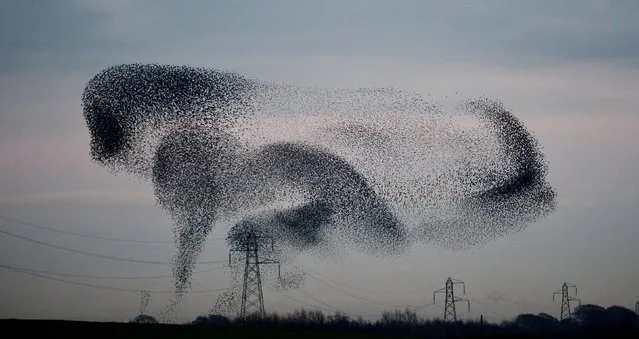
A murmuration of starlings above the  the small village of Rigg, near Gretna, in the Scottish Borders, on November 25, 2013. The weight of the resting birds on power lines caused some power localised power outages in the village. Still one of the commonest of garden birds, its decline elsewhere puts it on the Red List of endangered species. (Photo by Owen Humphreys/PA Wire)

A murmuration of starlings above the the small village of Rigg, near Gretna, in the Scottish Borders, on November 25, 2013. The weight of the resting birds on power lines caused some power localised power outages in the village. Still one of the commonest of garden birds, its decline elsewhere puts it on the Red List of endangered species. (Photo by Owen Humphreys/PA Wire)
Details
27 Nov 2013 11:00:00
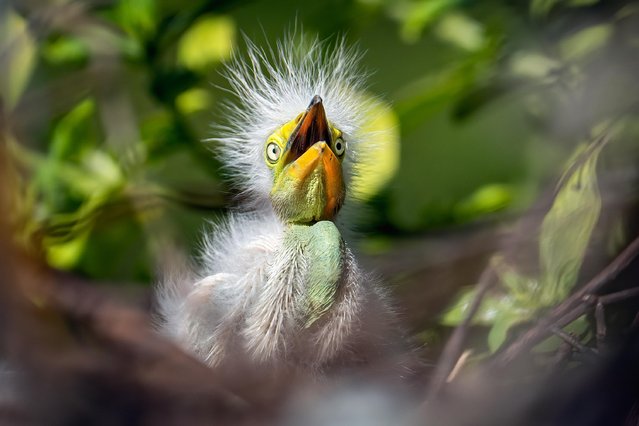
A recently hatched baby Egret bird seen in a nest at the Gatorland Bird Rookery in Kissimmee, Florida on March 17, 2022. Gatorland is known as The Alligator Capital of the World and has a 10 acre natural bird rookery. (Photo by Ronen Tivony/SOPA Images/Rex Features/Shutterstock)

A recently hatched baby Egret bird seen in a nest at the Gatorland Bird Rookery in Kissimmee, Florida on March 17, 2022. Gatorland is known as The Alligator Capital of the World and has a 10 acre natural bird rookery. (Photo by Ronen Tivony/SOPA Images/Rex Features/Shutterstock)
Details
27 Mar 2022 04:57:00
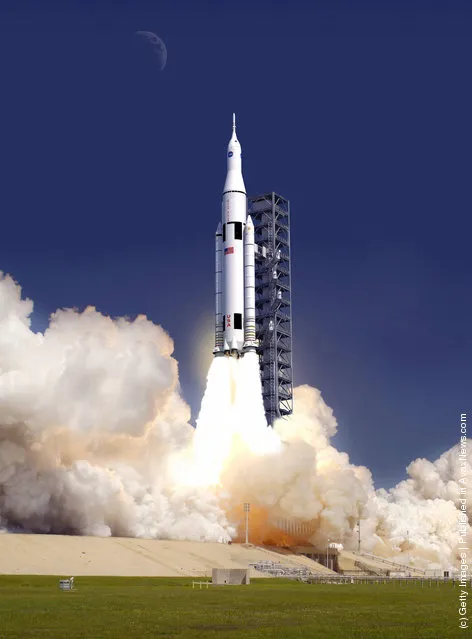
NASA's New Space Launch System

“The Space Launch System, or SLS, is a Shuttle-Derived heavy launch vehicle being designed by NASA, following the cancellation of the Constellation Program, to replace the Space Shuttle after its retirement. The NASA Authorization Act of 2010 envisions the transformation of the Ares I and Ares V vehicle designs into a single launch vehicle usable for both crew and cargo. It is to be upgraded over time with more powerful versions. The proposed SLS is visually similar to the legacy Saturn V booster and in particular the proposed, two-stage, Saturn INT-20”. – Wikipedia

Photo: In this illustration provided by NASA, the design for a new space rocket system, the Space Launch System, is seen. NASA's new rocket design will reportedly cost about $35 billion and be ready to for test launch in 2017. According to NASA, the rocket will be used to carry Orion Multi-Purpose Crew Vehicle as well as cargo and science experiments to earth's orbit, as a backup for the space station and possibly destinations beyond that. (Illustration by NASA via Getty Images)

Details
15 Sep 2011 10:50:00
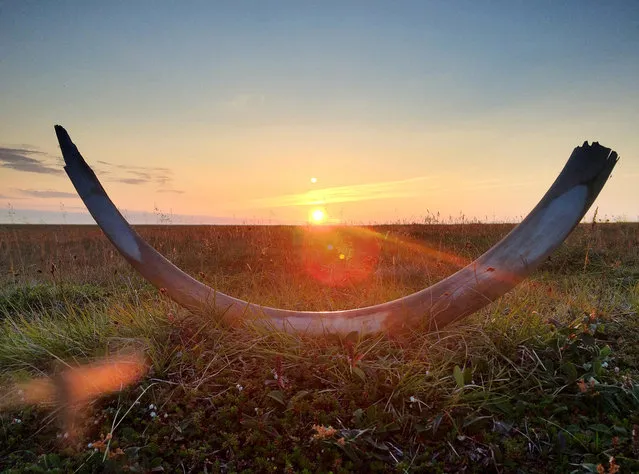
The tusk of a woolly mammoth that lived some 18,000 years ago, from which researchers sequenced the extinct mammal's entire genome, is seen in northeastern Siberia in this photo from 2015. (Photo by Love Dalen/Handout via Reuters)

The tusk of a woolly mammoth that lived some 18,000 years ago, from which researchers sequenced the extinct mammal's entire genome, is seen in northeastern Siberia in this photo from 2015. (Photo by Love Dalen/Handout via Reuters)
Details
09 Jun 2023 02:57:00