Loading...
Done
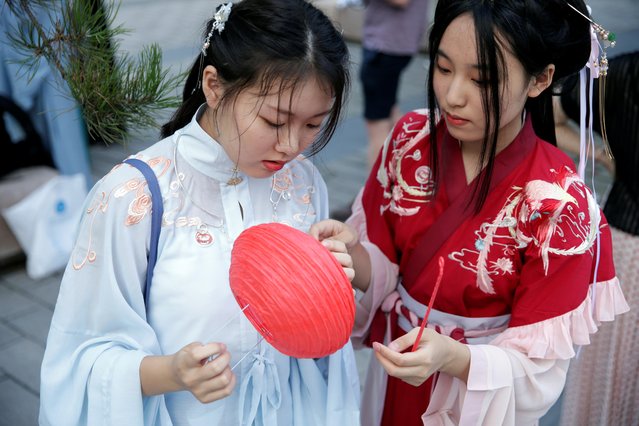
Girls dressed in “Hanfu”, or Han clothing, prepare for an event to mark the traditional Qixi festival, the Chinese equivalent of Valentine's Day, at a park in Beijing, China, August 7, 2019. Chinese for “Han clothing”, “Hanfu” is based on the idea of donning costumes worn in bygone eras by China's dominant Han ethnicity. Some of the most popular styles are from the Ming, Song and Tang dynasties. Hanfu enthusiasts doubled to two million in 2018 from a year earlier, according to a survey by Hanfu Zixun, a popular community account on the Wechat social media platform. (Photo by Jason Lee/Reuters)

Girls dressed in “Hanfu”, or Han clothing, prepare for an event to mark the traditional Qixi festival, the Chinese equivalent of Valentine's Day, at a park in Beijing, China, August 7, 2019. Chinese for “Han clothing”, “Hanfu” is based on the idea of donning costumes worn in bygone eras by China's dominant Han ethnicity. Some of the most popular styles are from the Ming, Song and Tang dynasties. Hanfu enthusiasts doubled to two million in 2018 from a year earlier, according to a survey by Hanfu Zixun, a popular community account on the Wechat social media platform. (Photo by Jason Lee/Reuters)
Details
23 Sep 2019 00:05:00
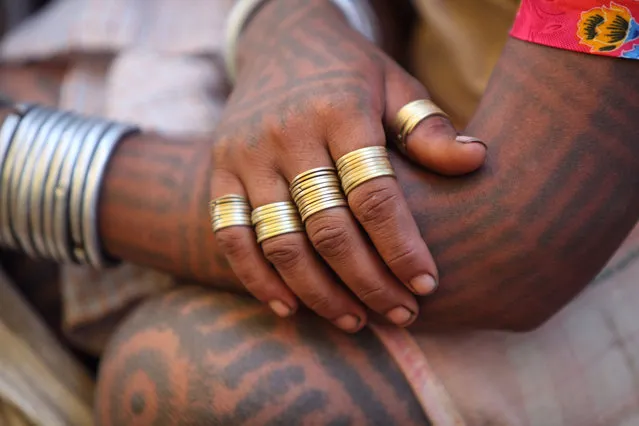
Once applied, the designs are washed using warm water and cow dung. Herbs are applied to promote faster healing. (Photo by Ronny Sen/WaterAid/The Guardian)

For more than 2,000 years, women from the Baiga tribe in the highland district of Dindori, in central India’s Madhya Pradesh state, have been tattooed. Sumintra, 25, from Bona village, has the markings across her forehead, legs and arms. The women who work as tattoo artists are knowledgable about the different types of designs and pigments preferred by various tribes, and their meanings are passed to them by their mothers. The tattooing ‘season’ begins with the approach of winter. (Photo by Ronny Sen/WaterAid/The Guardian)
Details
19 Aug 2017 08:48:00
Security forces' members gesture towards a woman in Santiago, Chile on December 18, 2019. (Photo by Andres Martinez Casares/Reuters)

Security forces' members gesture towards a woman in Santiago, Chile on December 18, 2019. (Photo by Andres Martinez Casares/Reuters)
Details
20 Dec 2019 00:07:00
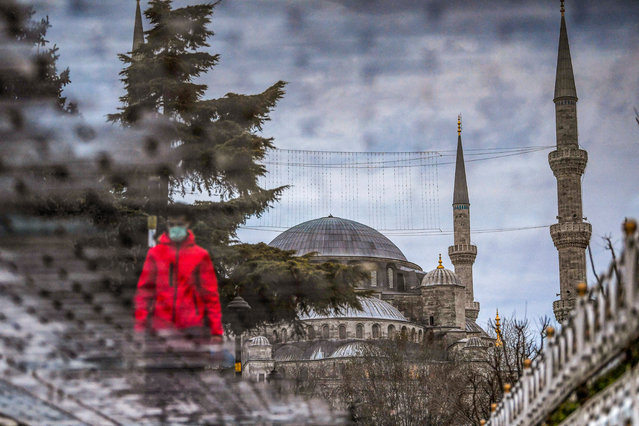
A reflection on waste liquid shows a tourist walking near the Blue mosque at the Sultanahmet Square on the first day of the Muslim fasting month of Ramadan in Istanbul on April 13, 2021. (Photo by Ozan Kose/AFP Photo)

A reflection on waste liquid shows a tourist walking near the Blue mosque at the Sultanahmet Square on the first day of the Muslim fasting month of Ramadan in Istanbul on April 13, 2021. (Photo by Ozan Kose/AFP Photo)
Details
14 May 2021 09:55:00
Autumn colors border a road leading through a small valley near Blankenburg am Harz, Germany, Wednesday, November 1, 2023. (Photo by Matthias Schrader/AP Photo)

Autumn colors border a road leading through a small valley near Blankenburg am Harz, Germany, Wednesday, November 1, 2023. (Photo by Matthias Schrader/AP Photo)
Details
24 Nov 2023 02:39:00
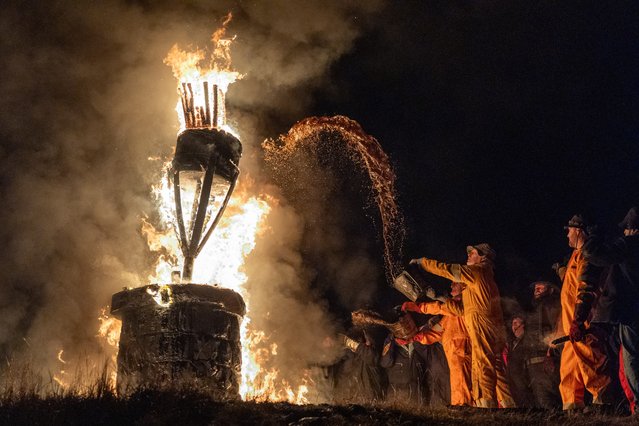
People take part in the Burning of the Clavie fire festival in Burghead, Moray, UK on Saturday, January 11, 2025. Burghead welcomes in the New Year twice each year, on both January 11th and the more traditional January 1st. (Photo by Jane Barlow/PA Images via Getty Images)

People take part in the Burning of the Clavie fire festival in Burghead, Moray, UK on Saturday, January 11, 2025. Burghead welcomes in the New Year twice each year, on both January 11th and the more traditional January 1st. (Photo by Jane Barlow/PA Images via Getty Images)
Details
18 Mar 2025 03:43:00
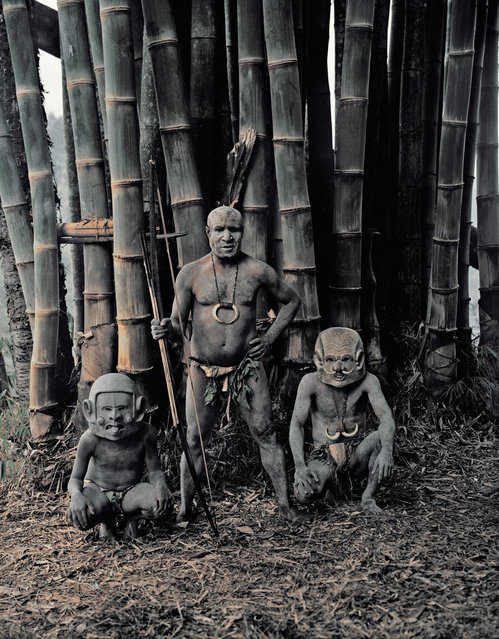
“Asaro from the Eastern Highlands”. The mudmen could not cover their faces with mud because the people of Papua New Guinea thought that the mud from the Asaro river was poisonous. So instead of covering their faces with this alleged poison, they made masks from pebbles that they heated and water from the waterfall, with unusual designs such as long or very short ears either going down to the chin or sticking up at the top, long joined eyebrows attached to the top of the ears, horns and sideways mouths. (Jimmy Nelson)

“Asaro from the Eastern Highlands”. The mudmen could not cover their faces with mud because the people of Papua New Guinea thought that the mud from the Asaro river was poisonous. So instead of covering their faces with this alleged poison, they made masks from pebbles that they heated and water from the waterfall, with unusual designs such as long or very short ears either going down to the chin or sticking up at the top, long joined eyebrows attached to the top of the ears, horns and sideways mouths. (Photo and caption by Jimmy Nelson)
Details
20 Oct 2013 08:54:00
Two race pigs jump over an obstacle during a rural festivity in reference to Maria Ascension in San Bernardino, Switzerland on Monday, August 15 2016.  (Photo by Samuel Golay/Keystone/TI-Press via AP Photo)

Two race pigs jump over an obstacle during a rural festivity in reference to Maria Ascension in San Bernardino, Switzerland on Monday, August 15 2016. (Photo by Samuel Golay/Keystone/TI-Press via AP Photo)
Details
16 Aug 2016 10:08:00