Members of staff demonstrate a form of massage using pythons at Bali Heritage Reflexology and Spa on October 27, 2013 in Jakarta, Indonesia. The snake spa offers a unique massage treatment which involves having several pythons placed on the customers body. The movement of the snakes and the adrenaline triggered by fear is said to have a positive impact on the customers metabolism. (Photo by Ulet Ifansasti/Getty Images)
Visitors look on as a man (front) inserts two live snakes through his nose and mouth during a performance at an amusement park to celebrate the 65th anniversary of the founding of the People's Republic of China and the 7-day national day holiday, in Jinhua, Zhejiang province October 1, 2014. (Photo by Reuters/Stringer)
A man is seen wrapped with pythons, some which include the Albino Burmese Python, as part of a show celebrating the coming Year of the Snake in the Chinese calendar, while spectators look on, in Malabon city, north of Manila, Philippines, December 28, 2012. (Photo by Romeo Ranoco/Reuters)
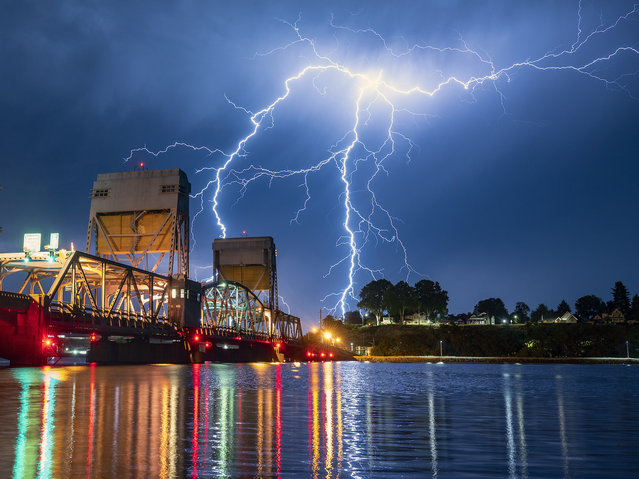
A bolt of lighting strikes over Lewiston, Idaho, behind the Interstate Bridge that spans the Snake River into Clarkston, Wash., on the morning of Thursday, July 1, 2021. Multiple thunderstorms moved through the area on Wednesday evening into Thursday morning. (Photo by Pete Caster/Lewiston Tribune via AP Photo)
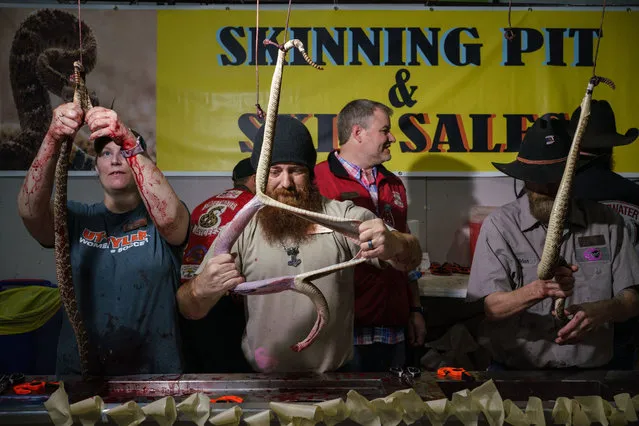
Volunteers skin western diamondback rattlesnakes during the 2021 Rattlesnake Roundup at the Nolan County Coliseum in Sweetwater, Texas on March 13, 2021. The town of Sweetwater holds the largest rattlesnake roundup in the world, launched in 1958 with the sole purpose of getting rid of rattlesnakes, killing an average of 5,000 pounds of snake each year. (Photo by Paul Ratje/AFP Photo)
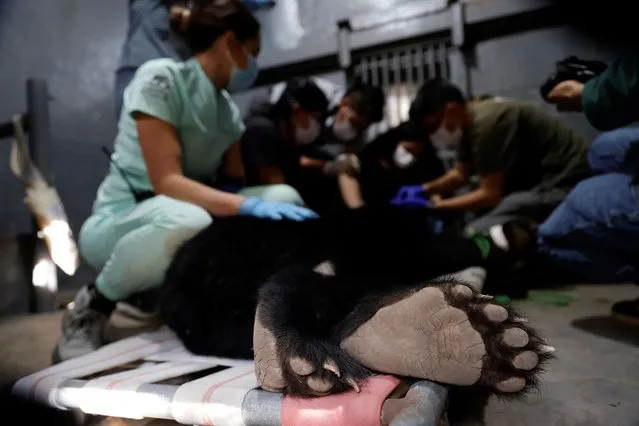
Veterinarians and biologists from the Quito Zoo and the Andean Condor Foundation fit a tracking collar that juvenile Andean bear Tupak will wear for the next four years, prior to his reintroduction into the wild, after the bear's life was deemed in danger due to proximity to humans, in Quito, Ecuador on March 31, 2024. (Photo by Karen Toro/Reuters)
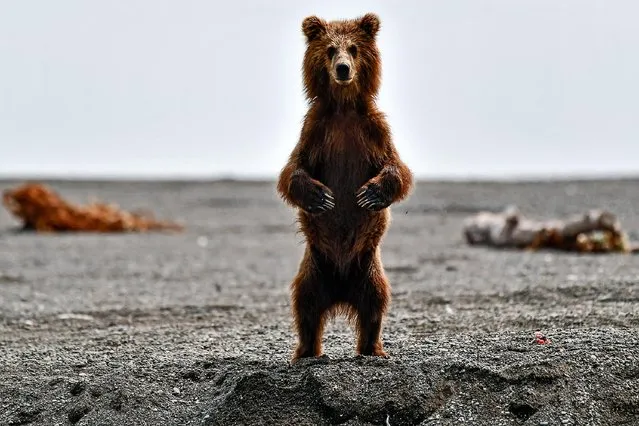
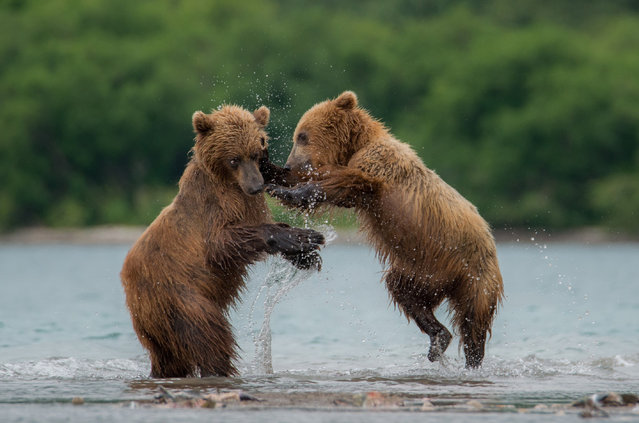
Kamchatka brown bears at Kurile Lake in Kamchatka peninsula’s volcanic terrain, Russia on August, 2017. Kamchatka brown bears are generally not dangerous to humans, and only 1% of encounters result in attack. (Photo by Igor Ivanko/Anadolu Agency/Getty Images)