Loading...
Done
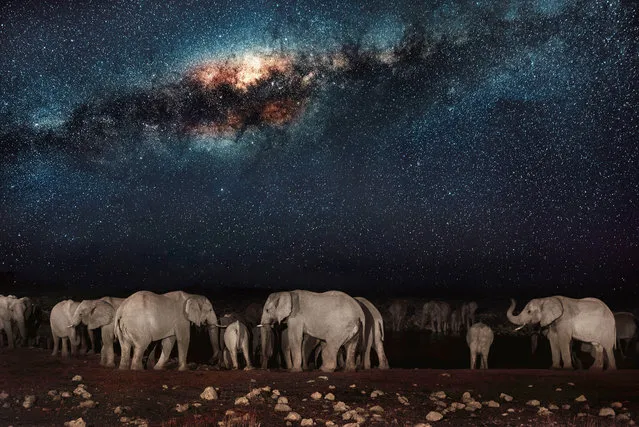
This watering hole is the social hub of the veldt; the scrubby grasslands that stretch across Namibia. The scorched earth supports sometimes fragile populations of magnificent wildlife – from endangered predators to plentiful herds of game. But these gentle giraffes and elephants need to be careful: lions don’t sleep at night, they hunt! The spectacular starscape above southern Africa is unchanged since explorers first mapped the continent. The photographer, Pietro Olivetta from Italy, said he had to be patient to capture these shots – but it was worth the wait. (Photo by Pietro Olivetta/Caters News)

This watering hole is the social hub of the veldt; the scrubby grasslands that stretch across Namibia. The scorched earth supports sometimes fragile populations of magnificent wildlife – from endangered predators to plentiful herds of game. But these gentle giraffes and elephants need to be careful: lions don’t sleep at night, they hunt! The spectacular starscape above southern Africa is unchanged since explorers first mapped the continent. The photographer, Pietro Olivetta from Italy, said he had to be patient to capture these shots – but it was worth the wait. (Photo by Pietro Olivetta/Caters News)
Details
20 Feb 2017 00:05:00
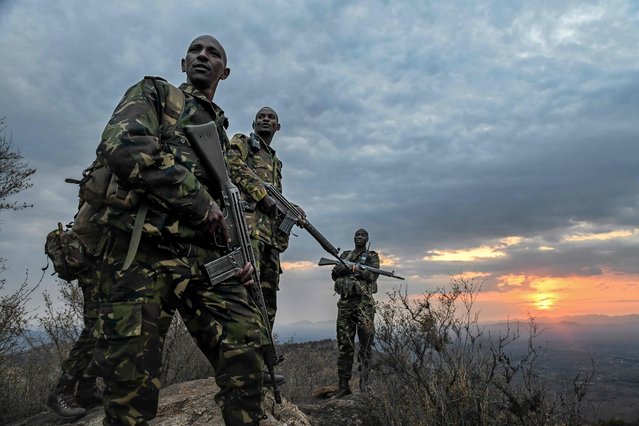
Armed officers of Lewa Wildlife Conservancy's (LWC) anti-poaching unit look out from a ridge at dawn in Meru, on July 31, 2021, as they wind up their nightly security patrol against poaching and illegal incursions into the conservancy. Despite the global condemnation of poaching and the resources that have been mobilised to safeguard endangered wildlife, well-funded and well-equipped poaching groups continue to pose a real threat to Africa’s wildlife. (Photo by Tony Karumba/AFP Photo)

Armed officers of Lewa Wildlife Conservancy's (LWC) anti-poaching unit look out from a ridge at dawn in Meru, on July 31, 2021, as they wind up their nightly security patrol against poaching and illegal incursions into the conservancy. Despite the global condemnation of poaching and the resources that have been mobilised to safeguard endangered wildlife, well-funded and well-equipped poaching groups continue to pose a real threat to Africa’s wildlife. (Photo by Tony Karumba/AFP Photo)
Details
19 Aug 2021 09:19:00
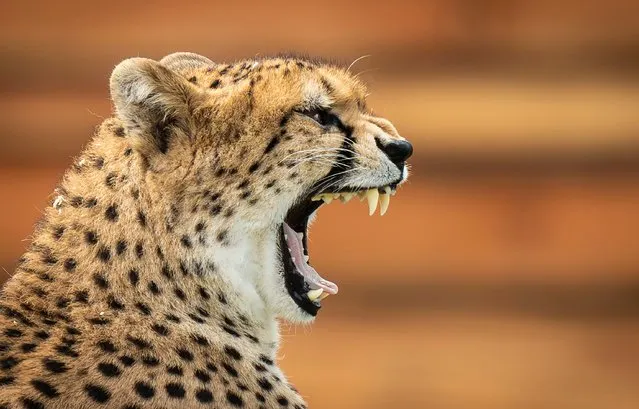
Cheetah Darcy enjoys her newly-developed Cheetah Territory that covers 10,000 square at Yorkshire Wildlife Park, near Doncaster, UK on Wednesday, August 16, 2023. Darcy, who is four-years-old, travelled from Ireland's Fota Wildlife Park to YWP last week where she will be joined by 13-year-old male Brooke who is on his way from the Bristol Zoo Project as a recommendation by the European Endangered Species Programme. (Photo by Danny Lawson/PA Images via Getty Images)

Cheetah Darcy enjoys her newly-developed Cheetah Territory that covers 10,000 square at Yorkshire Wildlife Park, near Doncaster, UK on Wednesday, August 16, 2023. Darcy, who is four-years-old, travelled from Ireland's Fota Wildlife Park to YWP last week where she will be joined by 13-year-old male Brooke who is on his way from the Bristol Zoo Project as a recommendation by the European Endangered Species Programme. (Photo by Danny Lawson/PA Images via Getty Images)
Details
27 Aug 2023 03:23:00
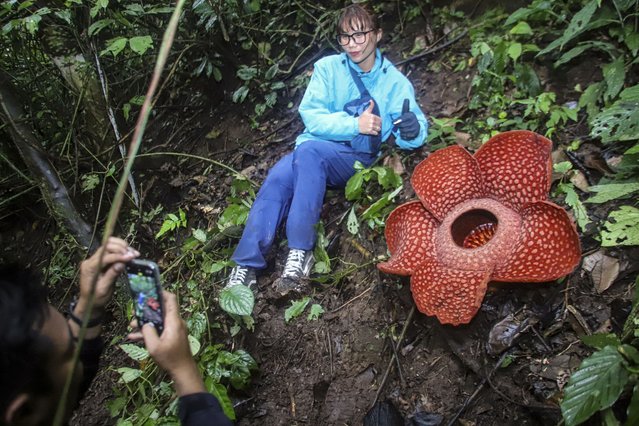
A woman poses for a photo with the Rafflesia Arnoldii flower at Palupuah Forest, Agam District, West Sumatra, Indonesia on September 16, 2024. Palupuh forest is located at an altitude of 975 meters above sea level, with temperatures reaching 18-20 degrees Celsius. According to The West Sumatera Nature Conservation Agency (BKSDA), in the province of West Sumatra there are 36 points where this endangered flower grows. (Photo by Adi Prima/Anadolu via Getty Images)

A woman poses for a photo with the Rafflesia Arnoldii flower at Palupuah Forest, Agam District, West Sumatra, Indonesia on September 16, 2024. Palupuh forest is located at an altitude of 975 meters above sea level, with temperatures reaching 18-20 degrees Celsius. According to The West Sumatera Nature Conservation Agency (BKSDA), in the province of West Sumatra there are 36 points where this endangered flower grows. (Photo by Adi Prima/Anadolu via Getty Images)
Details
07 Oct 2024 02:44:00
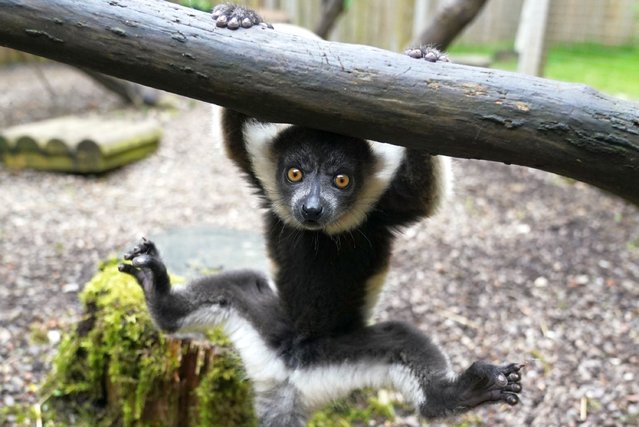
One of two black-and-white ruffed lemur pups born at Blair Drummond Safari and Adventure Park, near Stirling, UK on Friday, May 24, 2024.The critically endangered lemur pups, both female were born on April 14 and have been named Nova, meaning “new” and Evie meaning “life”. (Photo by Andrew Milligan/PA Images via Getty Images)

One of two black-and-white ruffed lemur pups born at Blair Drummond Safari and Adventure Park, near Stirling, UK on Friday, May 24, 2024.The critically endangered lemur pups, both female were born on April 14 and have been named Nova, meaning “new” and Evie meaning “life”. (Photo by Andrew Milligan/PA Images via Getty Images)
Details
04 Oct 2025 04:29:00
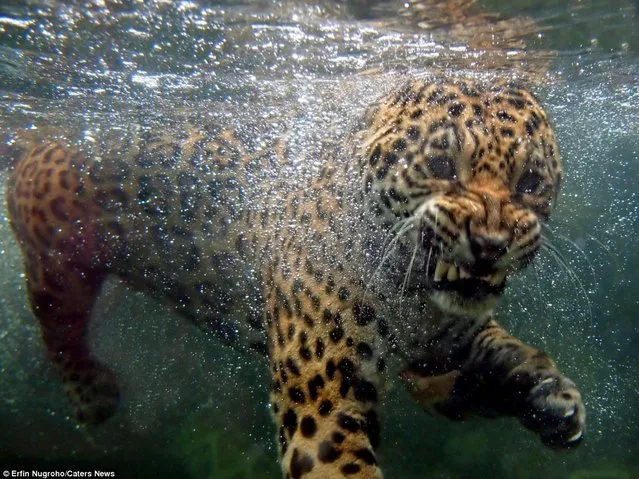
Hungry Rare Jaguar Swims For His Supper

“Most cats run away at the first sign of water but this jaguar shows that some just love to make a splash. The fierce-looking feline was spotted doing an impressive moggy paddle as it swam for meat at Taman Safari in Indonesia. The spectacular shots were captured by professional photographer, Erfin Nugroho, who was visiting the centre for endangered animals with his family”. – Richard Hartley-Parkinson. (Photo by Erfin Nugroho/Caters News)
Details
18 Apr 2012 11:49:00
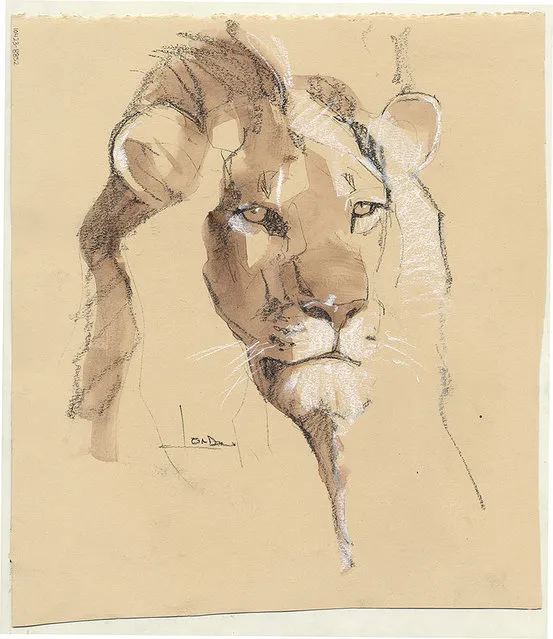
Drawing By Anne London

Anne London found her focus at the age of 19 while working for Tippi Hedren, founder of Shambala , a refuge for big cats, elephants and other species located in California. There, as she walked among the animals, she realized that the commercial art field was not for her, and she dedicated her life to bringing about awareness of the plight of endangered wildlife across the globe, and raising money for conservation efforts.
Details
29 May 2014 06:59:00
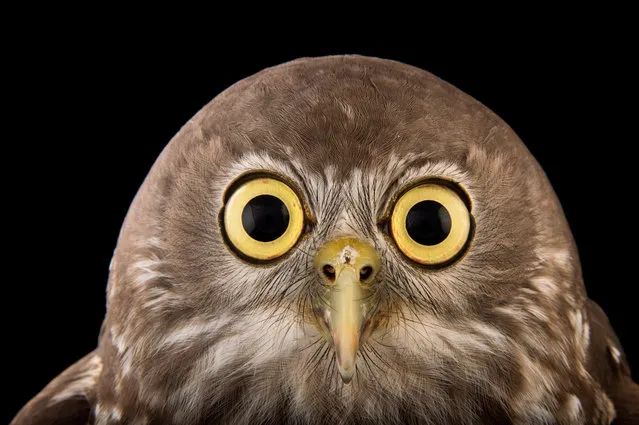
The National Geographic Photo Ark is a travelling exhibition of photographer Joel Sartore’s quest to create a photo archive of biodiversity around the world. So far, Sartore has captured studio portraits of more than 6,000 species – a number that he hopes to double. On 1 July, the ark will open at Melbourne zoo – the first time it has been exhibited in the southern hemisphere. More than 50 portraits will be on display, including many of Australian endangered animals being protected by programs at the zoo itself. These captions have been edited from text supplied by Melbourne zoo. Here: Barking owl. So-named because its call sounds like a barking dog, these birds are native to Australia, Indonesia and Papua New Guinea. In Victoria they are listed as an endangered species, and in 2003 there were estimated to be fewer than 50 breeding pairs. The main threat to the species in Victoria is loss of habitat, especially large trees with hollows in which they can nest and on which many of their prey depend. Apart from a bark, they may utter a chilling scream when they feel threatened. (Photo by Joel Sartore/National Geographic Photo Ark/The Guardian)

The National Geographic Photo Ark is a travelling exhibition of photographer Joel Sartore’s quest to create a photo archive of biodiversity around the world. So far, Sartore has captured studio portraits of more than 6,000 species – a number that he hopes to double. On 1 July, the ark will open at Melbourne zoo – the first time it has been exhibited in the southern hemisphere. More than 50 portraits will be on display, including many of Australian endangered animals being protected by programs at the zoo itself. These captions have been edited from text supplied by Melbourne zoo. Here: Barking owl. (Photo by Joel Sartore/National Geographic Photo Ark/The Guardian)
Details
01 Jul 2017 07:45:00