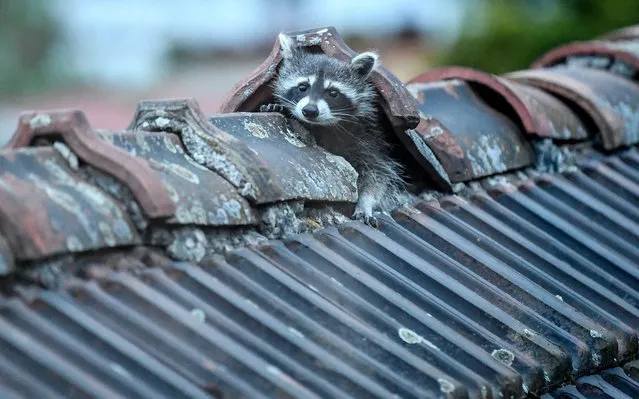
A raccoon crawls out of its hiding place on the roof in Berlin, Germany on May 12, 2020. Every evening he leaves his sleeping place to go in search of food. (Photo by Britta Pedersen/dpa-Zentralbild/dpa)
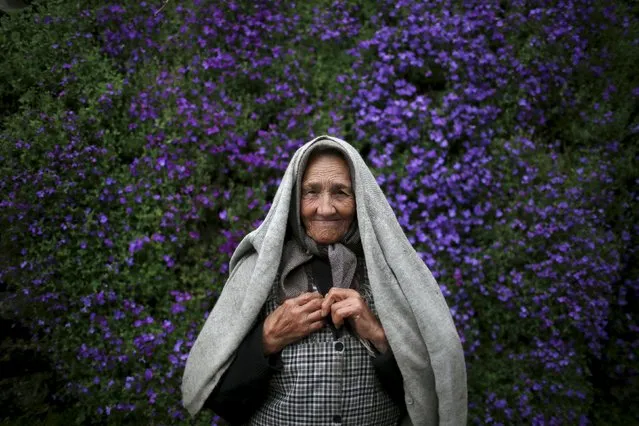
Zulmira Jesus poses for a portrait at a street in Povoa de Agracoes, near Chaves, Portugal April 19, 2016. In the villages of Agracoes and Povoa de Agracoe, the steady drip-drip of emigration has brought down population numbers from more than 50 residents to fewer than a dozen each. These remaining villagers share the same glum acceptance that, after they have gone, their villages will die out too. It is the same desolate picture in scores of other backwater settlements in Portugal's interior, north to south. (Photo by Rafael Marchante/Reuters)
Boats of fishermen are seen on the dried Poopo lakebed in the Oruro Department, south of La Paz, Bolivia, December 17, 2015. Lake Poopo in Bolivia, the Andean nation's formerly second largest after the famed Titicaca, has dried up entirely. With the water now gone, animals have died off in the millions, according to studies. And the local families, having lost much of their sustenance, have been forced to migrate. (Photo by David Mercado/Reuters)
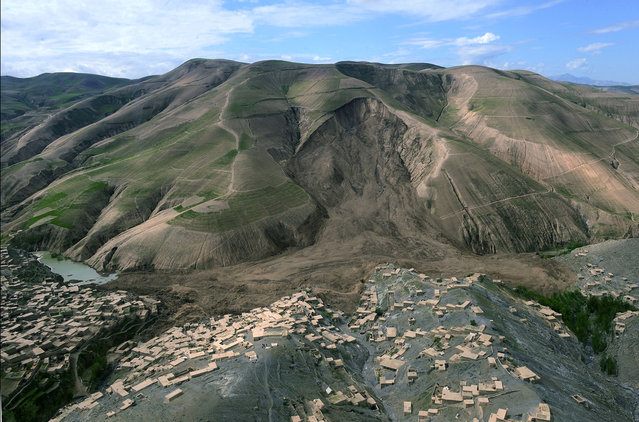
Last Friday, in Afghanistan's mountainous northeastern province of Badakhshan, an enormous landslide took place, burying much of a small village, and killing hundreds. Officials say that at least 300 residents of Abi Barik village were killed, but are uncertain about exact numbers, cautioning that the final number could be 500 or more. Rescue teams gave up hope on Saturday of finding any survivors, focusing energy on helping the hundreds suddenly made homeless. Many of the surviving families have struggled to get aid. Some have gone to nearby villages to stay with relatives or friends, while others have slept in tents provided by aid groups.
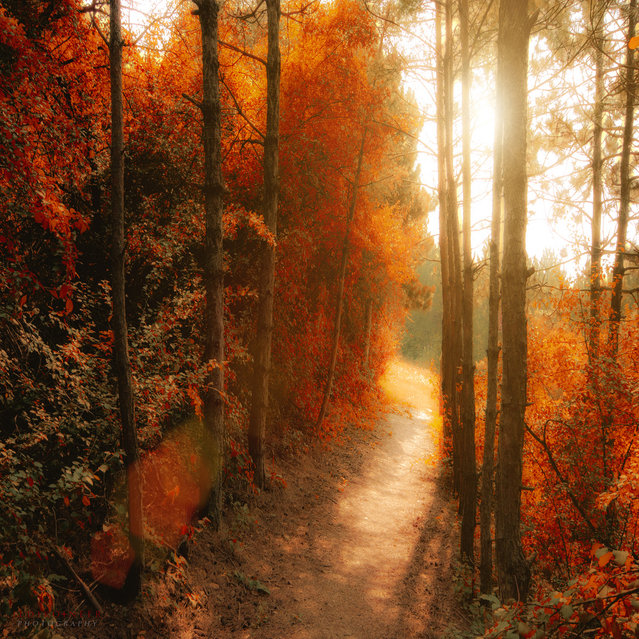
“I bought my first dlsr camera in 2009 may. The first part of my life is gone but the other i dedicate to photography. If i try to imagine myself, i saw someone on the road, who walking straight to the light. This kind of light is the photography and the post-processing in my life. My pictures express the feelings, moods what i felt under my trip in the last few years”. – Ildiko Neer
Photo: “Path to the shine”, 2011. (Photo by Ildiko Neer)
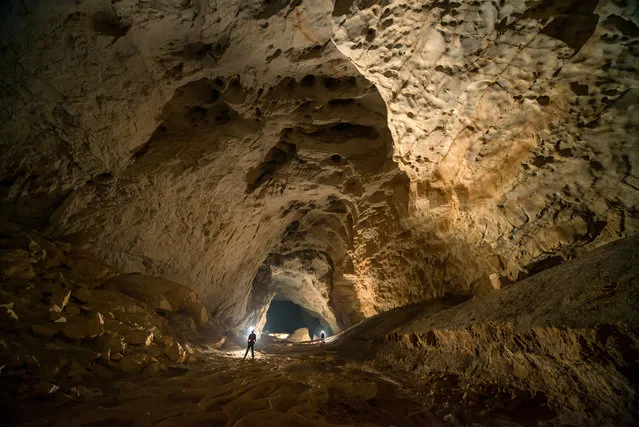
“Adventurers have gone deep underground to discover previously unexplored caves in these pictures. The awe-inspiring snaps show the cavers dwarfed by the huge series natural rock chambers in the Leye – Fengshan Geopark, China. Belgian photographer Francois-Xavier De Ruydts, 33, captured the team of explorers as they trekked through the deep wonderground in January 2014”. – Caters News. Here: Caving expedition in Fengshan, China, Guangxi province. (Photo by Francois-Xavier De Ruydts/Caters News)
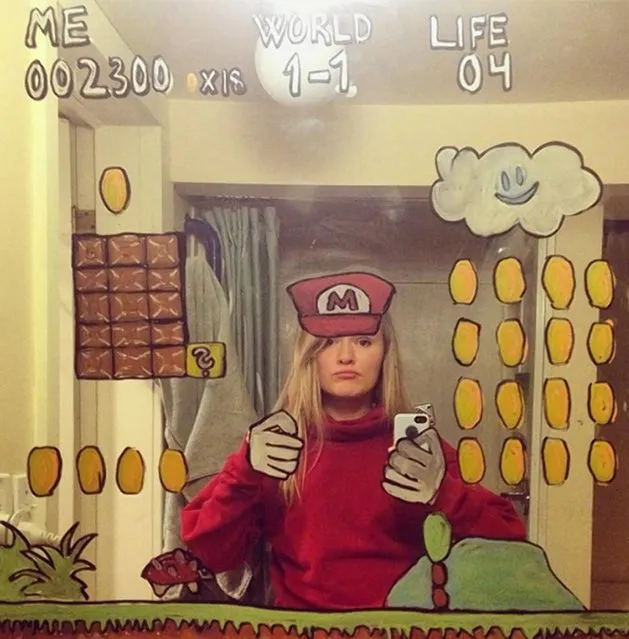
The time of selfies with duck faces is long gone and ridiculed, though some persist in doing it. Helene Meldahl, however, didn’t want to give up the trend, but had to think of a creative way to keep doing it. So she decided to create comical pictures by drawing over the selfies that she has made. Some people just can’t stop taking pictures of themselves. It makes you wonder, what they would do in an era before the existence of cameras… Oh, poor souls, they would definitely suffer greatly without the possibility of sharing on instagram their “stunning looks” and the pictures of food that they eat every 2 seconds. (Photo by Helene Meldahl)
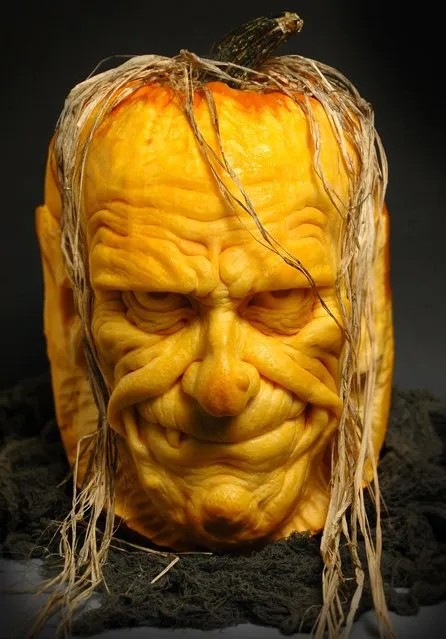
These Halloween horrors were all carved out of humble pumpkins by Ray Villafane and his team of professional sculptors who meticulously carved the terrifying characters using spoons and scalpels. Each one takes on average two hours to complete – with the horrifying results netting Villafane, plus colleagues Andy Bergholtz and Chris Vierra, numerous TV appearances each Halloween. This year the team has gone global travelling to Germany, Switzerland and Hong Kong to create their masterpieces. Photo: A horror face carved out of a pumpkin by Ray Villafane and team in Bellaire, Michigan. (Photo by Ray Villafane/Barcroft Media)