Loading...
Done
Afghanistan: Dogs of War Part 1

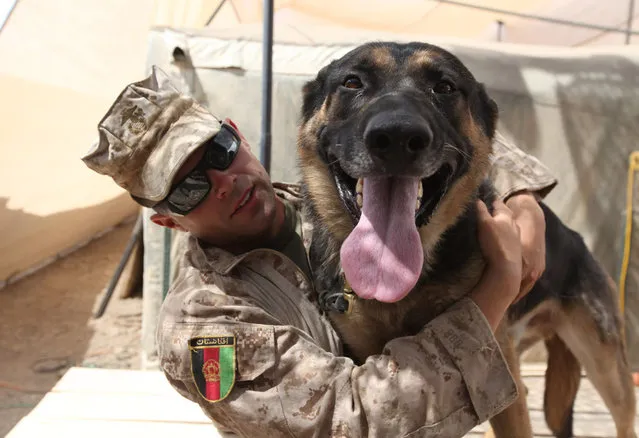
Throughout the course of the long war in Afghanistan, Coalition troops have relied on thousands of military working dogs to help keep them safe, and make their jobs easier. The dogs are trained to detect explosives, to find illegal drugs, to search for missing comrades, or target enemy combatants. Not only are they active on the front lines, but behind the lines they serve as therapy dogs, service dogs, and loyal companions. They also share the same risks as the ground troops, suffering injuries and sometimes death on the battlefields. Gathered here are images of these dogs and their handlers in Afghanistan and back home, from over the past several years, part of the ongoing series here on Afghanistan.
Details
03 Jun 2014 21:02:00


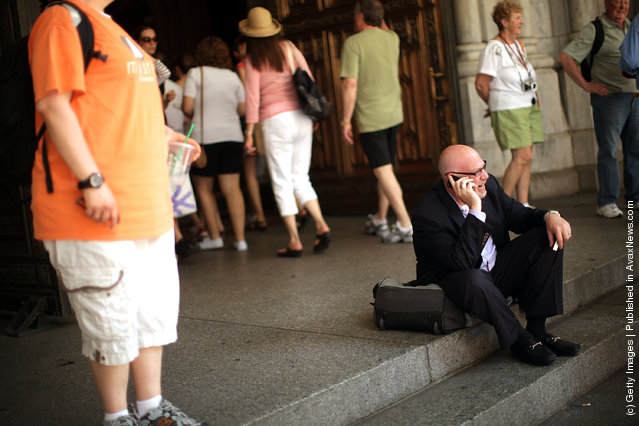
A man speaks on his mobile phone on May 31, 2011 in New York City. In a new report by 31 scientists meeting at the World Health Organization's International Agency for Research on Cancer (WHO/IARC) it was found that using a mobile phone may increase your risk for certain kinds of brain cancers. While further scientific work will be conducted, the group of scientists from 14 countries classified cell phones in the carcinogenic category 2B, which is similar to the pesticide DDT and gasoline engine exhaust. (Photo by Spencer Platt/Getty Images)
Details
01 Jun 2011 06:40:00
In this September 11, 2014 photo, villagers climb down the side of a hill used earlier as a dumping ground of asbestos waste on Roro hills in Roro, India. (Photo by Saurabh Das/AP Photo)

In this September 11, 2014 photo, villagers climb down the side of a hill used earlier as a dumping ground of asbestos waste on Roro hills in Roro, India. An asbestos mine, abandoned nearly three decades ago still affects the people around it and 18 along with Jema were diagnosed with asbestosis in 2012. Tens of thousands more, some former mine workers, remain untested and at risk. (Photo by Saurabh Das/AP Photo)
Details
26 Dec 2014 14:44:00
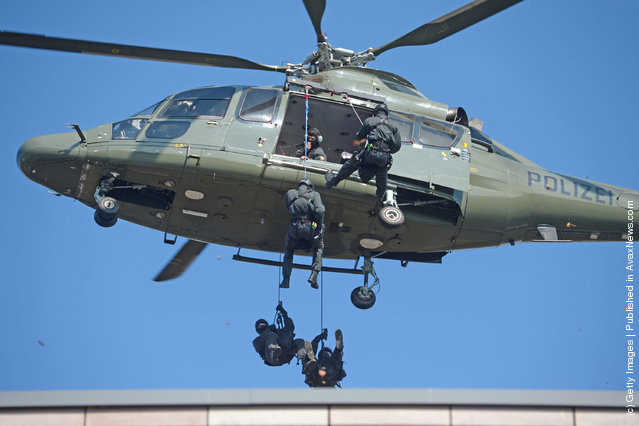
Members of Germany's elite police unit, the Spezialeinsatzkommando, or SEK, demonstrate an abseil deployment from a helicopter during a media event

Members of Germany's elite police unit, the Spezialeinsatzkommando, or SEK, demonstrate an abseil deployment from a helicopter during a media event on March 20, 2012 in Minden, Germany. The SEK is the special response team of Germany's state police force and typically deploys in high-risk situations, such as bank robberies, hostage takings and the arrest of armed and dangerous fugitives. (Photo by Thomas Starke/Getty Images)
Details
21 Mar 2012 09:01:00
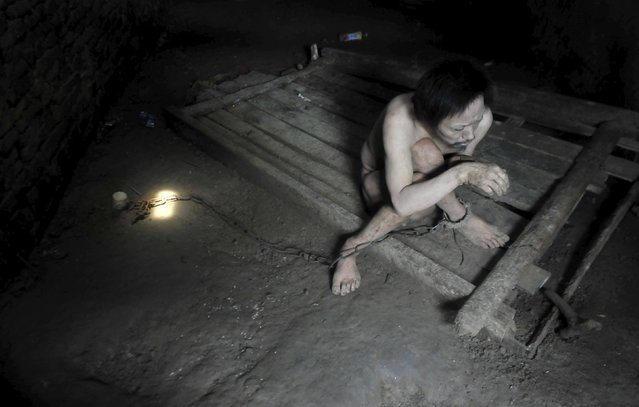
Tong Jieping, 44-year-old mentally disabled patient, is chained by his foot inside his room, in Qunxing village of Wangjiang county, Anhui province, China, July 14, 2015. Tong was diagnosed mentally ill when he was in his 20s. His parents, both in their 70s, could not afford the medical treatments so they had to lock him up in chains to prevent him from running away, according to Tong's family. (Photo by Reuters/Stringer)

Tong Jieping, 44-year-old mentally disabled patient, is chained by his foot inside his room, in Qunxing village of Wangjiang county, Anhui province, China, July 14, 2015. Tong was diagnosed mentally ill when he was in his 20s. His parents, both in their 70s, could not afford the medical treatments so they had to lock him up in chains to prevent him from running away, according to Tong's family. (Photo by Reuters/Stringer)
Details
15 Jul 2015 11:33:00
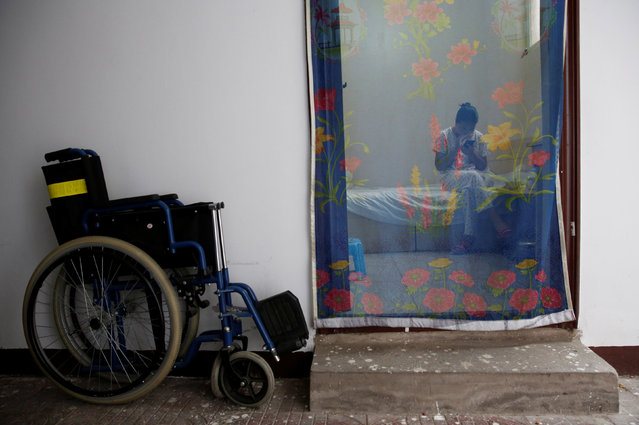
Wang uses a mobile phone as she take a rest in her room at the accommodation where patients and their family members stay while seeking medical treatments in Beijing, China, June 23, 2016. Wang, who suffers from cervical cancer, came from Inner Mongolia to seek treatment at a specialist hospital in Beijing. (Photo by Kim Kyung-Hoon/Reuters)

Wang uses a mobile phone as she take a rest in her room at the accommodation where patients and their family members stay while seeking medical treatments in Beijing, China, June 23, 2016. Wang, who suffers from cervical cancer, came from Inner Mongolia to seek treatment at a specialist hospital in Beijing. (Photo by Kim Kyung-Hoon/Reuters)
Details
30 Sep 2016 09:03:00
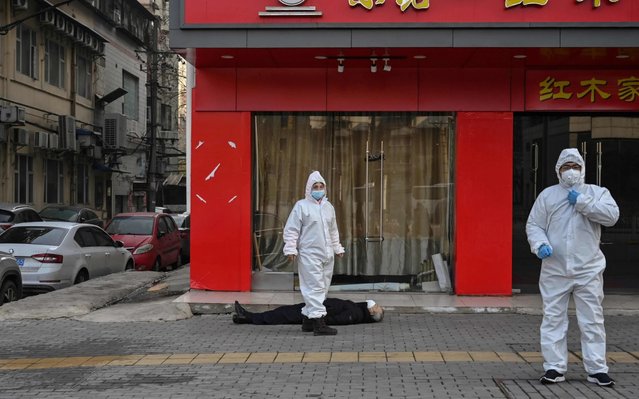
This photo taken on January 30, 2020 shows officials in protective suits checking on an elderly man wearing a facemask who collapsed and died on a street near a hospital in Wuhan. AFP journalists saw the body on January 30, not long before an emergency vehicle arrived carrying police and medical staff in full-body protective suits. The World Health Organization declared a global emergency over the new coronavirus, as China reported on January 31 the death toll had climbed to 213 with nearly 10,000 infections. (Photo by Hector Retamal/AFP Photo)

This photo taken on January 30, 2020 shows officials in protective suits checking on an elderly man wearing a facemask who collapsed and died on a street near a hospital in Wuhan. AFP journalists saw the body on January 30, not long before an emergency vehicle arrived carrying police and medical staff in full-body protective suits. The World Health Organization declared a global emergency over the new coronavirus, as China reported on January 31 the death toll had climbed to 213 with nearly 10,000 infections. (Photo by Hector Retamal/AFP Photo)
Details
02 Feb 2020 00:07:00
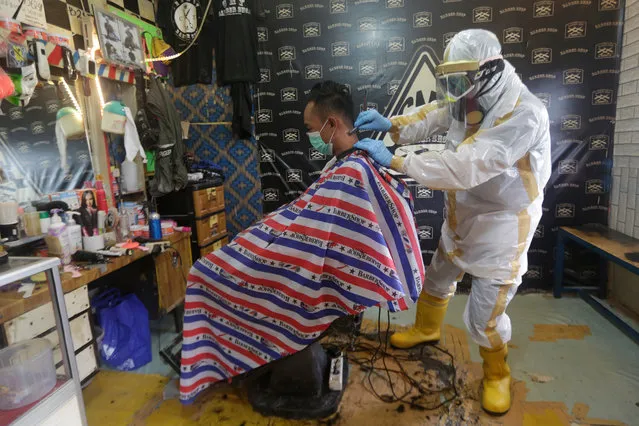
Barber Herman Mulyana (R) gives a haircut to a customer while wearing protective attire made from plastic garbage bags at a barbershop in Bogor, Indonesia, 06 April 2020. The Trade Ministry of Indonesia issued a regulation temporarily recinding all requirements for the import of protective gear and medical equipment, to counter shortages of many items used to treat COVID-19 patients and prevent the further spread of the disease. (Photo by Adi Weda/EPA/EFE)

Barber Herman Mulyana (R) gives a haircut to a customer while wearing protective attire made from plastic garbage bags at a barbershop in Bogor, Indonesia, 06 April 2020. The Trade Ministry of Indonesia issued a regulation temporarily recinding all requirements for the import of protective gear and medical equipment, to counter shortages of many items used to treat COVID-19 patients and prevent the further spread of the disease. (Photo by Adi Weda/EPA/EFE)
Details
08 Apr 2020 00:07:00