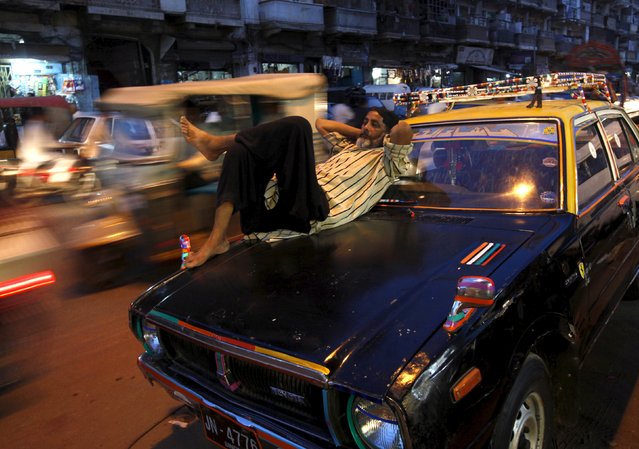
Vehicles move past a man resting on a taxi, as he waits for passengers, along a road in Karachi, Pakistan, May 5, 2015. (Photo by Akhtar Soomro/Reuters)
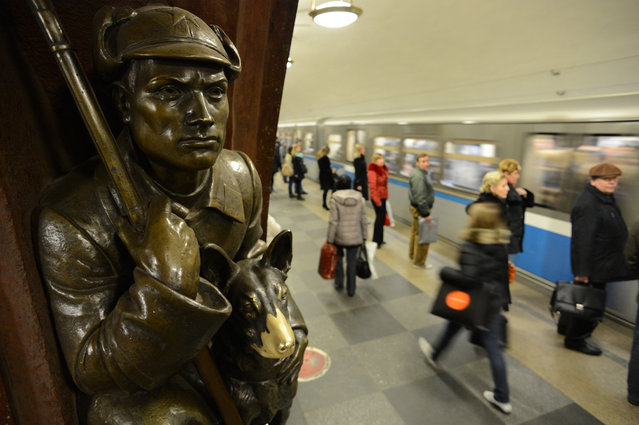
Subway passengers walk past bronze sculptures representing the Soviet people at the Ploshchad Revolyutsii metro station in Moscow, on November 14, 2012. The station was opened in 1938. (Photo by Kirill Kudryavtsev/AFP Photo)
Tourists pose for a selfie in an old American car in front of a wall bearing a graffiti of the Committees for the Defense of the Revolution (CDR) in Havana, on September 27, 2023. September 28 marks the 63th anniversary of the Committees for the Defense of the Revolution (CDR), the so-called “eyes and ears of the Revolution” created by the late Cuban leader Fidel Castro. (Photo by Yamil Lage/AFP Photo)
A sales assistant poses for photographs with a mealworm cookie in Seoul, South Korea, August 8, 2016. Insect-eating, or entomophagy, has long been common in much of the world, including South Korea, where boiled silky worm pupae, or beondegi, are a popular snack. Now, South Korea is looking to expand its insect industry as a source of agricultural income. (Photo by Kim Hong-Ji/Reuters)
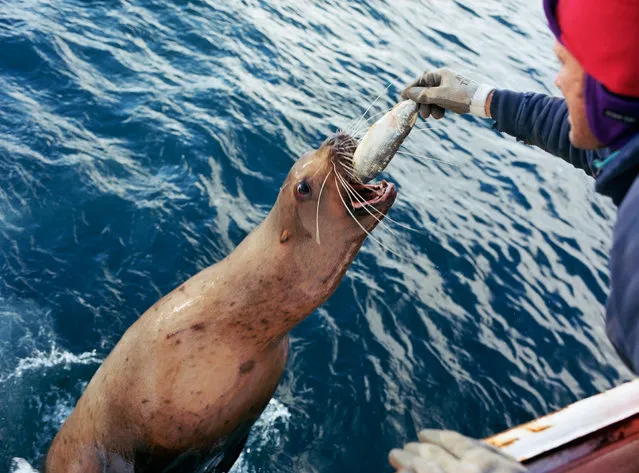
In 2002 photographer Corey Arnold left behind a poor economy in San Francisco and headed up to Alaska to try his luck at his longtime passion of fishing. Arnold, who had worked summers during college on a salmon boat in Alaska, signed onto the f/v Rollo, a crabbing boat that fishes in the dangerous Bering Sea. While working long, strenuous hours on the Rollo, Arnold often stole away with the captain’s permission to grab his camera and photograph the crew and the ship. Arnold eventually put together “Fish Work: Bering Sea”, a documentation of his seven adventurous and dicey crab seasons aboard the Rollo. (Photo by Corey Arnold)
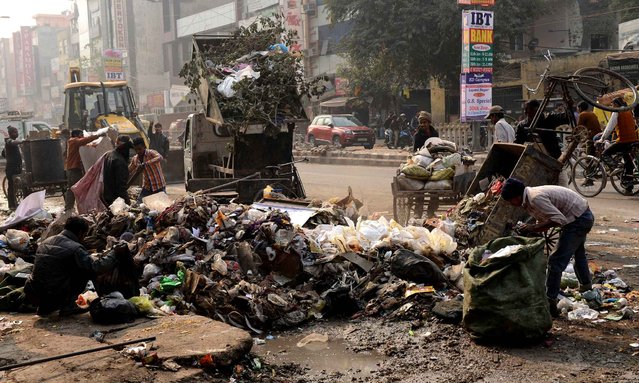
Locals sort through garbage at a roadside dump in New Delhi on January 10, 2017 The national capital has been reeling under tonnes of garbage after sanitation workers went on a strike demanding payment of pending salaries. (Photo by Chandan Khanna/AFP Photo)
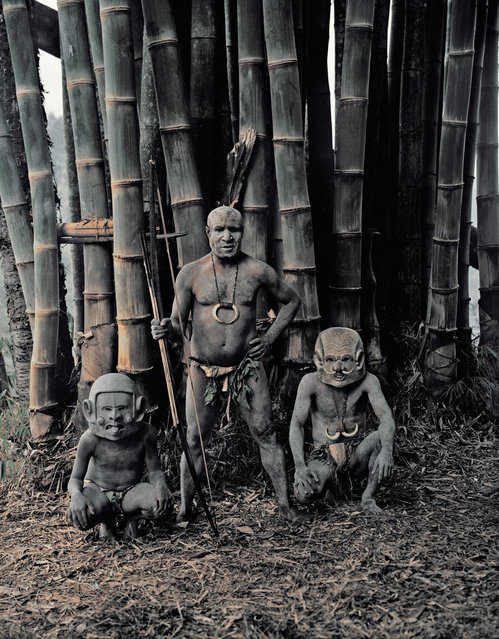
“Asaro from the Eastern Highlands”. The mudmen could not cover their faces with mud because the people of Papua New Guinea thought that the mud from the Asaro river was poisonous. So instead of covering their faces with this alleged poison, they made masks from pebbles that they heated and water from the waterfall, with unusual designs such as long or very short ears either going down to the chin or sticking up at the top, long joined eyebrows attached to the top of the ears, horns and sideways mouths. (Photo and caption by Jimmy Nelson)