Loading...
Done
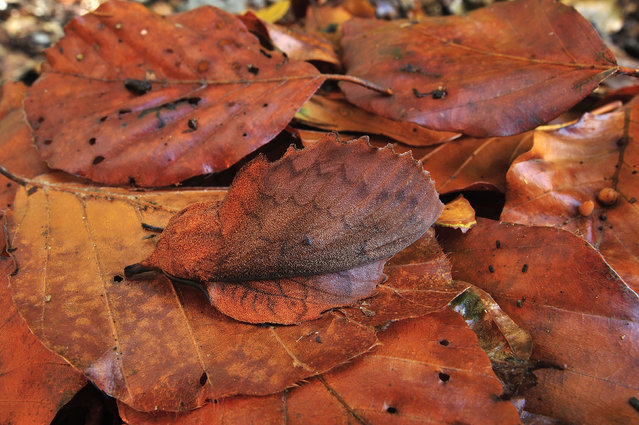
The camouflage mappet moth looks like a fall lead in Switzerland. (Photo by Thomas Marent/Caters News/Ardea)

Whether they are the hunter or the hunted, these camouflage animals show natures incredible ability to blend in with its surroundings. Pictured perfectly concealed against their natural environment, the stunning pictures show the amazing lengths some animals will go to to stay out of sight. Here: The camouflage mappet moth looks like a fall lead in Switzerland. (Photo by Thomas Marent/Caters News/Ardea)
Details
09 Oct 2014 12:58:00
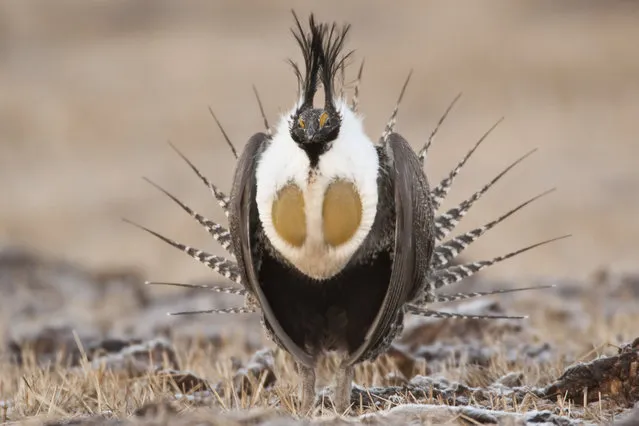
Greater Sage-Grouse

The Greater Sage-Grouse is certainly a formidable-looking bird. Being the largest grouse in North America and having tail feathers, which look like giant spikes, make for a ferocious sight. These birds are well known for their complicated courtship rituals, in which the males perform a special “strutting display” to attract the females. Another distinct feature of the Greater Sage-Grouse is two large yellow throat sacs (gular sacs), which are inflated by the males during the courtship display. Unlike pelicans, whose gular sacs are used to store fish while hunting, the throat sacks of the Greater Sage-Grouse are merely for display.
Details
21 Nov 2014 12:25:00
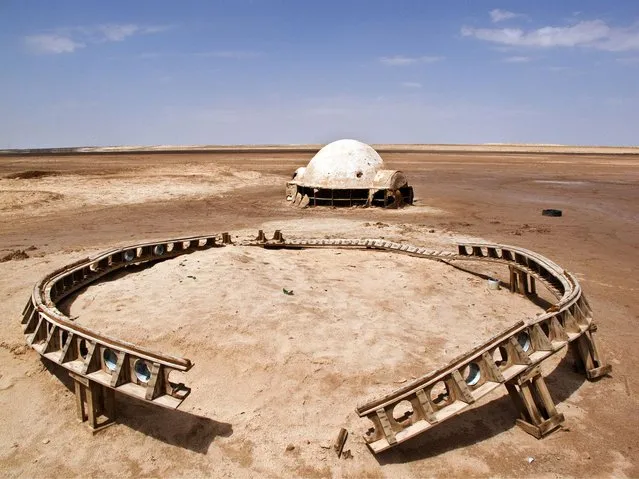
“No More Stars”: Abandoned Stars Wars Sets in the Desert by Rä di Martino

New York-based visual artist and filmmaker Rä di Martino has taken a series of eerie and beautiful photos that capture scenes of abandoned Hollywood film sets. Martino spent over a year traveling throughout the desert towns of Morocco and Tunisia hunting down the old Star Wars sets, exploring these massive structures that stand almost like ancient ruins. “No More Stars” showcases the backdrop of Luke Skywalker's home on the fictional desert planet Tatooine. (Photo by Rä di Martino)
Details
12 Mar 2015 13:38:00
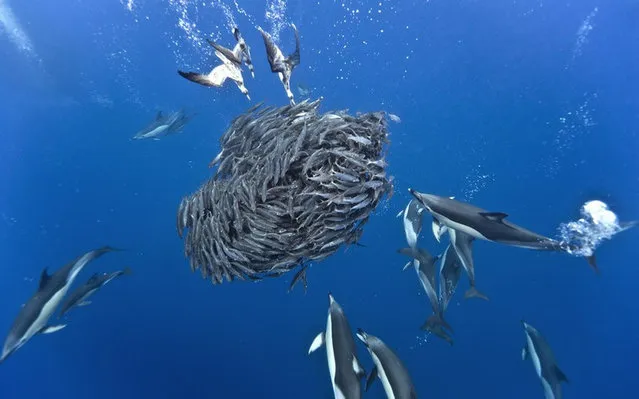
Sharks And Dolphins Preying On Mackerel

British photographer Christopher Swann captures the fascinating underwater action that takes place when sharks and dolphins prey on a school of mackerel. We rarely think about how members of the animal kingdom hunt or defend themselves, but the wildlife photographer gives some perspective on these particular creatures off the coast of Azores.
Details
10 Feb 2013 12:04:00
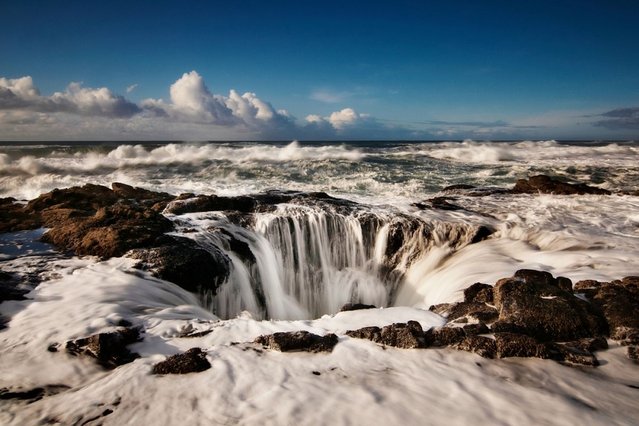
Thor's Well in Cape Perpetua

For at least 6,000 years Native Americans hunted for mussels, crabs, sea urchins, and clams along the coast near Cape Perpetua. Evidence of their lives can still be found in the huge piles of discarded mussel shells that lie along the shore near the Cape Perpetua Visitor Center
Details
22 Jul 2012 20:13:00


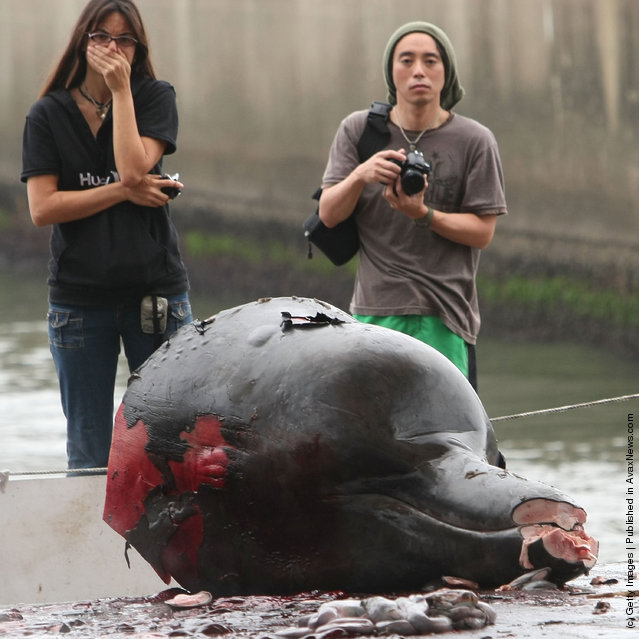
Fishermen slaughter a 9.61m Baird's Beaked whale at Wada Port on June 28, 2008 in Minami Boso, Chiba, Japan. Only five ports are allowed whaling under the coastal whaling program which tries to keep whaling tradition that dates back to the seventeenth century. Japan is only allowed to hunt a limited number of whales every year. (Photo by Koichi Kamoshida/Getty Images)
Details
26 Apr 2011 08:07:00
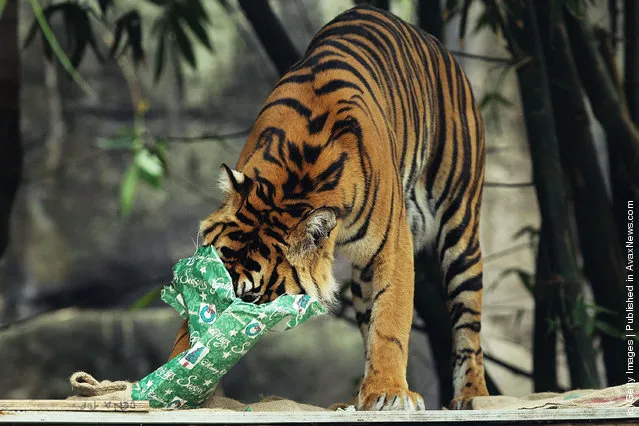
A Sumatran Tiger tears apart a wrapped Christmas present at Taronga Zoo

A Sumatran Tiger tears apart a wrapped Christmas present at Taronga Zoo on December 21, 2011 in Sydney, Australia. Animals received Christmas themed enrichment foods as part of the Zoo's regular program to encourage the animals to forage for food and help improve hunting abilities. (Photo by Brendon Thorne/Getty Images)
Details
21 Dec 2011 14:40:00
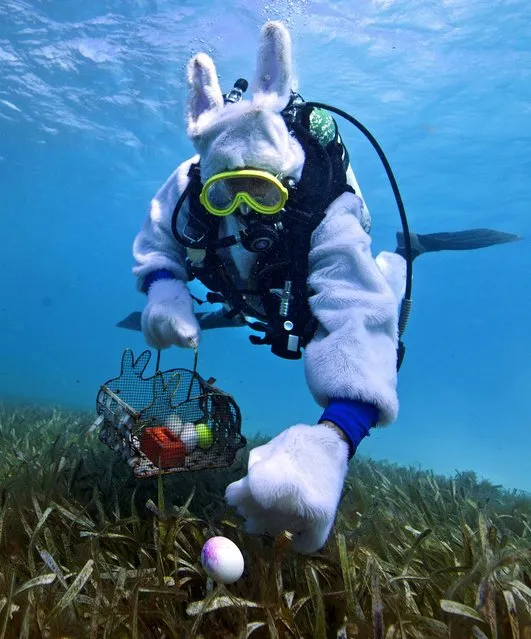
Spencer Slate, costumed as a scuba-diving Easter bunny, is shown in this handout photo provided by the Florida Keys News Bureau as he hides eggs amid eel grass, in the Florida Keys National Marine Sanctuary off Key Largo, Florida March 31, 2013. About 80 adults and children participated in an Underwater Easter Egg Hunt, seeking real hard-boiled eggs painted with non-toxic food coloring to avoid adverse effects on the marine ecosystem. (Photo by Bob Care/Reuters/Florida Keys News Bureau)

Spencer Slate, costumed as a scuba-diving Easter bunny, is shown in this handout photo provided by the Florida Keys News Bureau as he hides eggs amid eel grass, in the Florida Keys National Marine Sanctuary off Key Largo, Florida March 31, 2013. About 80 adults and children participated in an Underwater Easter Egg Hunt, seeking real hard-boiled eggs painted with non-toxic food coloring to avoid adverse effects on the marine ecosystem. (Photo by Bob Care/Reuters/Florida Keys News Bureau)
Details
02 Apr 2013 12:33:00