Loading...
Done
Greater Sage-Grouse

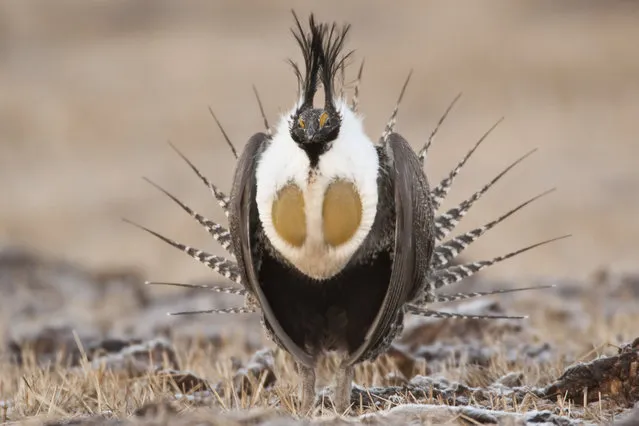
The Greater Sage-Grouse is certainly a formidable-looking bird. Being the largest grouse in North America and having tail feathers, which look like giant spikes, make for a ferocious sight. These birds are well known for their complicated courtship rituals, in which the males perform a special “strutting display” to attract the females. Another distinct feature of the Greater Sage-Grouse is two large yellow throat sacs (gular sacs), which are inflated by the males during the courtship display. Unlike pelicans, whose gular sacs are used to store fish while hunting, the throat sacks of the Greater Sage-Grouse are merely for display.
Details
21 Nov 2014 12:25:00
Surviving The Northeast Heatwave Part2

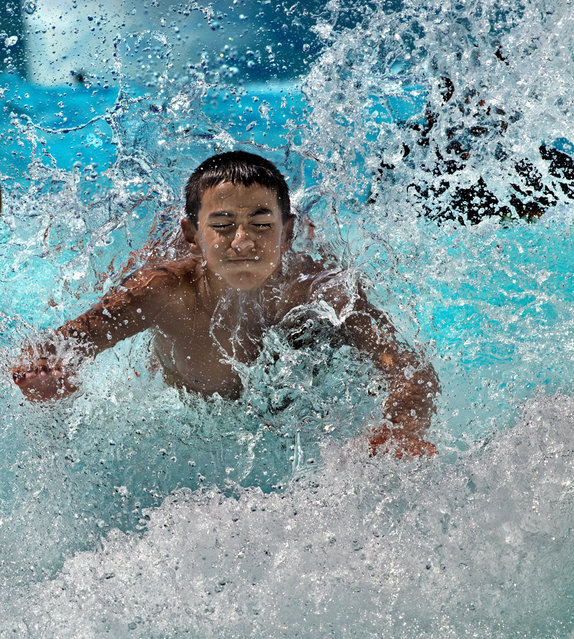
The northeastern United States sweltered this week in a scorching summer heat wave, complete with stagnant, sticky air and no winds for relief, forecasters said. Even in a summer already filled with stretches of very hot weather, this week will be stubbornly brutal, with no relief in sight until the weekend brings thunderstorms to the region, they said. "Plain and simple, this week may feel the worst of any week for this summer in the Northeast," said Accuweather.com meteorologist Alex Sosnowski. (Reuters)
Details
23 Aug 2013 12:01:00
Burning Man 2013

Every year, participants in the Burning Man Festival descend on the playa of Nevada's Black Rock Desert to form a temporary city – a self-reliant community populated by performers, artists, free spirits, and more. Last week, an estimated 68,000 people came to Burning Man 2013 from all over the world to dance, express themselves, and take in the spectacle. Gathered below are some of the sights from the festival, which lasted a week and came to its conclusion yesterday


First part HERE.

Details
17 Oct 2013 13:24:00
Surrealistic Animal By Marco Mazzoni

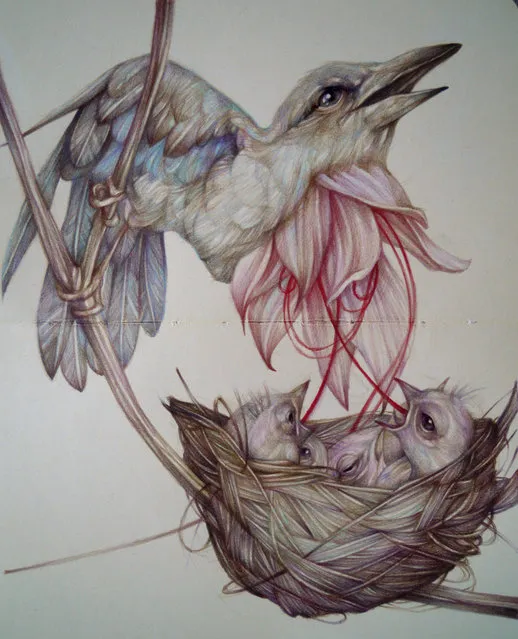
Italian pencil artist Marco Mazzoni‘s work goes far beyond technical perfection. His representation of historical healing women is enigmatic and sublime. Often leaving the eyes blank or covered with an abundance of birds, butterflies and flowers, he gives the impression of a deeper inward focused sight, as well as obscuring the identity of the individual. Many female healers in the past – both medicine woman and midwives – were brutally persecuted by religion, some even burnt as witches… Mazzoni’s work captures their deep connection with nature and their innate power and femininity with delicacy and beautiful detail.
Details
01 Apr 2015 07:43:00
Karlie Kloss Heads to Brazil for Vogue US July 2012, Lensed by Mario Testino

Brazilian Treatment – Mario Testino teams up with American beauty Karlie Kloss for a story lensed in Bahia, Brazil for the July issue of Vogue US. Stylist Phyllis Posnick selects a wardrobe of colorful looks for Karlie to wear as she heads to the beaches and other stunning sights of Bahia. Whether posing with Capoeira dancers or exploring the outdoors, Karlie enchants in every image. (Photo by Mario Testino)
Details
12 Jul 2012 12:14:00
Volunteer rescue a beached humpback calf to sea at Surfers Paradise Beach on the Gold Coast, Australi

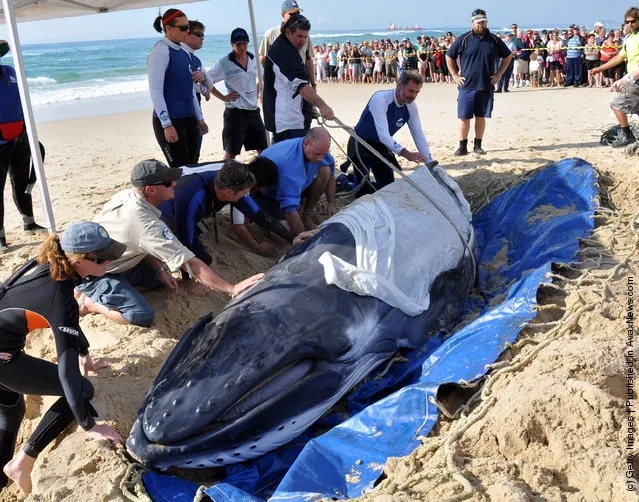
Volunteer rescuers prepare to drag a beached humpback calf to sea at Surfers Paradise Beach on August 8, 2011 on the Gold Coast, Australia. The humpback calf was stranded on the beach yesterday for hours before volunteer rescuers were able to drag it back to the sea. SeaWorld Australia says a mother and calf humpback were sighted near where the calf was released and are hoping to get photos to verify it is the same calf and that it has been reunited with it's mother. (Photo by 2011 SeaWorld Australia via Getty Images)
Details
09 Aug 2011 12:26:00
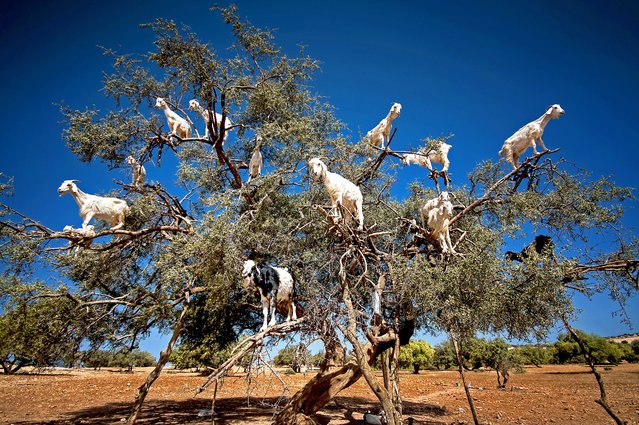
These goats threw caution to the wind and scaled this Argan tree right to the very top, even balancing on the most unsturdy of branches. It looks like a bit of a baa-lancing act, but the goats hooves are perfectly adapted to climbing the trees, where they graze on the Argan fruit. Amateur photographer Burak Senbak, 51, took these photos whilst travelling through Morocco in July 2016. Burak is originally from Turkey and works as a mechanical engineer, but has pursued his passion for photography for 10 years. Intrigued by the sight of goats in a tree, Burak couldnt resist the opportunity to take some photos, and said the goats proved a perfect subject. (Photo by Burak Senbak/Caters News)

These goats threw caution to the wind and scaled this Argan tree right to the very top, even balancing on the most unsturdy of branches. It looks like a bit of a baa-lancing act, but the goats hooves are perfectly adapted to climbing the trees, where they graze on the Argan fruit. Amateur photographer Burak Senbak, 51, took these photos whilst travelling through Morocco in July 2016. Burak is originally from Turkey and works as a mechanical engineer, but has pursued his passion for photography for 10 years. Intrigued by the sight of goats in a tree, Burak couldnt resist the opportunity to take some photos, and said the goats proved a perfect subject. (Photo by Burak Senbak/Caters News)
Details
27 Aug 2017 07:00:00
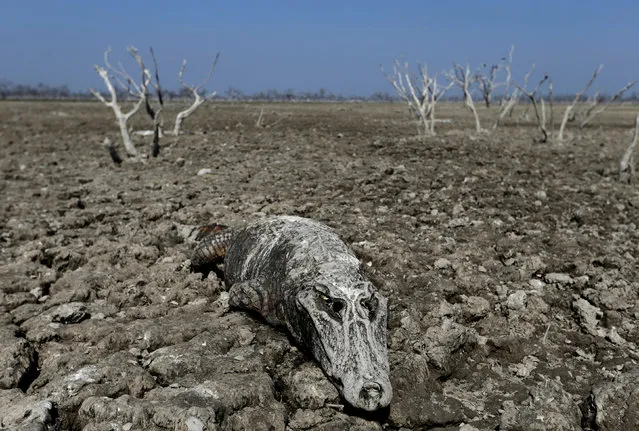
The carcass of a yacare caiman lies in the dried-up river bed of the Pilcomayo river in Boqueron, Paraguay, August 14, 2016. In Paraguay, alongside the Pilcomayo River, black vultures flew over a shrinking pond where a group of crocodilian reptiles known as yacare caimans sought refuge. Water from the river, which divides Paraguay and Argentina in the area of the Gran Chaco, was scarce. This is not an uncommon sight in the region of General Diaz, about 700 kilometres (435 miles) northwest of the country's capital Asuncion, where the Pilcomayo's waters form lakes and streams that give life to capybaras, birds and caimans. “The river's situation is critical. No water is forecast to enter the basin until December, as happens every year”, said Alcides Gonzalez, a resident of the area. (Photo by Jorge Adorno/Reuters)

The carcass of a yacare caiman lies in the dried-up river bed of the Pilcomayo river in Boqueron, Paraguay, August 14, 2016. In Paraguay, alongside the Pilcomayo River, black vultures flew over a shrinking pond where a group of crocodilian reptiles known as yacare caimans sought refuge. Water from the river, which divides Paraguay and Argentina in the area of the Gran Chaco, was scarce. This is not an uncommon sight in the region of General Diaz, about 700 kilometres (435 miles) northwest of the country's capital Asuncion, where the Pilcomayo's waters form lakes and streams that give life to capybaras, birds and caimans. (Photo by Jorge Adorno/Reuters)
Details
03 Nov 2016 12:40:00