Paint-splattered revellers take a break at the Notting Hill carnival in West London in the last decade of August 2022. (Photo by Andy Hall/The Observer)
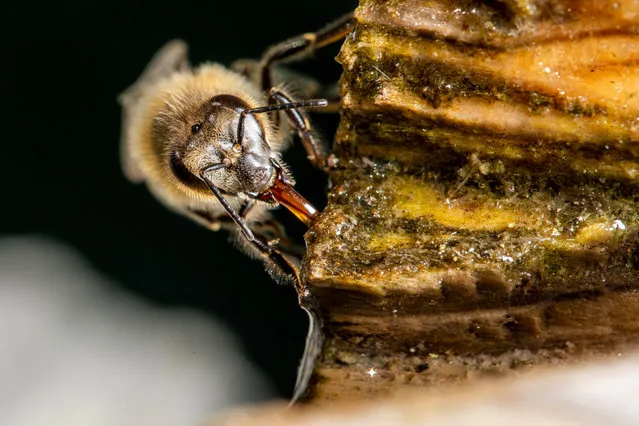
A Western honey bee feeds off acacia pollen at an apiary in Nagyszenas, eastern Hungary, 25 April 2020. The preparation of the bees for the acacia bloom began two weeks later than usual this year; due to the late frosts, this season's yield of Hungaricum acacia honey is expected to be lower. (Photo by Tibor Rosta/EPA/EFE)
A woman travels on a train stopping at a subway station visited by foreign reporters in central Pyongyang, North Korea on April 14, 2017. (Photo by Damir Sagolj/Reuters)
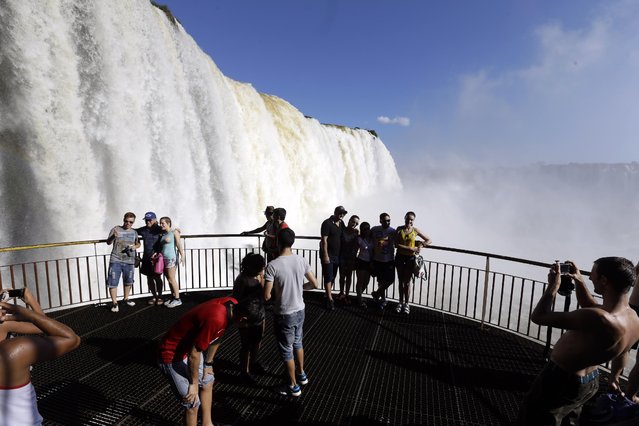
In this March 14, 2015 photo, tourists take pictures from a viewing area at Iguazu Falls in Brazil. From walkways and bridges, viewers can count 270 water falls almost 100 meters (330 feet) high. (Photo by Jorge Saenz/AP Photo)
School children take photographs as Queen Elizabeth II arrives in Valentine's Park Redbridge as part of her Diamond Jubilee tour of the UK on March 29, 2012 in London, England. (Photo by Chris Jackson/Getty Images)
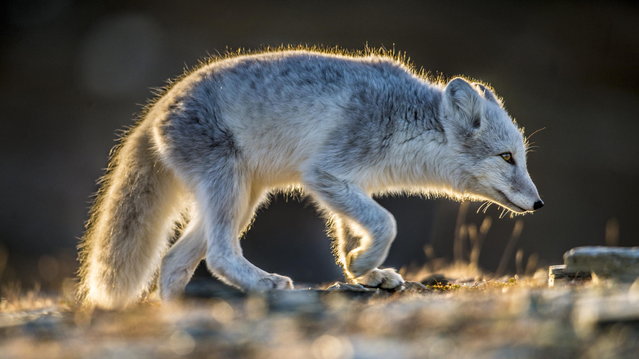
“The arctic fox (Vulpes lagopus), also known as the white fox, polar fox, or snow fox, is a small fox native to the Arctic regions of the Northern Hemisphere and is common throughout the Arctic tundra biome. It is well adapted to living in cold environments. It has a deep thick fur which is brown in summer and white in winter. It averages in size at about 85.3 cm (33.6 in) in body length, with a generally rounded body shape to minimize the escape of body heat. – Wikipedia. (Photo by Trond Eriksen)
A woman wears a face mask in the part of the city near neighbourhoods known for burning coal for heating in Ulaanbaatar, Mongolia January 26, 2017. Not many people in Ulaanbaatar wear masks to protect themselves against pollution. (Photo by B. Rentsendorj/Reuters)
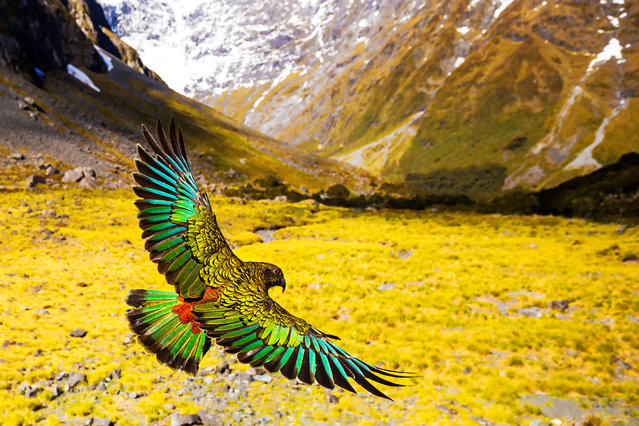
Kea are the only true alpine parrots in the world and thrive as cunning opportunists in the freezing conditions of the Southern Alps. Kea are thought to have developed their wide array of food-finding strategies during the last great ice age, where they learned to adapt using their unusual powers of curiosity. (Photo by Tom Walker/BBC Pictures/The Guardian)