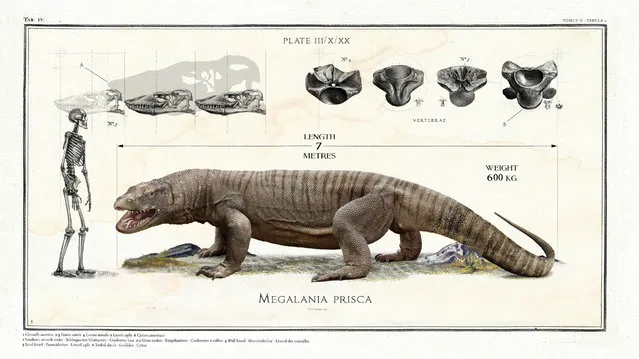
Fossil records indicate that this early lizard, Megalania (Megalania prisca or Varanus priscus), was a whopping seven metres in length. They were part of a megafaunal assemblage that inhabited southern Australia during the Pleistocene. The youngest fossil remains date to around 50,000 years ago. The first aboriginal settlers of Australia might have encountered them and been a factor in their extinction. (Photo by Sky TV/The Guardian)
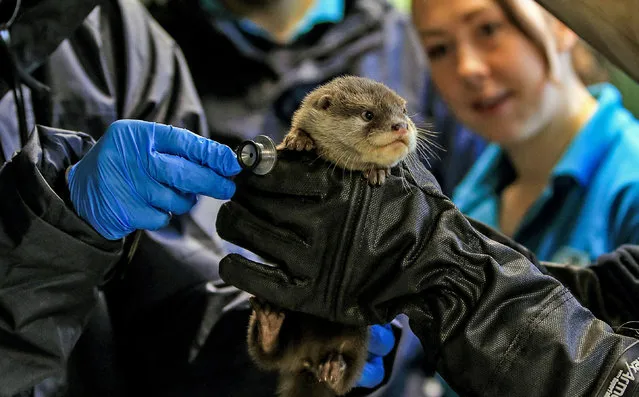
A baby otter has its first health checkup at Chester zoo, England on May 2, 2018. It was among five pups being weighed and microchipped. (Photo by Peter Byrne/PA Wire)
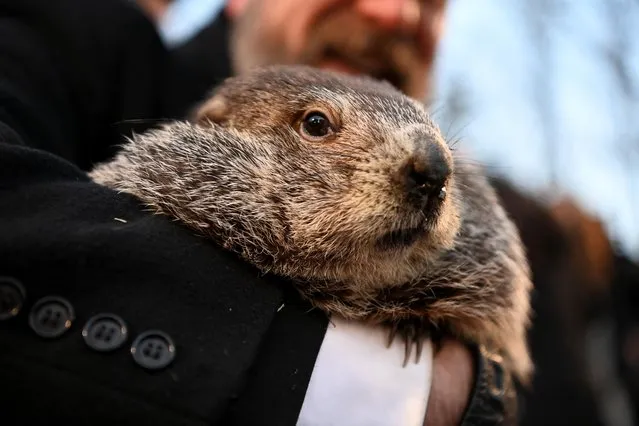
AJ Dereume holds Punxsutawney Phil during the Groundhog Day Festivities, at Gobblers Knob in Punxsutawney, Pennsylvania, U.S., February 2, 2023. (Photo by Alan Freed/Reuters)
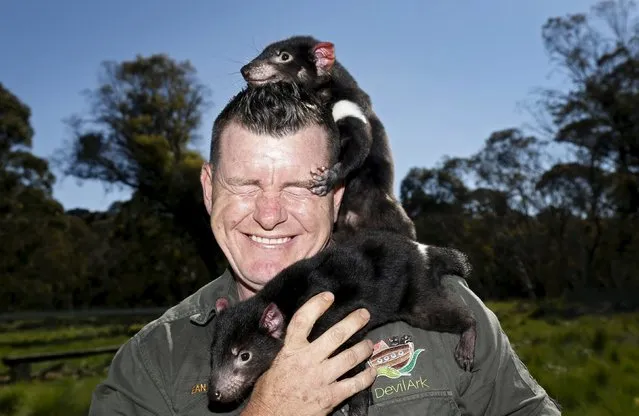
Devil Ark manager Dean Reid reacts as Tasmanian Devil joeys climb on him before the first shipment of healthy and genetically diverse devils to the island state of Tasmania leave the Devil Ark sanctuary in Barrington Tops on Australia's mainland, November 17, 2015. The largest group so far of disease-free Tasmanian devils has been released in the wild, as part of plans to save the carnivorous marsupials from a cancer threatening them with extinction. (Photo by Jason Reed/Reuters)
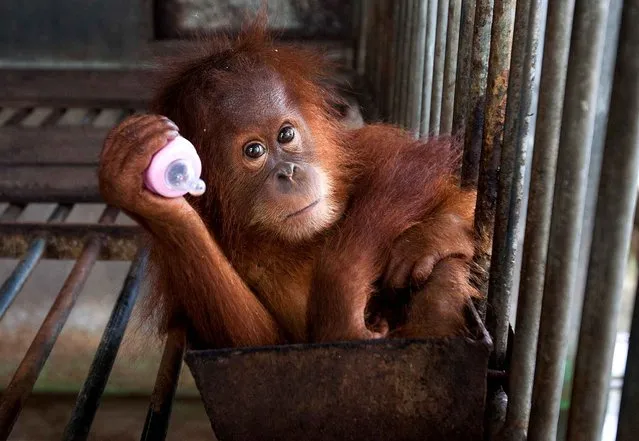
This picture shows a two-year old orangutan seized from a residents house at the provincial Nature Conservation and Agency (BKSDSA) office in Banda Aceh on September 16, 2014. The critically-endangered primates population are dwindling rapidly due to poaching and rapid destruction of their forest habitat that is being converted into palm oil plantations. (Photo by Chaideer Mahyuddin/AFP Photo)