Loading...
Done
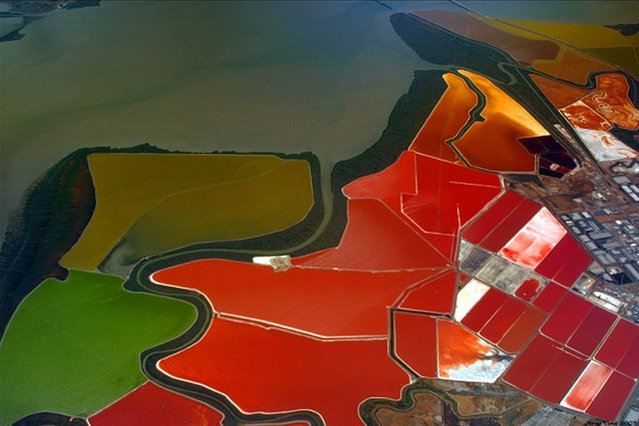
Salt ponds in San Francisco Bay

Salt evaporation ponds, also called salterns or salt pans, are shallow artificial ponds designed to produce salts from sea water or other brines. The seawater or brine is fed into large ponds and water is drawn out through natural evaporation which allows the salt to be subsequently harvested. The ponds also provide a productive resting and feeding ground for many species of waterbirds, which may include endangered species. The ponds are commonly separated by levees.
Details
11 Oct 2012 12:49:00
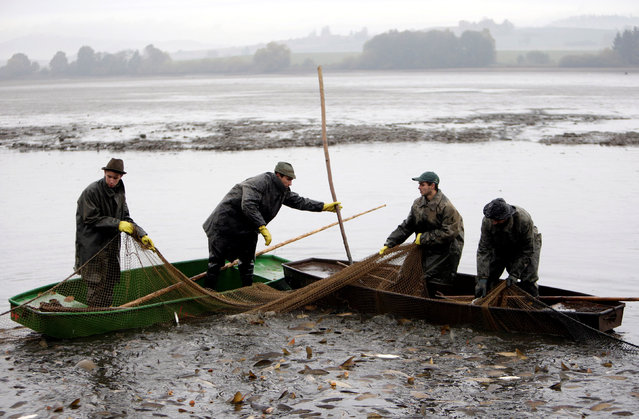
Fishermen pull a net containing fish from a pond during the traditional carp haul near the village of Belcice, Czech Republic, October 25, 2016. (Photo by David W. Cerny/Reuters)

Fishermen pull a net containing fish from a pond during the traditional carp haul near the village of Belcice, Czech Republic, October 25, 2016. Carp, the traditional Czech Christmas Eve dinner, is harvested primarly from the region of southern Bohemian lakes. (Photo by David W. Cerny/Reuters)
Details
26 Oct 2016 10:42:00
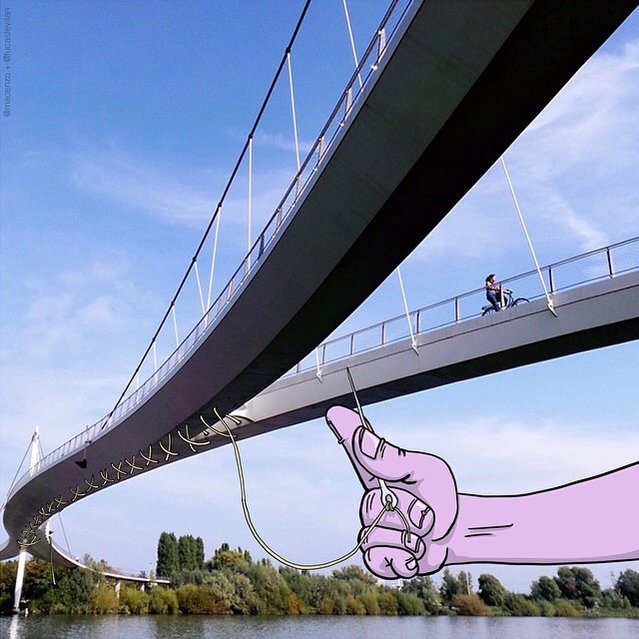
Funny Cartoons By Lucas Levitan Part 2

Being able to look at this world in a different light is the main thing that distinguishes a true artist from a common person. We can clearly see that Lucas Levitan is a true artist despite the crude drawings that he makes. By hunting through thousands of photos that people post on Instagram, he finds the ones that might have a completely different, surprising, and comical theme. For example, a sensual photo of lady’s eyelashes is transformed into a scene in which a farmer is harvesting his crops. This is imagination at its finest, which is why the art works of Lucas Levitan are so interesting to look at. (Photo by Lucas Levitan)
Details
04 Jan 2015 12:39:00
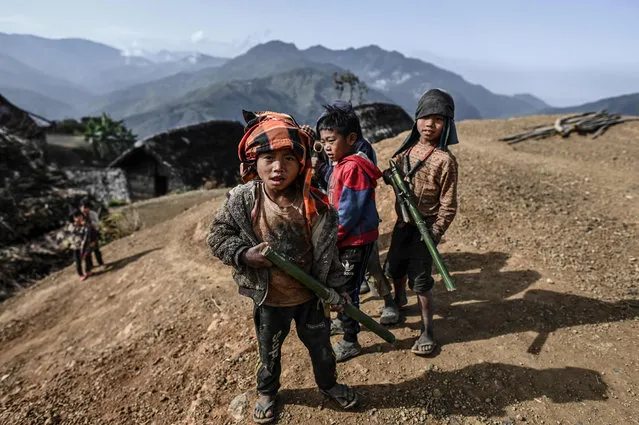
This photo taken on February 9, 2020 shows children playing in front of their homes in Tarmaw Lawri village in the Lahe township in Myanmar's Sagaing region. (Photo by Ye Aung Thu/AFP Photo)

This photo taken on February 9, 2020 shows children playing in front of their homes in Tarmaw Lawri village in the Lahe township in Myanmar's Sagaing region. A haunting refrain pierces the night as the tribeswomen of the Gongwang Bonyo, among the most isolated people in Myanmar, dance around a campfire to bless the harvest ahead. (Photo by Ye Aung Thu/AFP Photo)
Details
31 Mar 2020 00:05:00
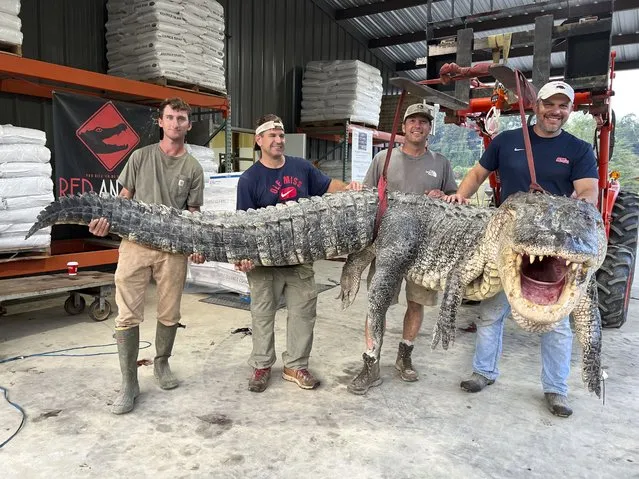
This photo provided by Red Antler Processing shows the alligator sport hunting team made up of, from left, Tanner White, tag-holder Donald Woods, Will Thomas and Joey Clark as they hoist, with the help of a forklift, the longest alligator officially harvested in Mississippi, Saturday, August 26, 2023, at Red Antler Processing in Yazoo City, Miss. The male alligator weighed 802.5 pounds and measured 14 feet, 3 inches long, and its length broke the state record as the longest alligator ever caught, according to the Mississippi Department of Wildlife, Fisheries and Parks. (Phoot by Shane Smith/Red Antler Processing via AP Photo)

This photo provided by Red Antler Processing shows the alligator sport hunting team made up of, from left, Tanner White, tag-holder Donald Woods, Will Thomas and Joey Clark as they hoist, with the help of a forklift, the longest alligator officially harvested in Mississippi, Saturday, August 26, 2023, at Red Antler Processing in Yazoo City, Miss. The male alligator weighed 802.5 pounds and measured 14 feet, 3 inches long, and its length broke the state record as the longest alligator ever caught, according to the Mississippi Department of Wildlife, Fisheries and Parks. (Phoot by Shane Smith/Red Antler Processing via AP Photo)
Details
17 Sep 2023 03:05:00
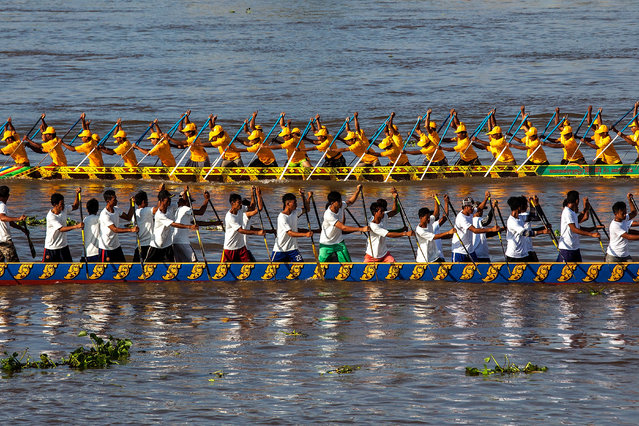
Boat crew members train on the waters of the Tonle Sap River on the morning of the first day of the Water Festival on November 13, 2016 in Phnom Penh, Cambodia. The yearly three-day Water Festival is one of the most important holidays in Cambodia and celebrates the end of the rainy season and the start of the rice harvesting. The Festival also coincides with the Tonle Sap river reversing course, which it does twice a year. Approximately 2 million people are expected to attend this year's festival, during which 259 boats and nearly 20,000 oarsmen will participate in the races. After a fatal stampede resulting in the death of some 353 people during the Water Festival in 2010, it has been cancelled four times over the past five years, with weather used as an official excuse. (Photo by Omar Havana/Getty Images)

Boat crew members train on the waters of the Tonle Sap River on the morning of the first day of the Water Festival on November 13, 2016 in Phnom Penh, Cambodia. The yearly three-day Water Festival is one of the most important holidays in Cambodia and celebrates the end of the rainy season and the start of the rice harvesting. The Festival also coincides with the Tonle Sap river reversing course, which it does twice a year. Approximately 2 million people are expected to attend this year's festival, during which 259 boats and nearly 20,000 oarsmen will participate in the races. After a fatal stampede resulting in the death of some 353 people during the Water Festival in 2010, it has been cancelled four times over the past five years, with weather used as an official excuse. (Photo by Omar Havana/Getty Images)
Details
15 Nov 2016 11:26:00
A performer wearing a lion mask performs the Ise Daikagura lion dance at the remote village of Yamanawa on February 08, 2021 in Ryuo, Japan. Ise Daikagura is a group of traditional Lion Dance performers who pray in front of farmers houses and businesses for good grain harvests and disease-free lives. Performers play sacred music using drums and flutes with two lion mask dancers. A lion mask is considered a symbol of God, who enters the house and performs in front of the Shinto God, a statue placed inside the house, mostly in the kitchen. These prayers are called “Kamodo Barai”. After the prayers, they are gifted with money, rice, sake and Japanese sweets from the householders. A group can travel for more than one hundred days to thousands of households and businesses throughout rural-villages in western Japan, and pray to those who are unable to visit the country’s most sacred shrine, the Grand Ise Shrine in Mie Prefecture. The group started its performance in the Edo era between 1603 to 1868 according to Japanese history. The Japanese government designated it as an important folk cultural national property in 1981. (Photo by Buddhika Weerasinghe/Getty Images)

A performer wearing a lion mask performs the Ise Daikagura lion dance at the remote village of Yamanawa on February 08, 2021 in Ryuo, Japan. Ise Daikagura is a group of traditional Lion Dance performers who pray in front of farmers houses and businesses for good grain harvests and disease-free lives. (Photo by Buddhika Weerasinghe/Getty Images)
Details
18 Feb 2021 09:27:00
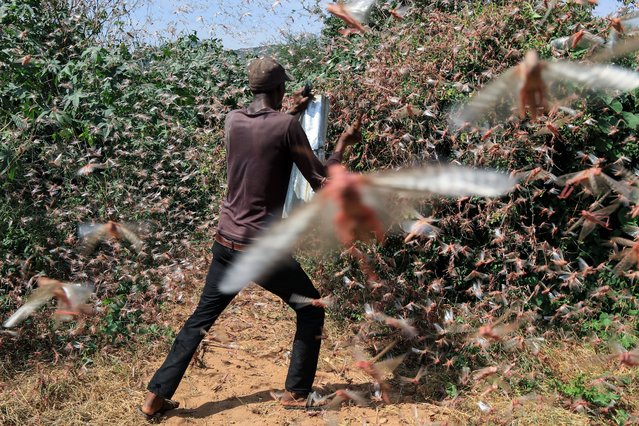
A man uses iron sheet to make noises, as a way of trying to disperse desert locusts that had invaded their farms during the second wave invasion in Kakongo village, in Nuu-Mwingi East, in Kitui, Kenya, 06 February 2021. The second wave invasion of the desert locusts in the country comes at a time where most famers are expecting to harvest their farm produce in the country. According to the United Nations Food and Agriculture Organization (FAO), on 04 February, warned numerous immature desert locust swarms persist in southern Ethiopia and Kenya. Some of the swarms are in community areas and therefore cannot be treated. In Kenya, immature swarms continue to spread westwards across northern and central counties where there are currently about 20 small swarms present, mostly about 50 hectares in size, it said. (Photo by Daniel Irungu/EPA/EFE)

A man uses iron sheet to make noises, as a way of trying to disperse desert locusts that had invaded their farms during the second wave invasion in Kakongo village, in Nuu-Mwingi East, in Kitui, Kenya, 06 February 2021. The second wave invasion of the desert locusts in the country comes at a time where most famers are expecting to harvest their farm produce in the country. (Photo by Daniel Irungu/EPA/EFE)
Details
25 Feb 2021 08:17:00