Loading...
Done
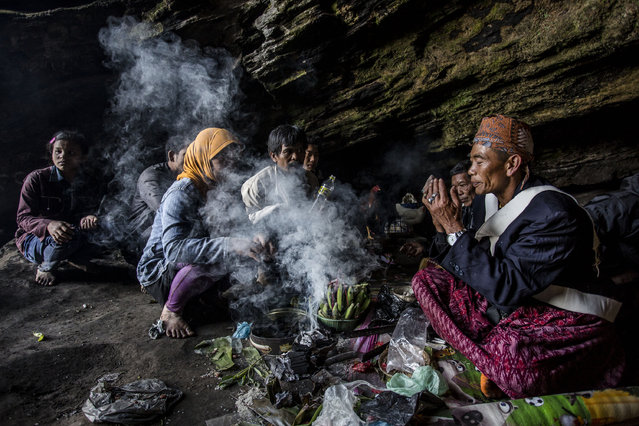
A Tenggerese shaman praying for worshippers at Widodaren cave during the Tenggerese Hindu Yadnya Kasada festival on July 31, 2015 in Probolinggo, East Java, Indonesia. The festival is the main festival of the Tenggerese people and lasts about a month. On the fourteenth day, the Tenggerese make the journey to Mount Bromo to make offerings of rice, fruits, vegetables, flowers and livestock to the mountain gods by throwing them into the volcano's caldera. (Photo by Ulet Ifansasti/Getty Images)

A Tenggerese shaman praying for worshippers at Widodaren cave during the Tenggerese Hindu Yadnya Kasada festival on July 31, 2015 in Probolinggo, East Java, Indonesia. The festival is the main festival of the Tenggerese people and lasts about a month. On the fourteenth day, the Tenggerese make the journey to Mount Bromo to make offerings of rice, fruits, vegetables, flowers and livestock to the mountain gods by throwing them into the volcano's caldera. The origin of the festival lies in the 15th century when a princess named Roro Anteng started the principality of Tengger with her husband Joko Seger, and the childless couple asked the mountain Gods for help in bearing children. The legend says the Gods granted them 24 children but on the provision that the 25th must be tossed into the volcano in sacrifice. The 25th child, Kesuma, was finally sacrificed in this way after initial refusal, and the tradition of throwing sacrifices into the caldera to appease the mountain Gods continues today. (Photo by Ulet Ifansasti/Getty Images)
Details
01 Aug 2015 12:07:00


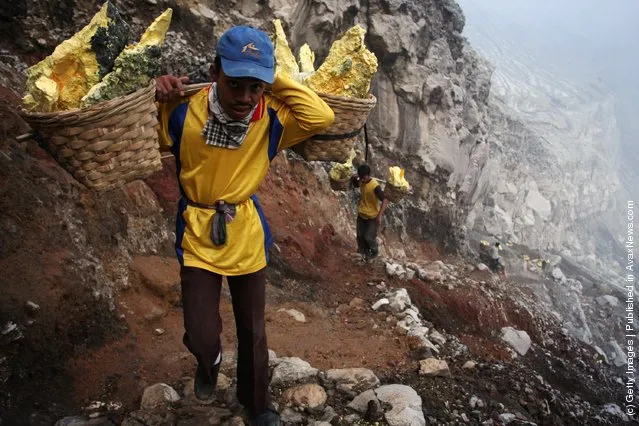
Traditional miners carry sulphur on the Ijen volcano complex on May 25, 2009 outside Banyuwangi, East Java, Indonesia. Miners carry the solidified yellow sulphur blocks from the crater floor to the rim for as many hours a day as they can tolerate, paid by the kilogram of sulphur they extract. The average wage is USD $.05 per kilogram of sulphur and a worker, depending on his strength and stamina, carry on average 3 baskets of 70-80kg per day, earning him around USD $11. (Photo by Ulet Ifansasti/Getty Images)
Details
08 Jul 2011 10:53:00
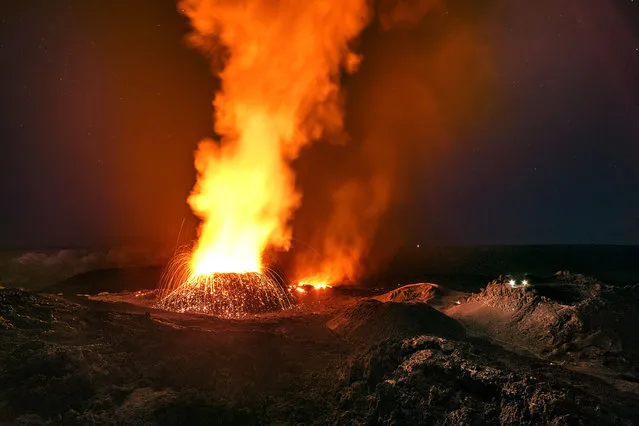
The powerful erupting volcano. (Photo by Luc Perrot/Caters News)

The photos were taken at the Piton de la Fournaise volcano on Reunion Island, a French island in the Indian Ocean one of the most active volcanoes in the world. Here: The powerful erupting volcano. (Photo by Luc Perrot/Caters News)
Details
01 Feb 2016 13:21:00
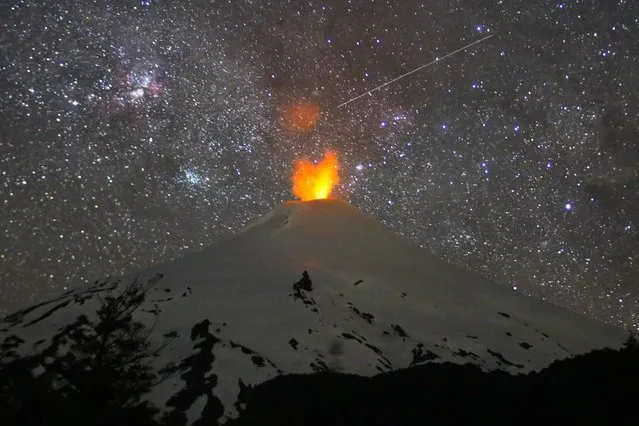
The Villarrica volcano shows signs of activity, as seen from Pucon, some 800 kilometers south of Santiago, on November 21, 2022. Villarrica volcano is among the most active in South America. (Photo by Mario Quilodran/AFP Photo)

The Villarrica volcano shows signs of activity, as seen from Pucon, some 800 kilometers south of Santiago, on November 21, 2022. Villarrica volcano is among the most active in South America. (Photo by Mario Quilodran/AFP Photo)
Details
17 Aug 2023 04:03:00
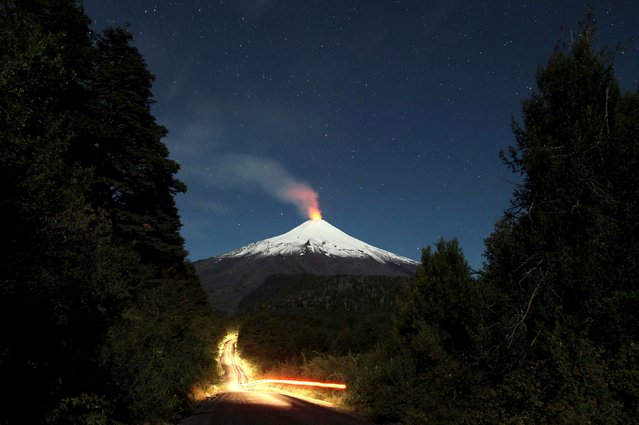
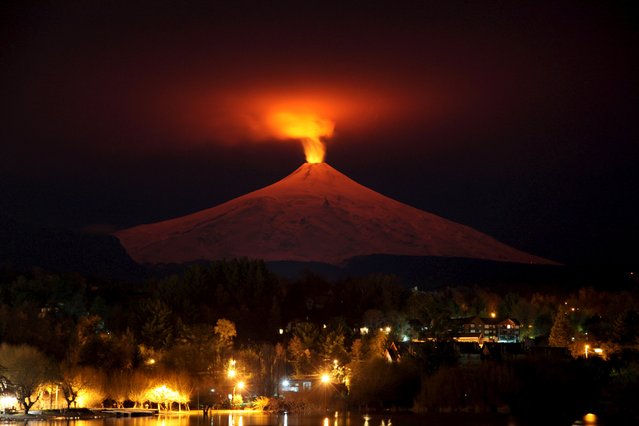
The Villarrica Volcano is seen at night in Chile, April 16, 2016. Villarrica is one of Chile's most active volcanoes. Picture taken with long exposure. Picture taken April 16, 2016. (Photo by Cristobal Saavedra/Reuters)

The Villarrica Volcano is seen at night in Chile, April 16, 2016. Villarrica is one of Chile's most active volcanoes. Picture taken with long exposure. (Photo by Cristobal Saavedra/Reuters)
Details
18 Apr 2016 10:23:00
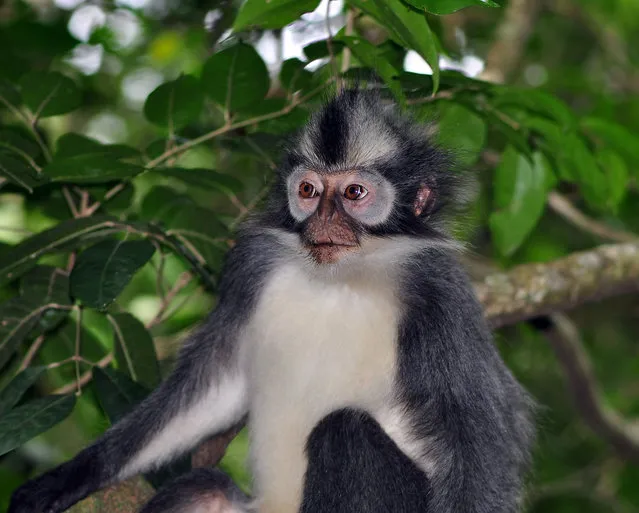
Gunung Leuser National Parkr"

Gunung Leuser National Park is a national park covering 7,927 km² in northern Sumatra, Indonesia, straddling the border of North Sumatra and Aceh provinces. The national park, named after Mount Leuser (3,381 m), protects a wide range of ecosystems. An orangutan sanctuary of Bukit Lawang is located inside the park. Together with Bukit Barisan Selatan and Kerinci Seblat national parks it forms a World Heritage Site, Tropical Rainforest Heritage of Sumatra.
Details
14 Jul 2013 10:28:00
The Villarrica Volcano is seen at night from Pucon town, Chile, July 12, 2015. Villarrica, located near the popular tourist resort of Pucon, is among the most active volcanoes in South America. (Photo by Cristobal Saavedra/Reuters)

The Villarrica Volcano is seen at night from Pucon town, Chile, July 12, 2015. Villarrica, located near the popular tourist resort of Pucon, is among the most active volcanoes in South America. (Photo by Cristobal Saavedra/Reuters)
Details
13 Jul 2015 11:55:00
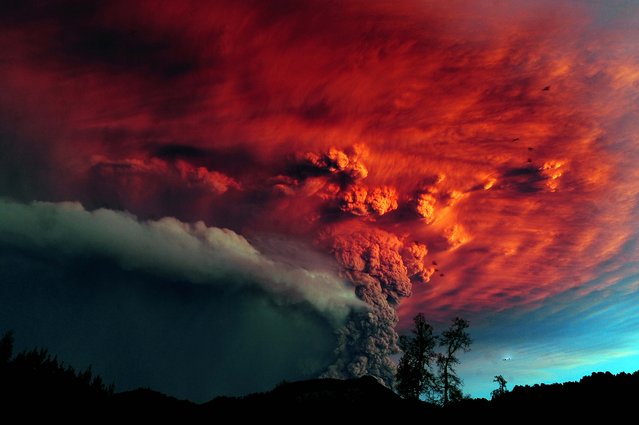
A cloud of ash pours from Puyehue volcano in southern Chile, at sunset on June 5, 2011

“A dirty thunderstorm (also, Volcanic lightning) is a weather phenomenon that occurs when lightning is produced in a volcanic plume. Dirty thunderstorms have been reported in Chile above the Chaiten Volcano, above Alaska's Mount Augustine volcano, and Iceland's Eyjafjallajökull volcano”.

Photo: A cloud of ash pours from Puyehue volcano in southern Chile, at sunset on June 5, 2011. (Claudio Santana/AFP)
Details
15 May 2012 11:31:00