Loading...
Done
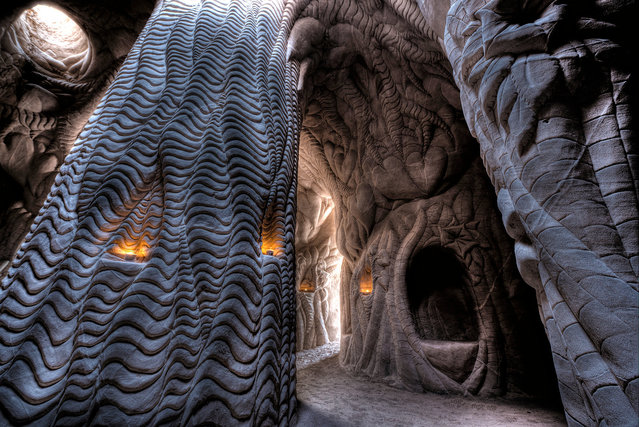
Cave Art By Ra Paulette

Ra Paulette is an American cave sculptor based in New Mexico who digs into hillsides to sculpt elaborate artistic spaces inside mountains. Reviewer Martha Mendoza in the Los Angeles Times described the caves he created as shrines, as hallowed places, a “sanctuary for prayer and meditation” while others describe the caves as works of art. The caves are finished with “scallops, molded curves, smooth ledges, inlaid stones, narrow pods and crusty ledges”. His caves attract visitors worldwide.
Details
24 Nov 2016 08:05:00
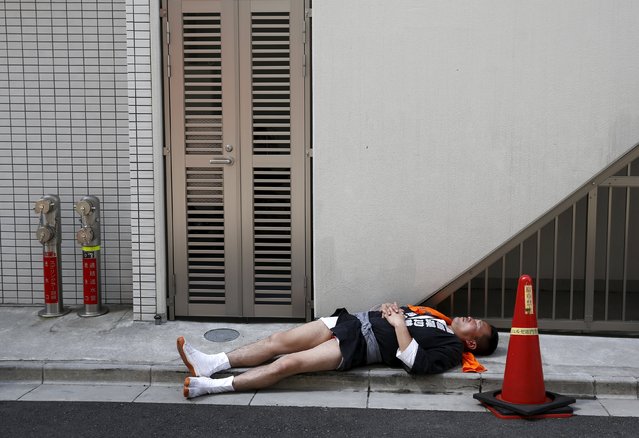
A reveller sleeps on the pavement during the Sanja Matsuri festival in the Asakusa district of Tokyo May 17, 2015. The Sanja Matsuri festival attracts over about one million visitors over its duration of three days, when parties of revellers carry portable shrines through the Asakusa neighbourhood, rocking and shaking them in a belief that this intensified the powers of the deities that reside inside them. (Photo by Thomas Peter/Reuters)

A reveller sleeps on the pavement during the Sanja Matsuri festival in the Asakusa district of Tokyo May 17, 2015. The Sanja Matsuri festival attracts over about one million visitors over its duration of three days, when parties of revellers carry portable shrines through the Asakusa neighbourhood, rocking and shaking them in a belief that this intensified the powers of the deities that reside inside them. (Photo by Thomas Peter/Reuters)
Details
19 May 2015 12:06:00
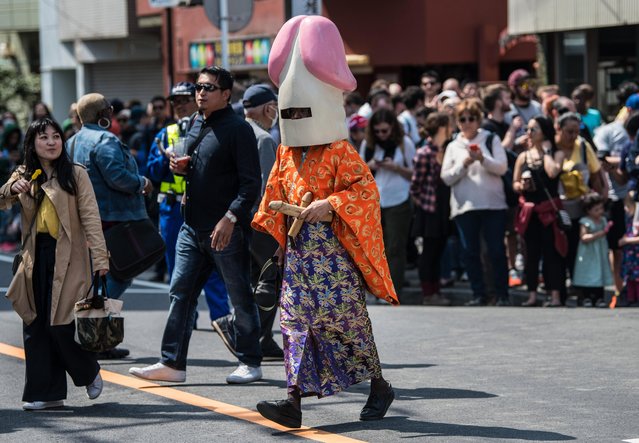
A man wear a phallic-shaped hat during Kanamara Matsuri (Festival of the Steel Phallus) on April 1, 2018 in Kawasaki, Japan. The Kanamara Festival is held annually on the first Sunday of April. The pen*s is the central theme of the festival, focused at the local pen*s-venerating shrine which was once frequented by prostitutes who came to pray for business prosperity and protection against sexually transmitted diseases. Today the festival has become a popular tourist attraction and is used to raise money for HIV awareness and research. (Photo by Carl Court/Getty Images)

A man wear a phallic-shaped hat during Kanamara Matsuri (Festival of the Steel Phallus) on April 1, 2018 in Kawasaki, Japan. The Kanamara Festival is held annually on the first Sunday of April. The pen*s is the central theme of the festival, focused at the local pen*s-venerating shrine which was once frequented by prostitutes who came to pray for business prosperity and protection against sexually transmitted diseases. Today the festival has become a popular tourist attraction and is used to raise money for HIV awareness and research. (Photo by Carl Court/Getty Images)
Details
04 Apr 2018 09:41:00
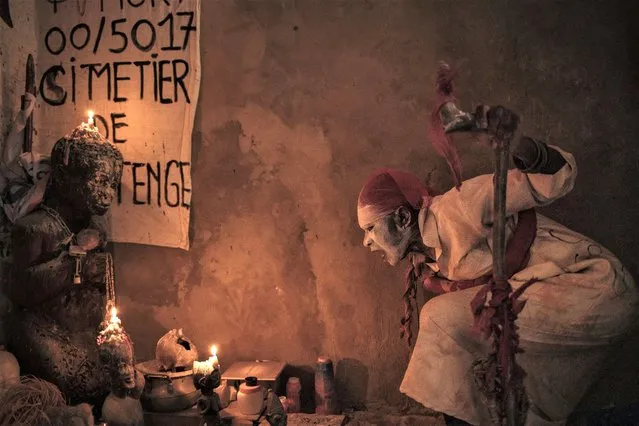
The “voodoo” wrestler known as Panthère utters incantations above the alter of his shrine in Kinshasa, Democratic Republic of Congo, on July 27, 2023. In the capital of DR Congo, dozens of men and women – including former wrestlers – practice “voodoo wrestling”, using traditional fetishes and animals. Fights are organised in some of the city's poorest and most densely populated districts. (Photo by Alexis Huguet/AFP Photo)

The “voodoo” wrestler known as Panthère utters incantations above the alter of his shrine in Kinshasa, Democratic Republic of Congo, on July 27, 2023. In the capital of DR Congo, dozens of men and women – including former wrestlers – practice “voodoo wrestling”, using traditional fetishes and animals. Fights are organised in some of the city's poorest and most densely populated districts. (Photo by Alexis Huguet/AFP Photo)
Details
05 Aug 2023 00:02:00
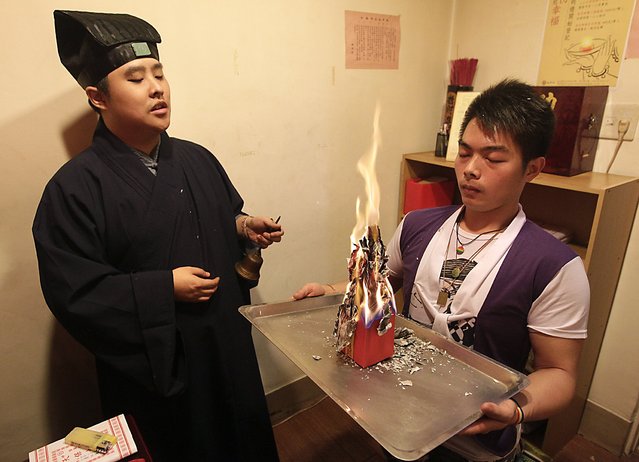
Lu Wei-ming (L), priest of the Wei-ming temple, and a worshipper burn a Taoist paper amulet during a prayer ritual at the temple in New Taipei city January 8, 2015. The shrine, down a narrow alleyway in a bustling district of the city, is dedicated to a deity who has watched over homosexuals for four centuries. (Photo by Pichi Chuang/Reuters)

Lu Wei-ming (L), priest of the Wei-ming temple, and a worshipper burn a Taoist paper amulet during a prayer ritual at the temple in New Taipei city January 8, 2015. The shrine, down a narrow alleyway in a bustling district of the city, is dedicated to a deity who has watched over homosexuals for four centuries. Priest Lu founded the temple in 2006, at a time gays were excluded from most religious ceremonies. (Photo by Pichi Chuang/Reuters)
Details
21 Jan 2015 13:06:00
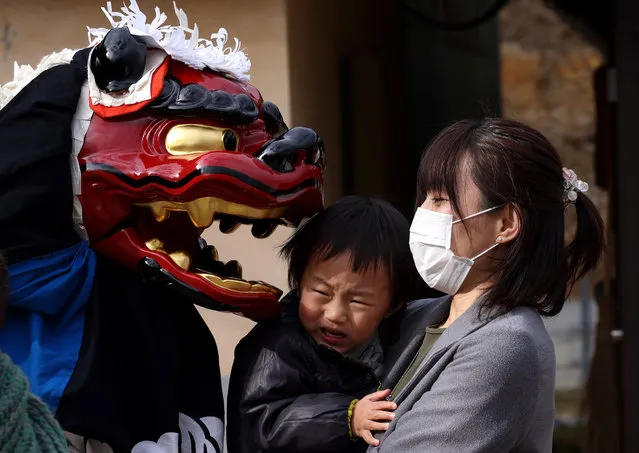
A performer wearing a lion mask performs the Ise Daikagura lion dance at the remote village of Yamanawa on February 08, 2021 in Ryuo, Japan. Ise Daikagura is a group of traditional Lion Dance performers who pray in front of farmers houses and businesses for good grain harvests and disease-free lives. Performers play sacred music using drums and flutes with two lion mask dancers. A lion mask is considered a symbol of God, who enters the house and performs in front of the Shinto God, a statue placed inside the house, mostly in the kitchen. These prayers are called “Kamodo Barai”. After the prayers, they are gifted with money, rice, sake and Japanese sweets from the householders. A group can travel for more than one hundred days to thousands of households and businesses throughout rural-villages in western Japan, and pray to those who are unable to visit the country’s most sacred shrine, the Grand Ise Shrine in Mie Prefecture. The group started its performance in the Edo era between 1603 to 1868 according to Japanese history. The Japanese government designated it as an important folk cultural national property in 1981. (Photo by Buddhika Weerasinghe/Getty Images)

A performer wearing a lion mask performs the Ise Daikagura lion dance at the remote village of Yamanawa on February 08, 2021 in Ryuo, Japan. Ise Daikagura is a group of traditional Lion Dance performers who pray in front of farmers houses and businesses for good grain harvests and disease-free lives. (Photo by Buddhika Weerasinghe/Getty Images)
Details
18 Feb 2021 09:27:00
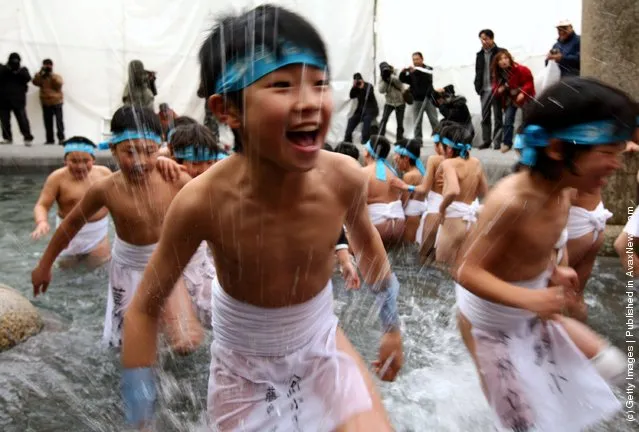
Japanese children wear loincloths as they splash about in freezing cold water during Saidaiji Naked Festival, at Saidaiji Temple

“A Hadaka Matsuri (“Naked Festival”) is a type of Japanese festival, or matsuri, in which participants wear a minimum amount of clothing; usually just a Japanese loincloth (called fundoshi), sometimes with a short happi coat, and rarely completely naked. Whatever the clothing, it is considered to be above vulgar, or everyday, undergarments, and on the level of holy Japanese shrine attire. Naked festivals are held in dozens of places throughout Japan every year, usually in the summer or winter. The most famous festival is held in Okayama, where the festival originated. Every year, over 9,000 men participate in this festival”. – Wikipedia

Photo: Japanese men wear loincloths as they splash about in freezing cold water during Saidaiji Naked Festival, at Saidaiji Temple on February 18, 2012 in Okayama, Japan. (Photo by Buddhika Weerasinghe/Getty Images)
Details
19 Feb 2012 12:18:00
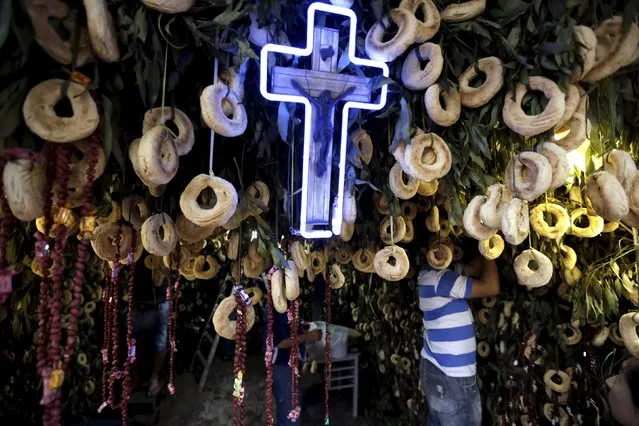
An altar is pictured after it was decorated by the Antar family with some 3,000 traditional cheese and corn buns called “chipas”, in celebration of Kurusu Ara in Asuncion May 3, 2015. (Photo by Jorge Adorno/Reuters)

An altar is pictured after it was decorated by the Antar family with some 3,000 traditional cheese and corn buns called “chipas”, in celebration of Kurusu Ara in Asuncion May 3, 2015. Kurusu Ara, the Day of the Cross, is a Catholic festival that is combined with local Gurani culture and falls annually on May 3. Paraguayans typically celebrate the festival with chipas, used to decorate religious shrines and altars. The chipas are later distributed to attendees. The buns at the top are arranged to read, “March 3 live”. (Photo by Jorge Adorno/Reuters)
Details
04 May 2015 09:18:00