Loading...
Done
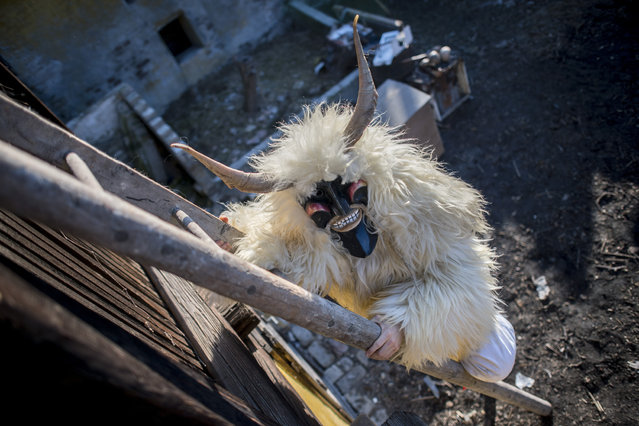
A man wears a busho mask and a costume made of sheep pelt while climbing up a ladder outside a barn in Mohacs, Hungary, 20 February 2020, on the first day of carnival. The traditional Busho carnival, which marks the end of winter, dates back to the 16th century. According to local legend, members of an ethnic South Slavic group living in Mohacs at the time dressed up in similar costumes and wore wooden masks to scare away Ottoman invaders, who mistook them for demons. (Photo by Tamas Soki/EPA/EFE)

A man wears a busho mask and a costume made of sheep pelt while climbing up a ladder outside a barn in Mohacs, Hungary, 20 February 2020, on the first day of carnival. The traditional Busho carnival, which marks the end of winter, dates back to the 16th century. According to local legend, members of an ethnic South Slavic group living in Mohacs at the time dressed up in similar costumes and wore wooden masks to scare away Ottoman invaders, who mistook them for demons. (Photo by Tamas Soki/EPA/EFE)
Details
23 Feb 2020 00:07:00
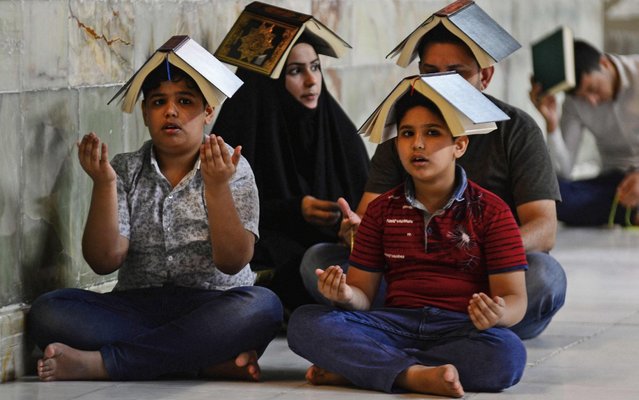
Shiite Muslims gather, albeit in fewer numbers due to the COVID-19 pandemic, at the Imam Ali shrine in the central Iraqi holy city of Najaf late on May 16, 2020, to mark Lailat al-Qadr, a night in the holy month of Ramadan during which the Koran was first revealed to the Prophet Mohammed in the seventh century. Worshippers placed copies of the Koran on their heads to convey veneration during the overnight prayers in a centuries-old ritual, as they pleaded to God to rid them of the ongoing novel coronavirus pandemic. (Photo by Haidar Hamdani/AFP Photo)

Shiite Muslims gather, albeit in fewer numbers due to the COVID-19 pandemic, at the Imam Ali shrine in the central Iraqi holy city of Najaf late on May 16, 2020, to mark Lailat al-Qadr, a night in the holy month of Ramadan during which the Koran was first revealed to the Prophet Mohammed in the seventh century. Worshippers placed copies of the Koran on their heads to convey veneration during the overnight prayers in a centuries-old ritual, as they pleaded to God to rid them of the ongoing novel coronavirus pandemic. (Photo by Haidar Hamdani/AFP Photo)
Details
19 May 2020 00:07:00
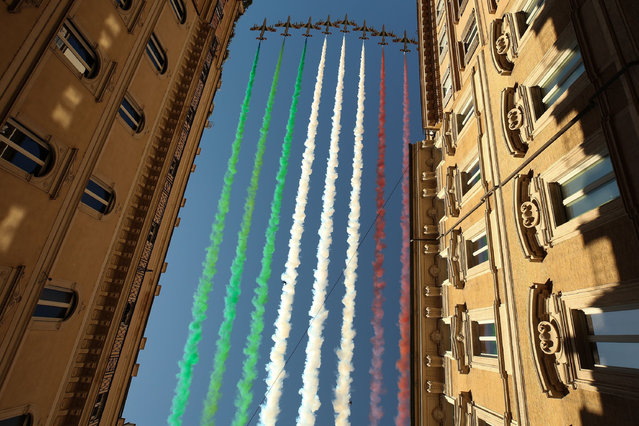
Rome marks 74th Festa della Repubblica on 2 June 2020. Italy's celebrate the national day, Festa della Repubblica in 2020 with the events for the 74th edition of Republic Day reduced due to the covid-19 crisis. The Frecce Tricolori, the aerobatic demonstration team of the Italian Air Force, popular aeronautical display featuring fighter jets, fly in formation over the centre of Rome, emitting plumes of the three colours from the Italian flag. (Photo by Giuseppe Pino Fama/Pacific Press/Rex Features/Shutterstock)

Rome marks 74th Festa della Repubblica on 2 June 2020. Italy's celebrate the national day, Festa della Repubblica in 2020 with the events for the 74th edition of Republic Day reduced due to the covid-19 crisis. The Frecce Tricolori, the aerobatic demonstration team of the Italian Air Force, popular aeronautical display featuring fighter jets, fly in formation over the centre of Rome, emitting plumes of the three colours from the Italian flag. (Photo by Giuseppe Pino Fama/Pacific Press/Rex Features/Shutterstock)
Details
04 Jun 2020 00:07:00
An orphan plays with her new hula hoop during the food and toy distribution, for total about 500 orphans in 11 orphanages, by National Muslim COVID-19 Response Committee to celebrate Eid al-Fitr, the Muslim holiday which marks the end of the fasting month of Ramadan at Good hope markazil Banatil Islamia orphans centre in Nairobi, Kenya, on May 25, 2020. (Photo by Yasuyoshi Chiba/AFP Photo)

An orphan plays with her new hula hoop during the food and toy distribution, for total about 500 orphans in 11 orphanages, by National Muslim COVID-19 Response Committee to celebrate Eid al-Fitr, the Muslim holiday which marks the end of the fasting month of Ramadan at Good hope markazil Banatil Islamia orphans centre in Nairobi, Kenya, on May 25, 2020. (Photo by Yasuyoshi Chiba/AFP Photo)
Details
06 Jun 2020 00:01:00
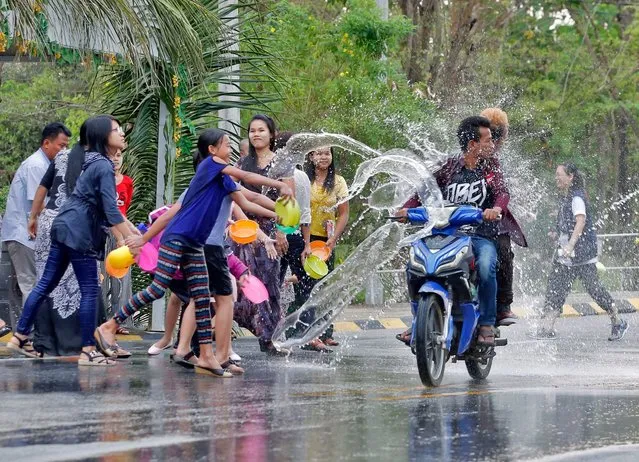
People participate in the first day of Thingyan Water Festival in Naypyitaw, Myanmar on April 13, 2018. The annual water festival, known as Thingyan, features large groups of people congregating to celebrate the by splashing water and throwing powder at each other's faces as a symbol of cleansing and washing away the sins from the old year. It marks the start of the traditional New Year and is similarly celebrated in countries such as Myanmar, Thailand, Laos and Cambodia. (Photo by Hein Htet/EPA/EFE/Rex Features/Shutterstock)

People participate in the first day of Thingyan Water Festival in Naypyitaw, Myanmar on April 13, 2018. The annual water festival, known as Thingyan, features large groups of people congregating to celebrate the by splashing water and throwing powder at each other's faces as a symbol of cleansing and washing away the sins from the old year. It marks the start of the traditional New Year and is similarly celebrated in countries such as Myanmar, Thailand, Laos and Cambodia. (Photo by Hein Htet/EPA/EFE/Rex Features/Shutterstock)
Details
27 Apr 2018 00:03:00
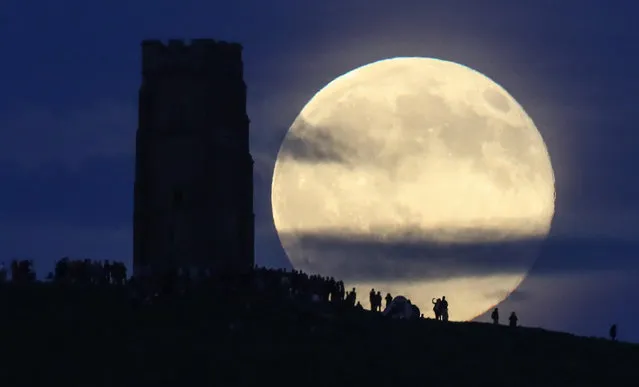
A full moon rises behind Glastonbury Tor as people gather to celebrate the summer solstice on June 20, 2016 in Somerset, England. Tonight's strawberry moon, a name given to the full moon in June by Native Americans because it marks the beginning of strawberry picking season, last occurred on the solstice on June 22, 1967 and it will not happen again on the summer solstice for another 46 years until June 21, 2062. (Photo by Matt Cardy/Getty Images)

A full moon rises behind Glastonbury Tor as people gather to celebrate the summer solstice on June 20, 2016 in Somerset, England. Tonight's strawberry moon, a name given to the full moon in June by Native Americans because it marks the beginning of strawberry picking season, last occurred on the solstice on June 22, 1967 and it will not happen again on the summer solstice for another 46 years until June 21, 2062. (Photo by Matt Cardy/Getty Images)
Details
23 Jun 2016 12:09:00
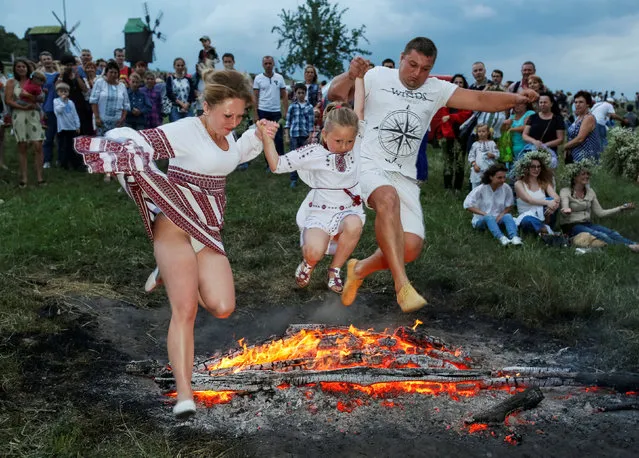
People jump over a campfire during a celebration on the traditional Ivana Kupala (Ivan the Bather) holiday, the ancient tradition, originating from pagan times, is usually marked with grand overnight festivities during which people sing and dance around campfires, believing it will purge them of their sins and make them healthier, in Kiev, Ukraine, July 6, 2016. (Photo by Gleb Garanich/Reuters)

People jump over a campfire during a celebration on the traditional Ivana Kupala (Ivan the Bather) holiday, the ancient tradition, originating from pagan times, is usually marked with grand overnight festivities during which people sing and dance around campfires, believing it will purge them of their sins and make them healthier, in Kiev, Ukraine, July 6, 2016. (Photo by Gleb Garanich/Reuters)
Details
07 Jul 2016 11:33:00
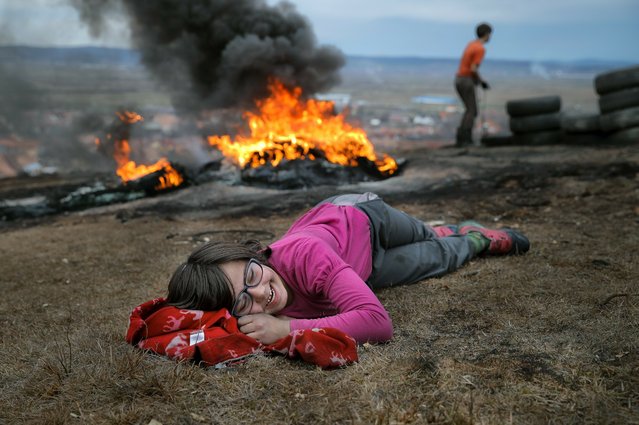
In this photo taken on Sunday, March 10, 2019, a little girl laughs during a ritual marking the upcoming Clean Monday, the beginning of the Great Lent, 40 days ahead of Orthodox Easter, on the hills surrounding the village of Poplaca, in central Romania's Transylvania region. Romanian villagers burn piles of used tires then spin them in the Transylvanian hills in a ritual they believe will ward off evil spirits as they begin a period of 40 days of abstention, when Orthodox Christians cut out meat, fish, eggs, and dairy. (Photo by Vadim Ghirda/AP Photo)

In this photo taken on Sunday, March 10, 2019, a little girl laughs during a ritual marking the upcoming Clean Monday, the beginning of the Great Lent, 40 days ahead of Orthodox Easter, on the hills surrounding the village of Poplaca, in central Romania's Transylvania region. Romanian villagers burn piles of used tires then spin them in the Transylvanian hills in a ritual they believe will ward off evil spirits as they begin a period of 40 days of abstention, when Orthodox Christians cut out meat, fish, eggs, and dairy. (Photo by Vadim Ghirda/AP Photo)
Details
01 Jun 2019 00:03:00