Loading...
Done
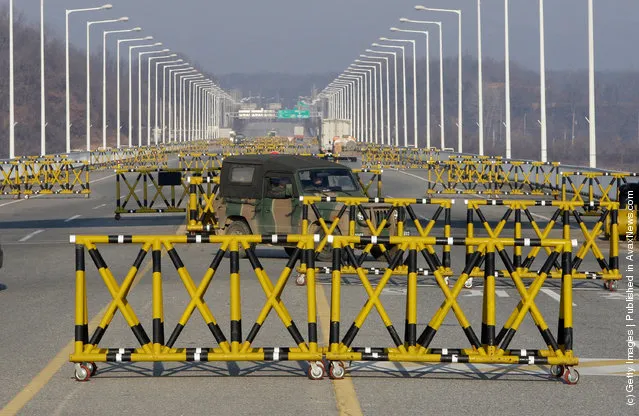
South Korean soldiers walk along barricades at the military check point, near the Demilitarized zone (DMZ) separating South and North Korea

A South Korean military vehicle drives past barricades at the military check point, near the Demilitarized zone (DMZ) separating South and North Korea on December 20, 2011 in Paju, South Korea. (Photo by Chung Sung-Jun/Getty Images)
Details
20 Dec 2011 13:29:00


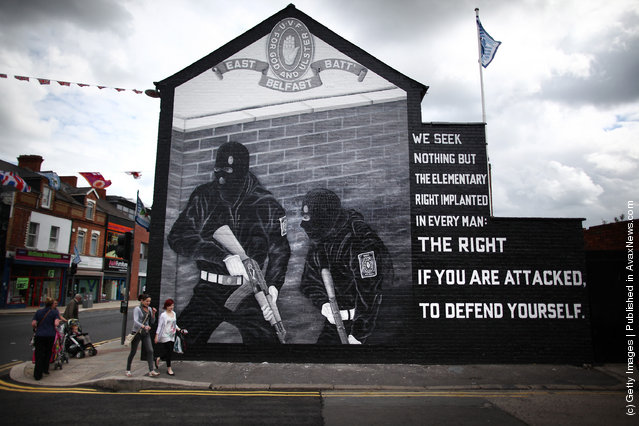
People walk past a mural depicting Ulster Volunteer Force gunmen in the mainly protestant area of East Belfast on June 23, 2011 in Northern Ireland. The Short Strand and Newtonards Road areas of East Belfast remained mostly peaceful after Protestant and Catholics groups were involved in a stand-off overnight. (Photo by Peter Macdiarmid/Getty Images)
Details
24 Jun 2011 09:53:00
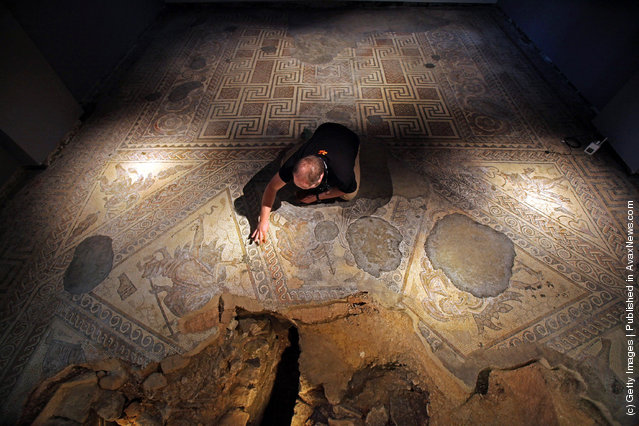
David Rawcliffe, house and monument steward at the National Trust's Chedworth Roman Villa cleans a Roman mosiac in the new environmentally-controlled conservation shelter near Cirencester, England

David Rawcliffe, house and monument steward at the National Trust's Chedworth Roman Villa cleans a Roman mosiac in the new environmentally-controlled conservation shelter on March 19, 2012 near Cirencester, England. Opened this month, the multi-million pound building allows visitors to walk on suspended walkways just above the 1600-year-old Roman floors and to see recently excavated mosaics not seen for 150 years, with more to be uncovered over the coming year. (Photo by Matt Cardy/Getty Images)
Details
20 Mar 2012 10:50:00
“The Skeleton Krewe 2013 – Manning”. (Kevin O'Mara)

“The Skeleton Krewe was founded in 1999 by Christopher Kirsch. Inspired by the early days of Carnival before tractors and floats replaced walking processions, the Krewe has become one of New Orleans' premier marching clubs. The Krewe began actively marching as a small group of friends, but has grown to 40 active members”. – The Skeleton Krewe. Photo: “The Skeleton Krewe 2013 – Manning”. (Photo by Kevin O'Mara)
Details
29 Oct 2013 11:56:00
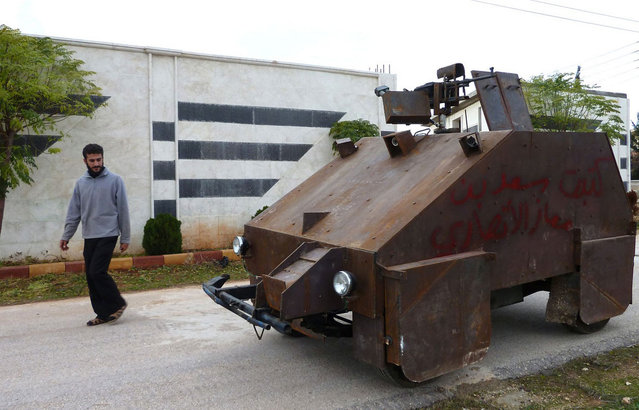
A Syrian rebel walks past Sham 2, a homemade armored vehicle, in Bishqatin, Syria, on December 8, 2012. From a distance it looks rather like a big rusty metal box but closer inspection reveals a homemade armored vehicle waiting to be deployed. Sham II, named after ancient Syria, is built from the chassis of a car and touted by rebels as “100 percent made in Syria”. (Photo by Herve Bar/AFP Photo)

A Syrian rebel walks past Sham 2, a homemade armored vehicle, in Bishqatin, Syria, on December 8, 2012. From a distance it looks rather like a big rusty metal box but closer inspection reveals a homemade armored vehicle waiting to be deployed. Sham II, named after ancient Syria, is built from the chassis of a car and touted by rebels as “100 percent made in Syria”. (Photo by Herve Bar/AFP Photo)
Details
03 Sep 2013 09:30:00
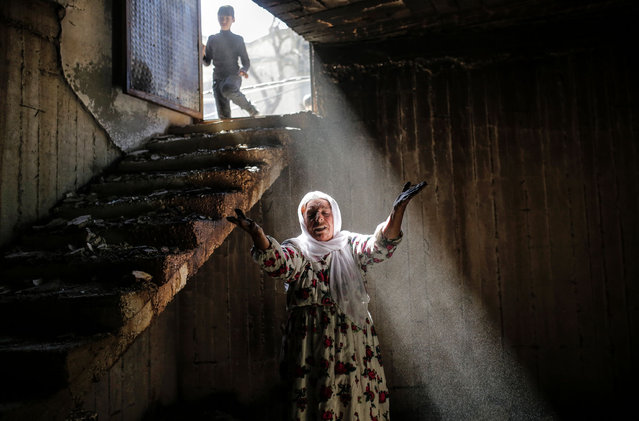
A woman reacts while walking among the ruins of damaged buildings following heavy fighting between government troops and Kurdish fighters, on March 2, 2016 in the southeastern Turkey Kurdish town of Cizre, near the border with Syria and Iraq. Thousands in Turkey's Kurdish-majority town of Cizre started returning to their homes today after authorities partially lifted a curfew in place since December for a controversial military operation to root out separatist rebels. (Photo by Yasin Akgül/AFP Photo)

A woman reacts while walking among the ruins of damaged buildings following heavy fighting between government troops and Kurdish fighters, on March 2, 2016 in the southeastern Turkey Kurdish town of Cizre, near the border with Syria and Iraq. Thousands in Turkey's Kurdish-majority town of Cizre started returning to their homes today after authorities partially lifted a curfew in place since December for a controversial military operation to root out separatist rebels. (Photo by Yasin Akgül/AFP Photo)
Details
03 Mar 2016 11:29:00
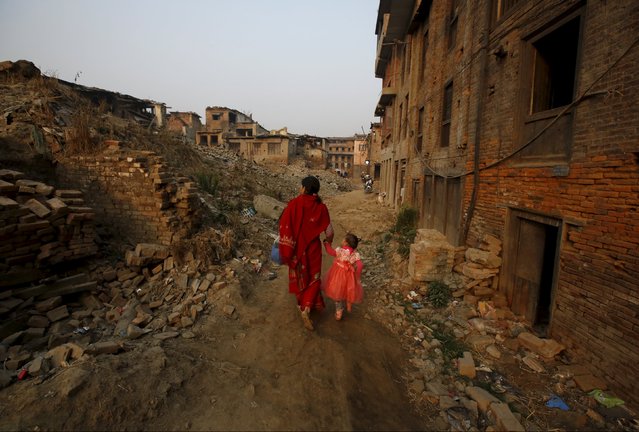
A woman and a child walk past the remains of collapsed houses damaged during the April 2015 earthquake, in Bhaktapur, Nepal March 18, 2016. The two devastating earthquakes that struck Nepal last year killed almost 9,000 people across the country. Inside the Kathmandu Valley almost 2,000 died, and some of the area's most important cultural and heritage sites were completely destroyed. As Kathmandu inhabitants prepare to mark the one-year anniversary of the event, thousands are still displaced and millions are living in temporary shelters. (Photo by Navesh Chitrakar/Reuters)

A woman and a child walk past the remains of collapsed houses damaged during the April 2015 earthquake, in Bhaktapur, Nepal March 18, 2016. The two devastating earthquakes that struck Nepal last year killed almost 9,000 people across the country. Inside the Kathmandu Valley almost 2,000 died, and some of the area's most important cultural and heritage sites were completely destroyed. As Kathmandu inhabitants prepare to mark the one-year anniversary of the event, thousands are still displaced and millions are living in temporary shelters. (Photo by Navesh Chitrakar/Reuters)
Details
25 Apr 2016 09:19:00
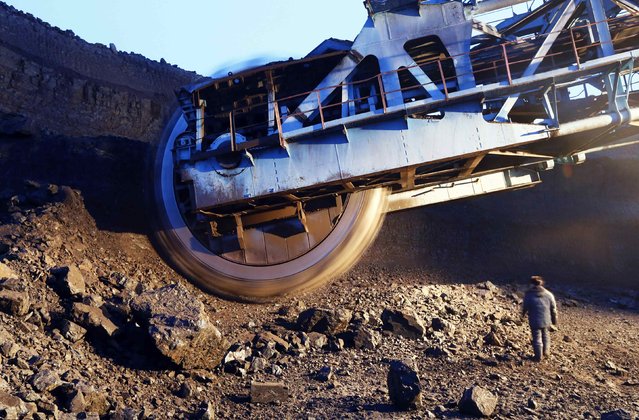
An employee walks near a rotary dredge which works on the coal face of the Borodinsky opencast colliery, near the Siberian town of Borodino, east of Krasnoyarsk, December 9, 2014. The Borodinsky colliery, 9 km (5.6 miles) long and more than 100 meters (328 feet) deep, annually produces more than 20 million tons of coal and is considered to be the biggest opencast coal mine in Russia, according to official representatives. (Photo by Ilya Naymushin/Reuters)

An employee walks near a rotary dredge which works on the coal face of the Borodinsky opencast colliery, near the Siberian town of Borodino, east of Krasnoyarsk, December 9, 2014. The Borodinsky colliery, 9 km (5.6 miles) long and more than 100 meters (328 feet) deep, annually produces more than 20 million tons of coal and is considered to be the biggest opencast coal mine in Russia, according to official representatives. (Photo by Ilya Naymushin/Reuters)
Details
11 Dec 2014 13:29:00