Loading...
Done
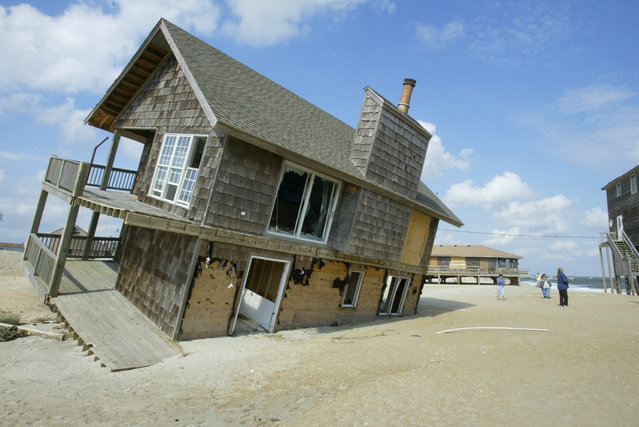
A house that was slammed off its foundation by Hurricane Isabel sits precariously on the beach one month after it hit Rodanthe, North Carolina October 18, 2003. (Photo by Rick Wilking/Reuters)

A house that was slammed off its foundation by Hurricane Isabel sits precariously on the beach one month after it hit Rodanthe, North Carolina October 18, 2003. (Photo by Rick Wilking/Reuters)
Details
17 Sep 2015 10:55:00
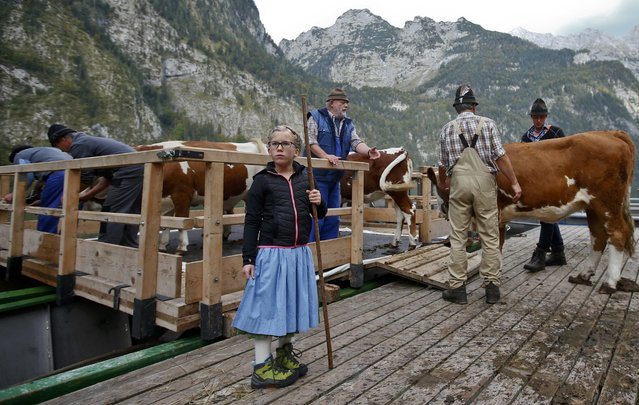
Bavarian farmers load their cows on a boat before they drive over the picturesque Lake Koenigssee, Germany, October 3, 2015. (Photo by Michael Dalder/Reuters)

Bavarian farmers load their cows on a boat before they drive over the picturesque Lake Koenigssee, Germany, October 3, 2015. Before the winter season approaches the farmers have to drive their cattle down from their Alpine meadows to a narrow valley that can only be reached by boat. (Photo by Michael Dalder/Reuters)
Details
06 Oct 2015 08:01:00
The stunning Milkyway in Midwestern U.S.A.  captured by photographer Randy Halverson in 2013. The stunning skies in Midwestern U.S.A. captured by photographer Randy Halverson. The videographer captured rare footage of the Milky Way, the elusive Northern Lights and raging night storms in some of the most isolated regions of the U.S.A. (Photo by Randy Halverson/Barcroft Media)

The stunning Milkyway in Midwestern U.S.A. captured by photographer Randy Halverson in 2013. The stunning skies in Midwestern U.S.A. captured by photographer Randy Halverson. The videographer captured rare footage of the Milky Way, the elusive Northern Lights and raging night storms in some of the most isolated regions of the U.S.A. The footage, which spans the skies of South Dakota, Wyoming and Utah, was taken between spring and autumn 2013. The 47-year-old spent 40 nights scattered across the eight-month period sat near his camera to capture the clear footage. Randy from Kennebec, South Dakota has been shooting timelapse for over 4 years. (Photo by Randy Halverson/Barcroft Media)
Details
20 Aug 2014 10:32:00
Members of the Compagnie 1602 take part in a procession in Geneva December 14, 2014. The annual procession of the Fete de l'Escalade has been held since 1926 and commemorates local resistance to the December 11, 1602 surprise attack by the troops of the Duke of Savoy. (Photo by Pierre Albouy/Reuters)

Members of the Compagnie 1602 take part in a procession in Geneva December 14, 2014. The annual procession of the Fete de l'Escalade has been held since 1926 and commemorates local resistance to the December 11, 1602 surprise attack by the troops of the Duke of Savoy. A popular symbol of the resistance is the figure of Mere Royaume pouring hot soup from her caldron onto the soldiers. A chocolate replica of the cauldron is widely available during the three-day celebrations. This year marks also the 200-year anniversary of the entry of the Canton of Geneva in the Swiss Confederation. (Photo by Pierre Albouy/Reuters)
Details
15 Dec 2014 11:08:00
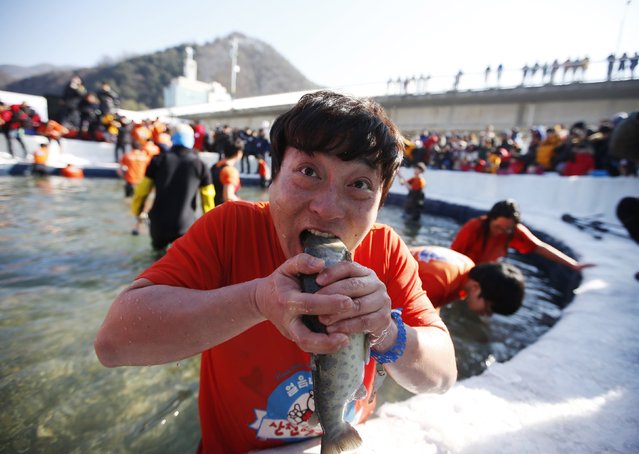
A man reacts after catching a trout with his hands during an event promoting the Ice Festival on a frozen river in Hwacheon, about 20 km (12 miles) south of the demilitarized zone separating the two Koreas, January 10, 2015. (Photo by Kim Hong-Ji/Reuters)

A man reacts after catching a trout with his hands during an event promoting the Ice Festival on a frozen river in Hwacheon, about 20 km (12 miles) south of the demilitarized zone separating the two Koreas, January 10, 2015. The annual ice festival, which is one of the most famous and biggest festivals in South Korea, expects to see more than 1,000,000 people attend. The festival lasts for three weeks from January 10 this year. (Photo by Kim Hong-Ji/Reuters)
Details
11 Jan 2015 13:54:00
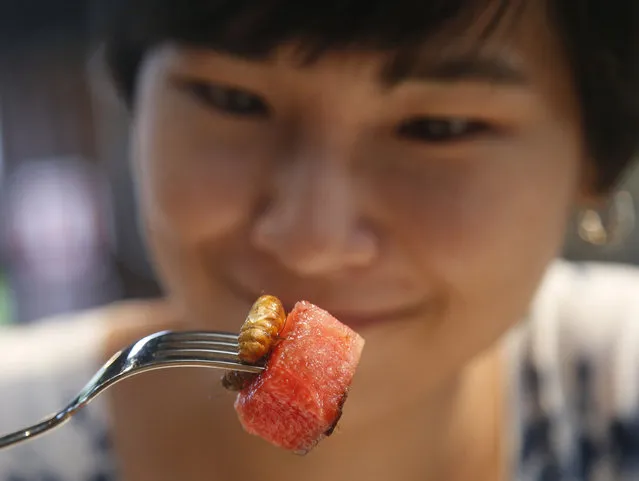
In this Tuesday, September 12, 2017 photo, Amornrat Simapsaisan, a local shop manager, watches before she ate watermelon salad with bamboo worms, at Inspects in the Backyard restaurant, Bangkok, Thailand. Tucking into insects is nothing new in Thailand, where street vendors pushing carts of fried crickets and buttery silkworms have long fed locals and adventurous tourists alike. But bugs are now fine-dining at the Bangkok bistro aiming to revolutionize views of nature’s least-loved creatures and what you can do with them. She tucked in quite happily to her watermelon and cricket salad on a recent evening.  “It’s tasty. It’s munchy”, she said. (Photo by Sakchai Lalit/AP Photo)

In this Tuesday, September 12, 2017 photo, Amornrat Simapsaisan, a local shop manager, watches before she ate watermelon salad with bamboo worms, at Inspects in the Backyard restaurant, Bangkok, Thailand. Tucking into insects is nothing new in Thailand, where street vendors pushing carts of fried crickets and buttery silkworms have long fed locals and adventurous tourists alike. But bugs are now fine-dining at the Bangkok bistro aiming to revolutionize views of nature’s least-loved creatures and what you can do with them. She tucked in quite happily to her watermelon and cricket salad on a recent evening. “It’s tasty. It’s munchy”, she said. (Photo by Sakchai Lalit/AP Photo)
Details
04 Oct 2017 06:54:00
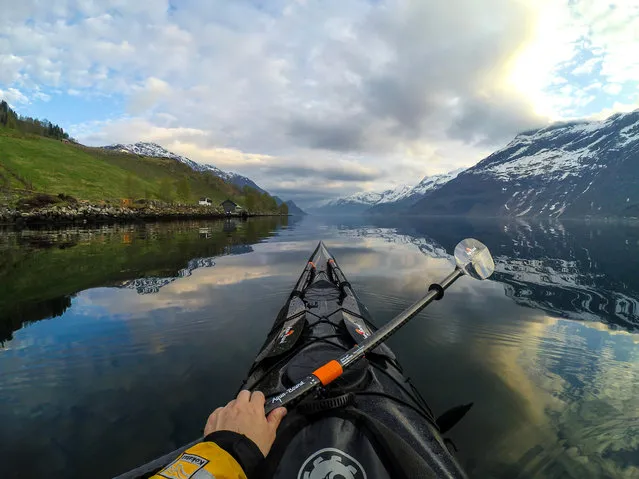
Hardangerfjorden, near Ullensvang. (Photo by Thomasz Furmanek/Caters News Agency)

Marine researcher Tomasz Furmanek, 44, from Bøjarnesveien, Norway, takes stunning images while kayaking through various fjords and lakes in the Scandinavian country. During Tomasz’s free time, he works as a freelance photographer traveling around the lakes, fjords and coastal regions of the beautiful country – and capturing breathtaking photographs. Here: Hardangerfjorden, near Ullensvang. (Photo by Thomasz Furmanek/Caters News Agency)
Details
22 Oct 2018 00:05:00
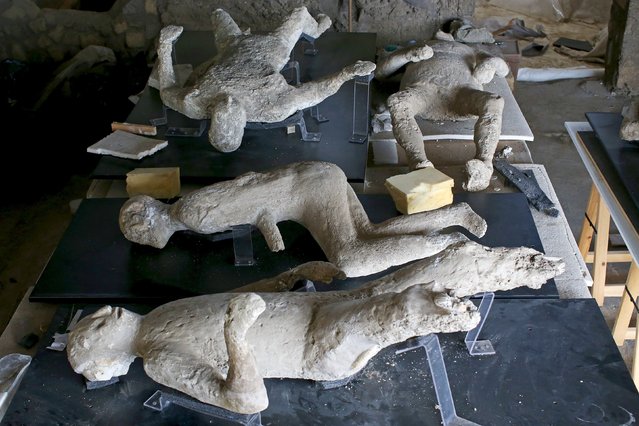
Plaster cast moulds of victims of the Mount Vesuvius eruption lie on a display table in a laboratory at Pompeii October 13, 2015. An expert team made up of archaeologists, radiologists, orthodontists and anthropologists began on September 2015 to use CAT scan technology (computerised axial tomography) to peer inside the plaster cast moulds of Pompeii's victims, in a study that has added more detail to previous findings. (Photo by Alessandro Bianchi/Reuters)

Plaster cast moulds of victims of the Mount Vesuvius eruption lie on a display table in a laboratory at Pompeii October 13, 2015. An expert team made up of archaeologists, radiologists, orthodontists and anthropologists began on September 2015 to use CAT scan technology (computerised axial tomography) to peer inside the plaster cast moulds of Pompeii's victims, in a study that has added more detail to previous findings. A 16-layer scan had to be used in order to penetrate the hardened plaster but the results showed up impressive skeletal remains and near perfect teeth. (Photo by Alessandro Bianchi/Reuters)
Details
22 Oct 2015 08:02:00