Loading...
Done
Ocean voyage

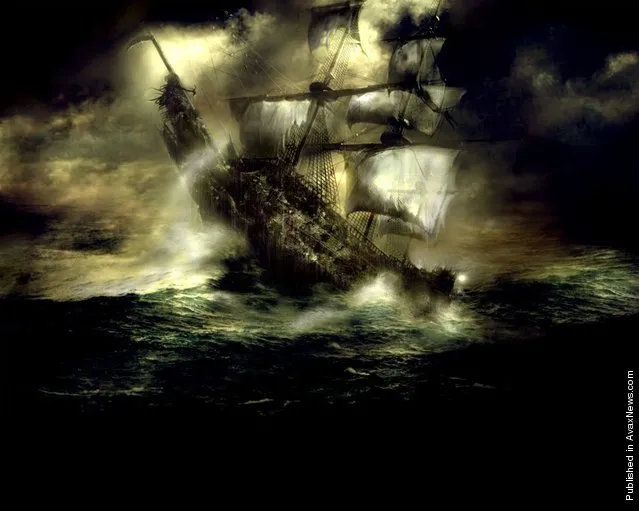
Do you think that history is a science? Well, not exactly. First, and foremost, history is the state's “legend of wars”, it’s official regalia. Of course, public historians are not interested in scientific truth – quite the opposite. In this respect, any attempt to present a state’s history as altruistic and benevolent as possible is welcomed and encouraged – as opposed to any revisionism attempts that may be more accurate. In this matter, Chinese have surpassed us all – they revised in highly creative manner (but rather shamelessly) the technology already invented by Europeans, a process that resulted in oldest state on the planet. Here is an interesting paradox: ask any sinologist about the Middle Kingdom during second century B.C., and he will describe it to you in such a vivid manner as if he has been living there all his life – but as soon as you will ask him to describe Chinese history in the 19-20th centuries… let's say, his eagerness will be greatly diminished. However, we will discuss China in a different article, and in the meantime we will try to understand how exactly historic “legend of wars” is formed and functions – based on a specific and well-known example. A great example is Ferdinand Magellan's first voyage around the world.
Details
14 Nov 2011 09:11:00
A Kashmiri woman walks on a footbridge as it rains in Srinagar, June 24, 2015. This year's monsoon rains in India are officially forecast to be only 88 percent of the long-term average. (Photo by Danish Ismail/Reuters)

A Kashmiri woman walks on a footbridge as it rains in Srinagar, June 24, 2015. This year's monsoon rains in India are officially forecast to be only 88 percent of the long-term average. (Photo by Danish Ismail/Reuters)
Details
29 Jun 2015 12:11:00
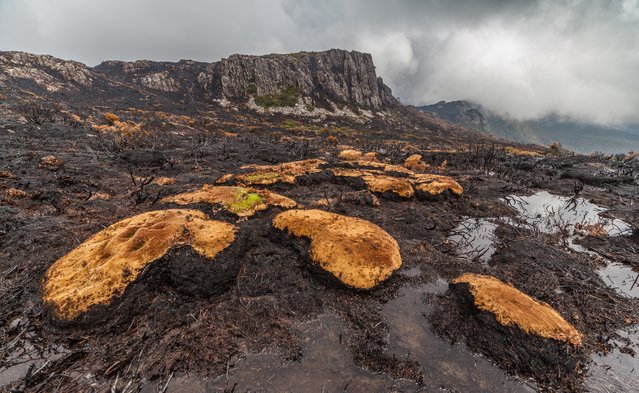
Pictures from Tasmania’s central plateau, shot by wilderness photographer Dan Broun, show the extraordinary damage wrought by more than a week of bushfires following lightning strikes in Australia’s southernmost state on January 13. 2016. The world heritage area was home to a range of unique alpine flora including pencil pines, king billy pines and cushion plants, some more than 1,000 years old. (Photo by Dan Broun)

Pictures from Tasmania’s central plateau, shot by wilderness photographer Dan Broun, show the extraordinary damage wrought by more than a week of bushfires following lightning strikes in Australia’s southernmost state on January 13. 2016. The world heritage area was home to a range of unique alpine flora including pencil pines, king billy pines and cushion plants, some more than 1,000 years old. Now more than 10,000ha of land has been incinerated, and ecologist say that, unlike eucalyptus trees, the ancient flora will not recover. (Photo by Dan Broun)
Details
02 Feb 2016 13:56:00
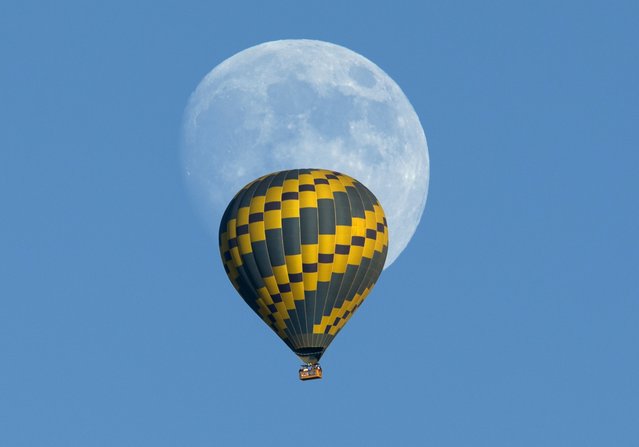
A hot air balloon floats past an almost full rising moon on a warm fall evening near Encinitas, California October 5, 2014. (Photo by Mike Blake/Reuters)

A hot air balloon floats past an almost full rising moon on a warm fall evening near Encinitas, California October 5, 2014. (Photo by Mike Blake/Reuters)
Details
09 Nov 2014 09:42:00
A giant size figure of the United States' goalkeeper Tim Howard is displayed outside a shopping mall in Hong Kong, Thursday, June 12, 2014, to promote the upcoming 2014 World Cup in Brazil. A total of seven 3.5 meters to 4 meters (11 feet 6 inch to 13 feet one inch) tall figures of famous players attract many soccer fans. (Photo by Vincent Yu/AP Photo)

A giant size figure of the United States' goalkeeper Tim Howard is displayed outside a shopping mall in Hong Kong, Thursday, June 12, 2014, to promote the upcoming 2014 World Cup in Brazil. A total of seven 3.5 meters to 4 meters (11 feet 6 inch to 13 feet one inch) tall figures of famous players attract many soccer fans. (Photo by Vincent Yu/AP Photo)
Details
13 Jun 2014 11:31:00
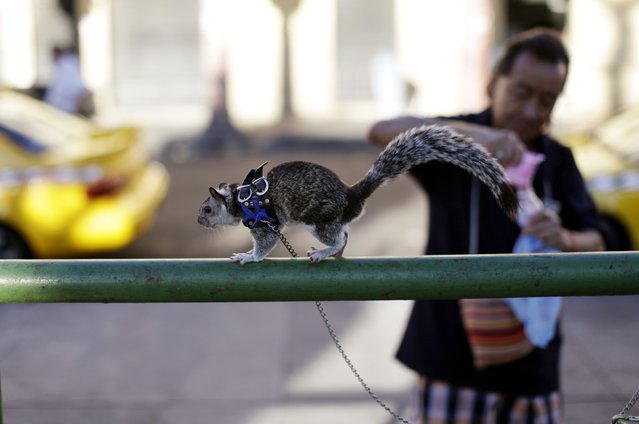
Carlos Melendez prepares to feed his pet squirrel “Colita” in downtown San Salvador January 29, 2015. (Photo by Jose Cabezas/Reuters)

Carlos Melendez prepares to feed his pet squirrel “Colita” in downtown San Salvador January 29, 2015. (Photo by Jose Cabezas/Reuters)
Details
31 Jan 2015 13:35:00
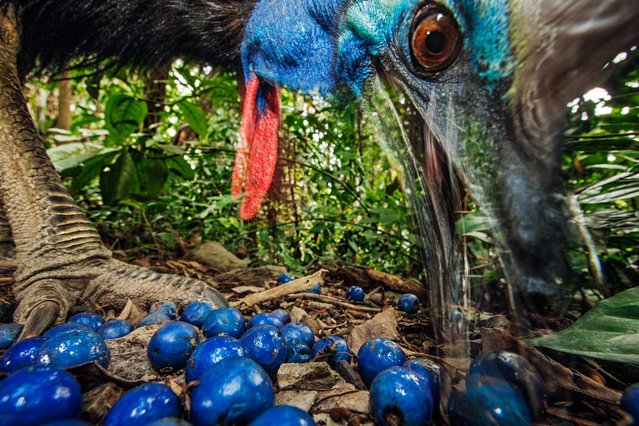
“Cassowaries are large, flightless birds related to emus and (more distantly) to ostriches, rheas, and kiwis”, writes Olivia Judson in the September issue of National Geographic magazine. (Photo by Christian Ziegler/National Geographic)

“Cassowaries are large, flightless birds related to emus and (more distantly) to ostriches, rheas, and kiwis”, writes Olivia Judson in the September issue of National Geographic magazine. How large? People-size: Adult males stand well over five foot five and top 110 pounds. Females are even taller, and can weigh more than 160 pounds. Dangerous when roused, they’re shy and peaceable when left alone. But even birds this big and tough are prey to habitat loss. The dense New Guinea and Australia rain forests where they live have dwindled. Today cassowaries might number 1,500 to 2,000. And because they help shape those same forests – by moving seeds from one place to another – “if they vanish”, Judson writes, “the structure of the forest would gradually change” too. (Photo by Christian Ziegler/National Geographic)
Details
06 Jan 2014 12:21:00
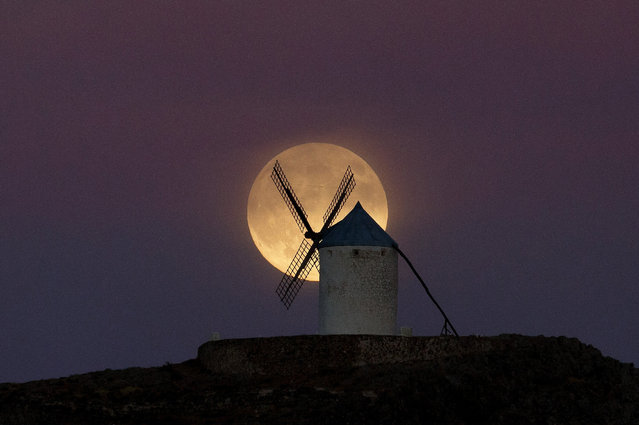
A moon appears behind a windmill a day before the supermoon is full on September 8, 2014 in Consuegra, in Toledo province, Spain. Consuegra belongs to a region made famous by the novel “Don Quijote de la Mancha” (Don Quixote) writed by Miguel De Cervantes. Some of the windmills belong to the 16th century. (Photo by Pablo Blazquez Dominguez/Getty Images)

A moon appears behind a windmill a day before the supermoon is full on September 8, 2014 in Consuegra, in Toledo province, Spain. Consuegra belongs to a region made famous by the novel “Don Quijote de la Mancha” (Don Quixote) writed by Miguel De Cervantes. Some of the windmills belong to the 16th century. (Photo by Pablo Blazquez Dominguez/Getty Images)
Details
10 Sep 2014 12:06:00