Loading...
Done
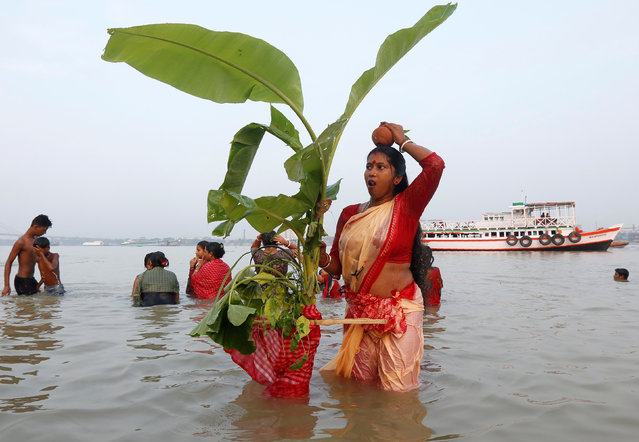
A Hindu devotee ululates as she holds a banana tree trunk after taking a dip in the waters of the Ganges river during a ritual as part of the Durga Puja festival in Kolkata, India, September 27, 2017. (Photo by Rupak De Chowdhuri/Reuters)

A Hindu devotee ululates as she holds a banana tree trunk after taking a dip in the waters of the Ganges river during a ritual as part of the Durga Puja festival in Kolkata, India, September 27, 2017. (Photo by Rupak De Chowdhuri/Reuters)
Details
05 Oct 2017 07:14:00
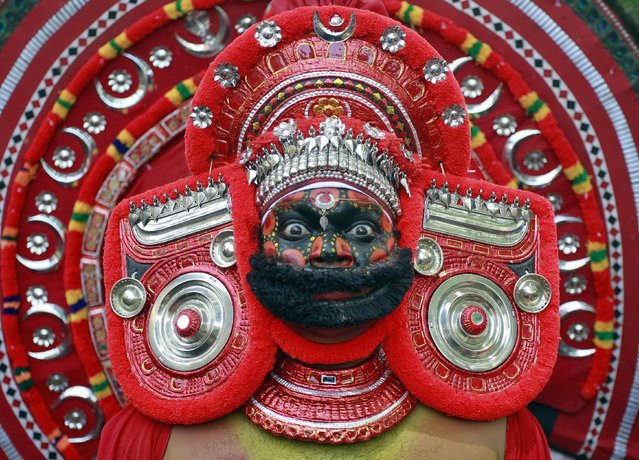
A dancer waits to perform during festivities marking the start of the annual harvest festival of “Onam” in Kochi, India, August 19, 2015. The ten-day-long Hindu festival is celebrated annually in India's southern coastal state of Kerala to commemorate the return of King Mahabali to his beloved subjects. (Photo by Sivaram V/Reuters)

A dancer waits to perform during festivities marking the start of the annual harvest festival of “Onam” in Kochi, India, August 19, 2015. The ten-day-long Hindu festival is celebrated annually in India's southern coastal state of Kerala to commemorate the return of King Mahabali to his beloved subjects. (Photo by Sivaram V/Reuters)
Details
26 Aug 2015 09:35:00
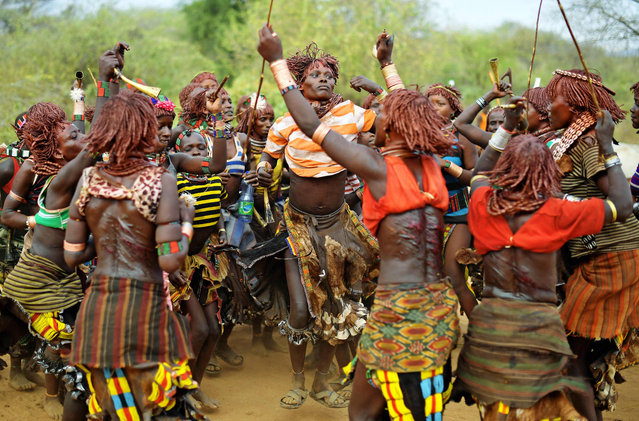
Hamar women dance before a bull jumping ceremony in Ethiopia's southern Omo Valley region near Turmi on September 19, 2016. The Hamar are a Nilotic ethnic group in Ethiopia. The construction of the Gibe III dam, the third largest hydroelectric plant in Africa, and large areas of very “thirsty” cotton and sugar plantations and factories along the Omo river are impacting heavily on the lives of tribes living in the Omo Valley who depend on the river for their survival and way of life. Human rights groups fear for the future of the tribes if they are forced to scatter, give up traditional ways through loss of land or ability to keep cattle as globalisation and development increases. (Photo by Carl De Souza/AFP Photo)

Hamar women dance before a bull jumping ceremony in Ethiopia's southern Omo Valley region near Turmi on September 19, 2016. The Hamar are a Nilotic ethnic group in Ethiopia. The construction of the Gibe III dam, the third largest hydroelectric plant in Africa, and large areas of very “thirsty” cotton and sugar plantations and factories along the Omo river are impacting heavily on the lives of tribes living in the Omo Valley who depend on the river for their survival and way of life. (Photo by Carl De Souza/AFP Photo)
Details
02 Oct 2016 08:45:00
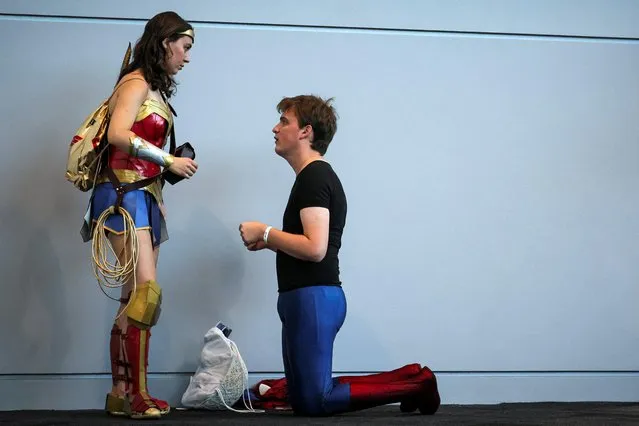
People attend in costume the 2022 New York Comic Con, at the Jacob Javits Convention Center in Manhattan in New York City, New York, U.S., October 6, 2022. (Photo by Brendan McDermid/Reuters)

People attend in costume the 2022 New York Comic Con, at the Jacob Javits Convention Center in Manhattan in New York City, New York, U.S., October 6, 2022. (Photo by Brendan McDermid/Reuters)
Details
08 Oct 2022 03:09:00
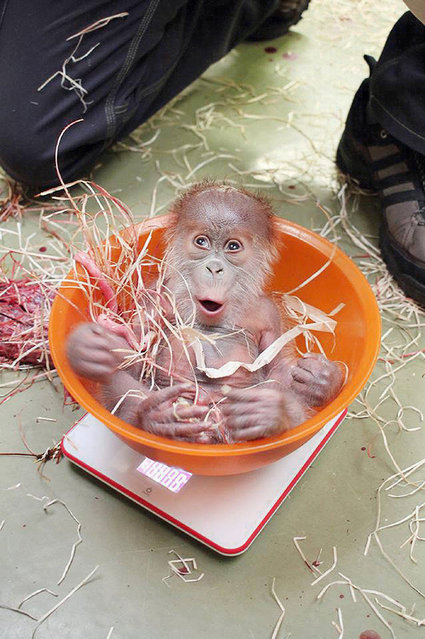
This female orangutan was born at the zoo in the German capital of Berlin.  German online users have fallen in love with Berlin Zoo's most recent addition – this newborn orangutan. (Photo by Europics/Zoo Berlin)

This female orangutan was born at the zoo in the German capital of Berlin. German online users have fallen in love with Berlin Zoo's most recent addition – this newborn orangutan. The female orangutan was born in the early hours of 12th January at the zoo in the German capital of Berlin and weighed a tiny 1.8 kilograms, normally regarded as small for an orangutan baby but nevertheless the infant is healthy and strong. (Photo by Europics/Zoo Berlin)
Details
23 Jan 2015 13:39:00
Switzerland's lead Nicole Schwaegli (L) and second Marisa Winkelhausen sweep during their curling round robin game against Japan at the World Women's Curling Championships in Sapporo March 14, 2015. (Photo by Thomas Peter/Reuters)

Switzerland's lead Nicole Schwaegli (L) and second Marisa Winkelhausen sweep during their curling round robin game against Japan at the World Women's Curling Championships in Sapporo March 14, 2015. (Photo by Thomas Peter/Reuters)
Details
17 Mar 2015 12:15:00
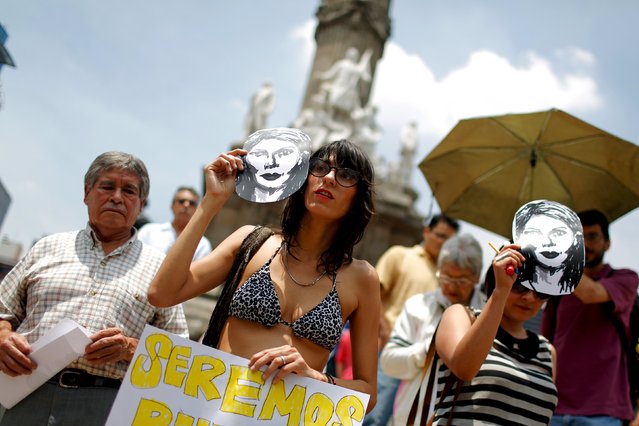
Demonstrators hold masks depicting Colombian citizen Mile Virginia, who was murdered along with photojournalist Ruben Espinosa and three other women, during a protest in Mexico City, August 16, 2015. Espinosa, a prominent Mexican news photographer was among five people found dead in a middle-class neighborhood of the capital on July 31, 2015. (Photo by Tomas Bravo/Reuters)

Demonstrators hold masks depicting Colombian citizen Mile Virginia, who was murdered along with photojournalist Ruben Espinosa and three other women, during a protest in Mexico City, August 16, 2015. Espinosa, a prominent Mexican news photographer was among five people found dead in a middle-class neighborhood of the capital on July 31, 2015. Espinosa, who worked for the weekly magazine Proceso and the photo agency Cuartoscuro, had sought shelter in Mexico City earlier this summer saying he had been followed and threatened in the eastern state of Veracruz. (Photo by Tomas Bravo/Reuters)

Details
17 Aug 2015 11:36:00
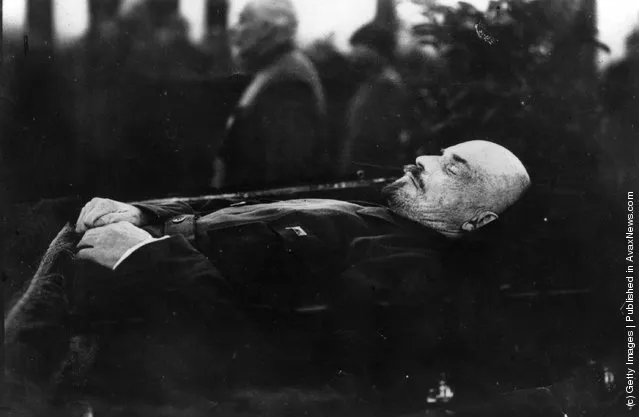
1924:  Vladimir Ilyich Lenin lying in state in the Kremlin

Photo: Vladimir Ilyich Lenin (1870 – 1924) lying in state in the Kremlin. (Photo by Hulton Archive/Getty Images). 1924

Important! For the same article in Russian language click here.

Something quite intriguing is happening within Russian-speaking internet during the last few – should you type a fully academic inquiry (at least, according to Russian academic requirements) in national search engines for "Lenin's mausoleum" – the first thing you get (even in top 10 searches) is website pages talking about black magic and occult. Website authors view this construction differently, but unconditionally agree on one thing: the mausoleum of the "leader of the world proletariat” – the essence of a magical artifact, a sort of “energy vampire”. It was built with a certain purpose: to drain the energy out of miserable Soviet citizens on one hand; and to poison the anthroposphere of one-sixth part of the earth with its vibes (the exact territory that was occupied by the former Soviet Union), depriving the Russian people of will to resist on the other hand. Complete nonsense? No doubt. Nevertheless, an intriguing one. Well, probably because some oddities do exist in mausoleum's history. These oddities are the thing we are going to discuss this time. First, let me refresh you memory on the subject.
Details
16 Oct 2011 11:27:00