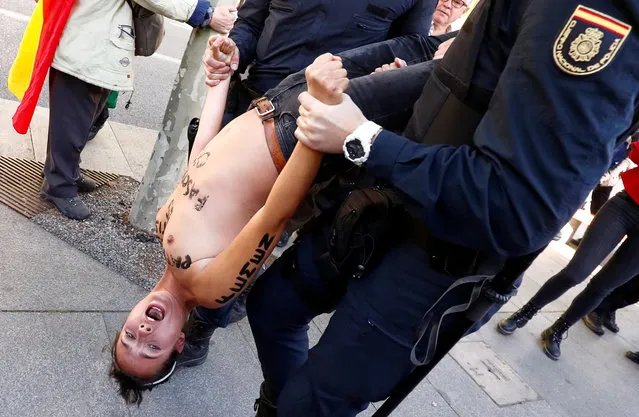
A protester is taken away by police during an electoral campaign closing rally of Spain's far-right party VOX in Madrid, Spain on April 26, 2019. (Photo by Juan Medina/Reuters)
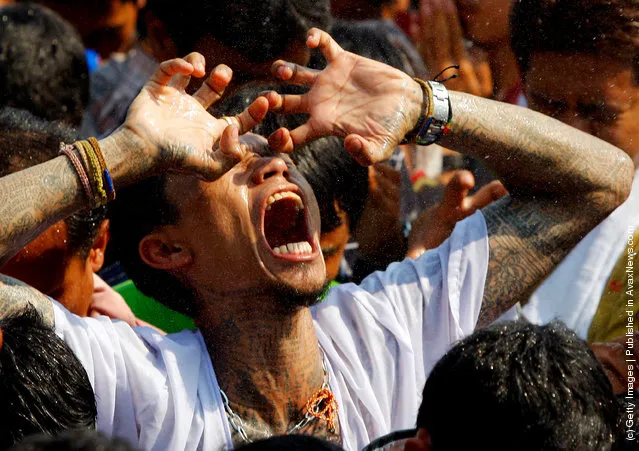
A Thai devotee in a state of trance screams while holy water is sprayed as thousands race towards the edifice of the founder monk during the annual Tattoo fesitval at Wat Bang Phra on March 7, 2009 in Nakhom Pathom, Thailand. Some men take on the characteristics of sacred animals that have been carved onto their skin. Thousands of believers from all over Thailand come to take part in one of the country's most bizarre festivals about 50 miles outside Bangkok to pay respect to the temple's monks who are master tattooist. In Thai culture the tattoo or Thai word sak yant is worn as a symbol of spiritual and physical protection, many believe that the tattoo have mystical powers. Many tattoo fanatics choose to have monkeys and tigers as well as the Khmer/Cambodia ancient script on their bodies. (Photo Paula Bronstein/Getty Images)
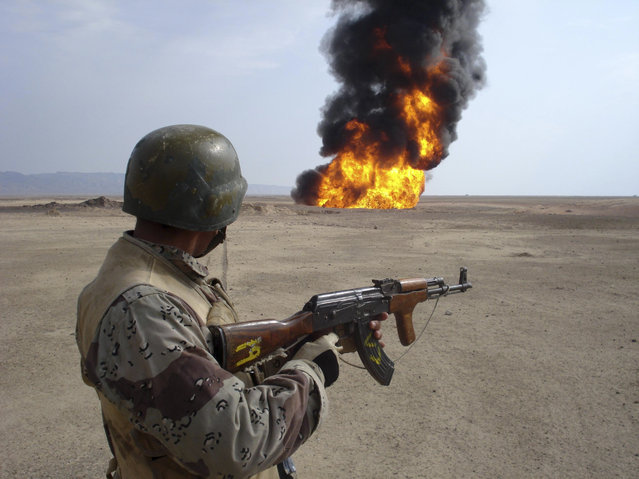
An Iraqi soldier stands guard as a pipeline burns in the background after an explosion 30 kilometers (20 miles) northeast of Tikrit, Iraq, Monday, February 11, 2008. (Photo by Bassem Daham/AP Photo)
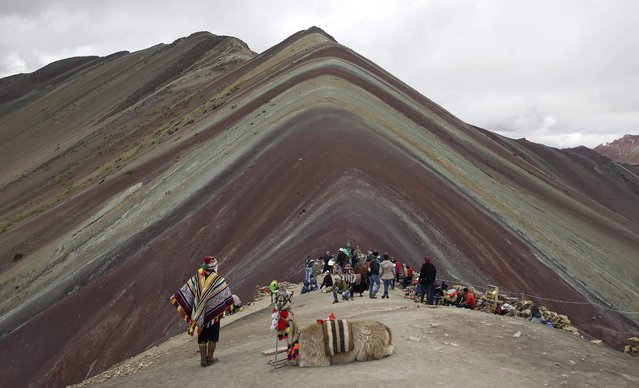
In this March 2, 2018 photo, an Andean man rests with his llama while tourists take in the natural wonder of Rainbow Mountain in Pitumarca, Peru. Tourists gasp for breath as they climb for two hours to the 16,404-foot (5,000-meter) peak in the Peruvian Andes, but stunned by the magical beauty that unfurls before them. (Photo by Martin Mejia/AP Photo)
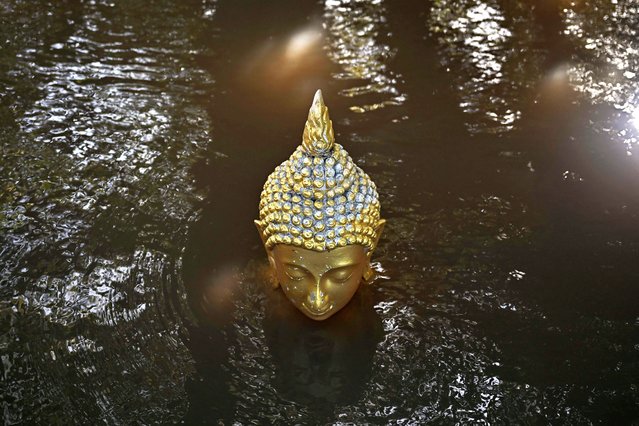
Floodwaters cover a Buddhastatue of at Wat Taku Buddhist temple in Bang Ban district in the central Thai province of Ayutthaya on November 14, 2025. (Photo by Lillian Suwanrumpha/AFP Photo)
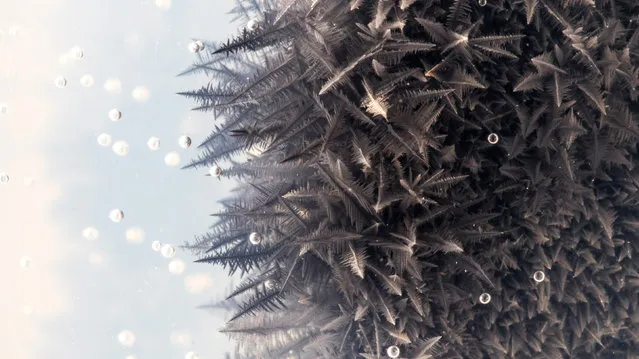
These beautiful shots may look like works of modern art – but they are actually close-ups of chemical reactions. The works were snapped with the help of a group of scientists from the University of Science and Technology of China (USTC) in Anhui, China. Here: Zinc reacting with lead nitrate in a soft gel to form lead crystals. (Photo by Yan Liang/Caters News)
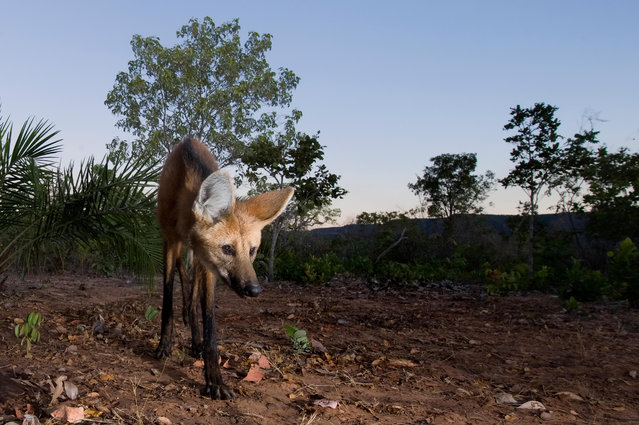
Global wildlife populations will decline by 67% by 2020 unless urgent action is taken to reduce human impact on species and ecosystems, warns the biennial Living Planet Index report from WWF (World Wide Fund for Nature) and ZSL (Zoological Society of London). From elephants to eels, here are some of the wildlife populations most affected by human activity. Here: The maned wolf is among the large mammals in the Brazilian Cerrado that are threatened by the increasing conversion of grasslands into farmland for grazing and growing crops. (Photo by Ben Cranke/Nature Picture Library/Alamy Stock Photo)