Loading...
Done
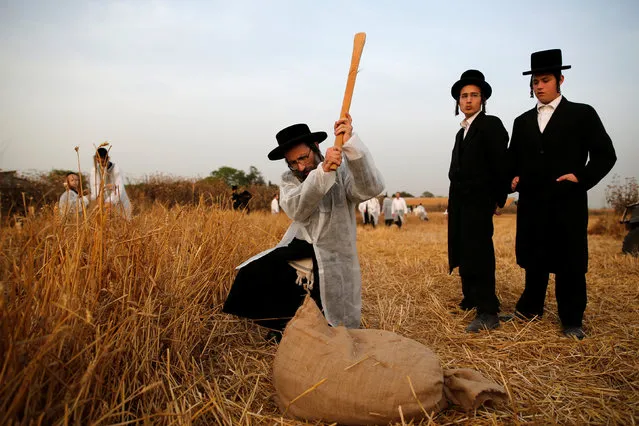
An Ultra-Orthodox Jewish man uses a stick to to separate the wheat grains in the Ultra-orthodox moshav of Komemiyut May 3, 2016. (Photo by Amir Cohen/Reuters)

An Ultra-Orthodox Jewish man uses a stick to to separate the wheat grains in the Ultra-orthodox moshav of Komemiyut May 3, 2016. The harvested wheat will later be used to make the traditional unleavened bread eaten during the Jewish holiday of Passover. (Photo by Amir Cohen/Reuters)
Details
04 May 2016 11:35:00
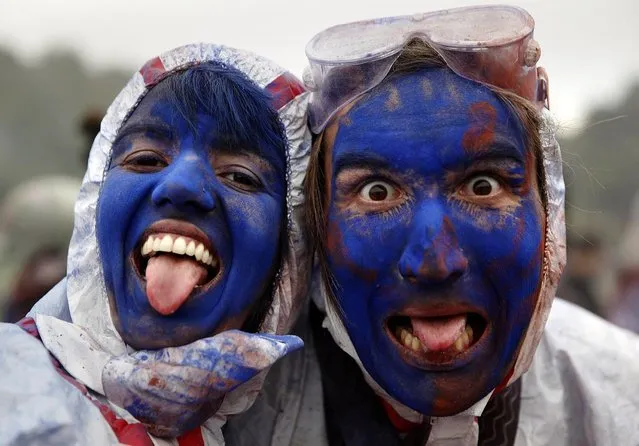
Revellers celebrate "Ash Monday" by participating in a colourful "flour war", a traditional festivity marking the end of the carnival season and the start of the 40-day Lent period until the Orthodox Easter,in the port town of Galaxidi, some 215 km (134 miles) north west of Athens, March 18, 2013. The revellers "fight" by throwing coloured flour, charcoal dust and powder painting until they essentially run out of supplies. (Photo by Yannis Behrakis/Reuters)

Revellers celebrate "Ash Monday" by participating in a colourful "flour war", a traditional festivity marking the end of the carnival season and the start of the 40-day Lent period until the Orthodox Easter,in the port town of Galaxidi, some 215 km (134 miles) north west of Athens, March 18, 2013. The revellers "fight" by throwing coloured flour, charcoal dust and powder painting until they essentially run out of supplies. (Photo by Yannis Behrakis/Reuters)
Details
20 Mar 2013 07:23:00
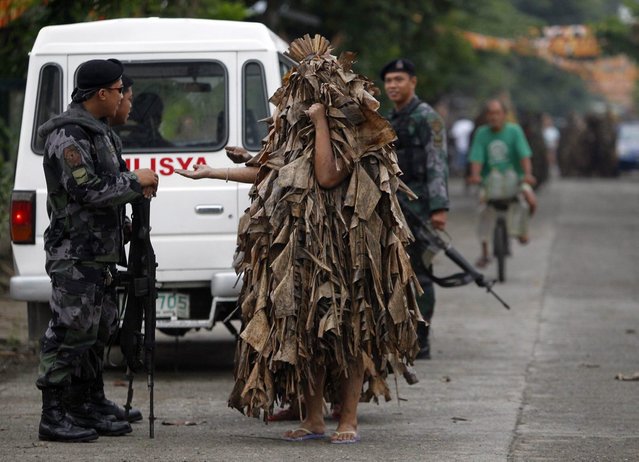
Residents, covered with mud and dried banana leaves, ask for money and candles from police before attending a mass celebrating the feast day of the Catholic patron Saint John the Baptist in the village of Bibiclat, Nueva Ecija, north of Manila, June 24, 2013. Hundreds of devotees took part in this annual religious tradition, which has been held in the village since 1945. (Photo by Cheryl Ravelo/Reuters)

Residents, covered with mud and dried banana leaves, ask for money and candles from police before attending a mass celebrating the feast day of the Catholic patron Saint John the Baptist in the village of Bibiclat, Nueva Ecija, north of Manila, June 24, 2013. Hundreds of devotees took part in this annual religious tradition, which has been held in the village since 1945. (Photo by Cheryl Ravelo/Reuters)
Details
26 Jun 2013 04:51:00
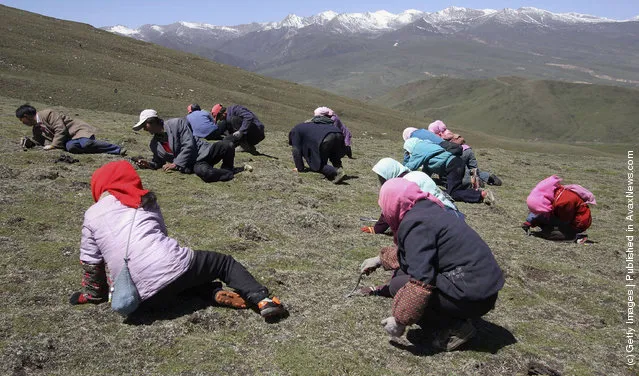
Ophiocordyceps Sinensis A.K.A. Caterpillar Fungus

“There are over 680 documented species of the sac fungus genus Ophiocordyceps, and one of the best known of these is Ophiocordyceps sinensis, colloquially known as caterpillar fungus. The fungus is known in Tibetan as yartsa gunbu or yatsa gunbu. O. sinensis is known in the West as a medicinal mushroom and its use has a long history in Traditional Chinese medicine as well as Traditional Tibetan medicine. The highly valuable fungus-caterpillar combination is hand-collected and is used as an aphrodisiac and as a treatment for a variety of ailments from fatigue to cancer”. – Wikipedia

Photo: Nomads dig for Chinese caterpillar fungus from a mountain May 25, 2007 in Guide County, Hainan Prefecture, Qinghai Province, China. Nomads can earn about 2,000 yuan to 5,000 yuan (about U.S. $260 to $653 ) through their work during the fifty-day Chinese caterpillar fungus gathering season. (Photo by China Photos/Getty Images)

Details
26 Sep 2011 10:47:00
The Red Arrows make a flypast during the Trooping The Colour parade at Buckingham Palace, in London, Saturday, June 13, 2015. Hundreds of soldiers in ceremonial dress have marched in London in the annual Trooping the Color parade to mark the official birthday of Queen Elizabeth II. The Trooping the Color tradition originates from preparations for battle, when flags were carried or "trooped" down the rank for soldiers to see. (AP Photo/Tim Ireland)

The Red Arrows make a flypast during the Trooping The Colour parade at Buckingham Palace, in London, Saturday, June 13, 2015. Hundreds of soldiers in ceremonial dress have marched in London in the annual Trooping the Color parade to mark the official birthday of Queen Elizabeth II. The Trooping the Color tradition originates from preparations for battle, when flags were carried or "trooped" down the rank for soldiers to see. (AP Photo/Tim Ireland)

Details
17 Jun 2015 13:50:00
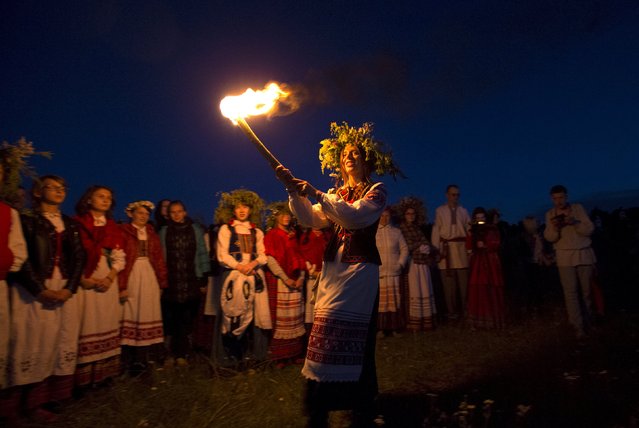
Belarusian people take part in the Ivan Kupala festival near the town of Rakov, west of Minsk June 27, 2015. The ancient tradition, originating from pagan times, is usually marked with grand overnight festivities. On Kupala night, people sing and dance around campfires, believing it will purge them of their sins and make them healthier. (Photo by Vasily Fedosenko/Reuters)

Belarusian people take part in the Ivan Kupala festival near the town of Rakov, west of Minsk June 27, 2015. The ancient tradition, originating from pagan times, is usually marked with grand overnight festivities. On Kupala night, people sing and dance around campfires, believing it will purge them of their sins and make them healthier. (Photo by Vasily Fedosenko/Reuters)
Details
29 Jun 2015 12:35:00
Revellers in fancy dress enjoy the atmosphere during the British Fancy Dress Day on November 12, 2015 in Benidorm, Spain. The British Fancy Dress Day is one of the biggest fancy dress parties in Europe and is held the day after the Benidorm fiestas in November. The tradition started over 20 years ago when Manolo from Sinatras Club offered a free drink to anyone who dress up. (Photo by David Ramos/Getty Images)

Revellers in fancy dress enjoy the atmosphere during the British Fancy Dress Day on November 12, 2015 in Benidorm, Spain. The British Fancy Dress Day is one of the biggest fancy dress parties in Europe and is held the day after the Benidorm fiestas in November. The tradition started over 20 years ago when Manolo from Sinatras Club offered a free drink to anyone who dress up. Nowadays around 30,000 people, mostly British Expats living in Spain and tourists visiting the Costa Blanca resorts, attends, attend the event. (Photo by David Ramos/Getty Images)
Details
15 Nov 2015 08:09:00
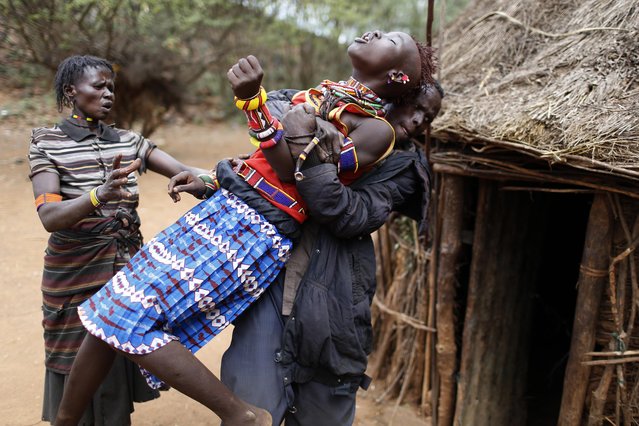
A man holds a girl as she tries to escape when she realised she is to to be married, about 80 km (50 miles) from the town of Marigat in Baringo County, Kenya,  December 7, 2014. As Pokot tradition dictates, the future husband arrived to her family home with a group of men to collect the girl. The men arrived with the last settled dowry of livestock for the girl's family.  (Photo by Siegfried Modola/Reuters)

A man holds a girl as she tries to escape when she realised she is to to be married, about 80 km (50 miles) from the town of Marigat in Baringo County, Kenya, December 7, 2014. As Pokot tradition dictates, the future husband arrived to her family home with a group of men to collect the girl. The men arrived with the last settled dowry of livestock for the girl's family. In this case it was 20 goats, three camels and 10 cows, given during a period of several weeks. (Photo by Siegfried Modola/Reuters)
Details
11 Dec 2014 14:07:00