Loading...
Done
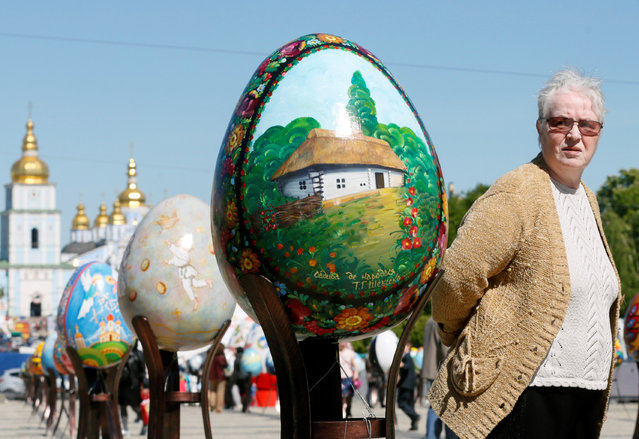
Amazing Photography Of A Bubble Bursting

Popping bubbles at any age is irresistible. For most of us (and by most I mean anyone who is not a super-hero) we have never truly seen a bubble pop.
Details
19 Feb 2013 11:27:00
Thierry Cohen by Darkened Cities

These Darkened Cities image series by Thierry Cohen is truly awe inspiring. Not only because he accurately portraits the skylines of major cities with no lighting whatsoever, but because the images remind us of the incredible show we city dwellers are missing every night.
Details
27 Dec 2012 15:44:00
We Are Flower By Galeria Melissa

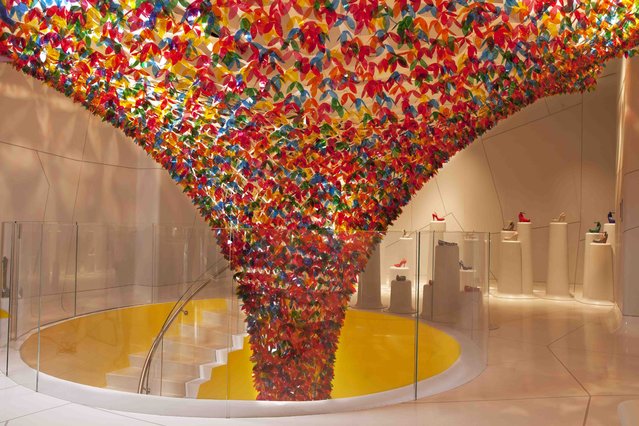
With a shower of colorful petals suspended form the ceiling, Galeria Melissa unveils the ‘We Are Flower’ installation by SOFTlab. The team at SOFTlab used over 20,000 translucent multicolored petals to create a large immersive hanging surface in the New York flagship.
Details
16 Jul 2014 12:51:00
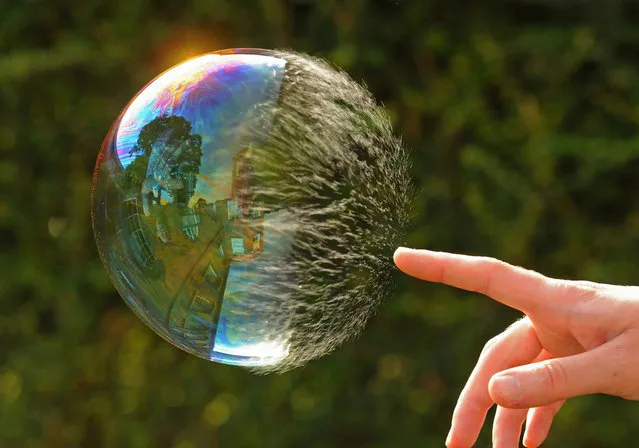
A woman looks at traditional Ukrainian Easter eggs “Pysanka”, installed as part of the upcoming celebrations of Easter, in central Kiev, Ukraine, April 29, 2016. A pysanka is a Ukrainian Easter egg, decorated with traditional Ukrainian folk designs using a wax-resist (batik) method. The word pysanka comes from the verb pysaty, “to write”, as the designs are not painted on, but written with beeswax. Many other eastern European ethnic groups decorate eggs using wax resist for Easter. These include the Belarusians, Bulgarians, Croats, Czechs, Hungarians, Lithuanians, Poles, Romanians, Serbs, Slovaks, Slovenes and Sorbs. (Photo by Valentyn Ogirenko/Reuters)

A woman looks at traditional Ukrainian Easter eggs “Pysanka”, installed as part of the upcoming celebrations of Easter, in central Kiev, Ukraine, April 29, 2016. A pysanka is a Ukrainian Easter egg, decorated with traditional Ukrainian folk designs using a wax-resist (batik) method. The word pysanka comes from the verb pysaty, “to write”, as the designs are not painted on, but written with beeswax. Many other eastern European ethnic groups decorate eggs using wax resist for Easter. These include the Belarusians, Bulgarians, Croats, Czechs, Hungarians, Lithuanians, Poles, Romanians, Serbs, Slovaks, Slovenes and Sorbs. (Photo by Valentyn Ogirenko/Reuters)

Details
30 Apr 2016 09:00:00
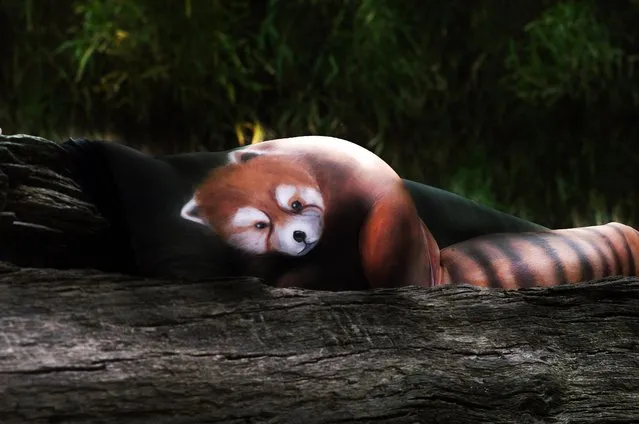
Using body paint and a woodland like location, Gesine appears to have created a model to look just like a red panda, Dortmund, Germany, October, 2016. An artist brings animals to life using body paint and contorted models. At first glance, these images could be mistaken for portraits of wildlife in their natural habitat were created with paper and paint. However, they are actually the incredible works of illusion by talented body painter Gesine Marwedel, who paints models to creates realistic animals. Marwedel, 29, from Dortmund, Germany has always been fascinated by the concept of transferring her designs to human bodies and her latest project features models posing in contorted positions. One image appears to show an elegant swan in a park pond, whilst another picture shows a mother penguin and its chick in a snowy landscape. (Photo by Gesine Marwedel/Barcroft Images)

Using body paint and a woodland like location, Gesine appears to have created a model to look just like a red panda, Dortmund, Germany, October, 2016. An artist brings animals to life using body paint and contorted models. At first glance, these images could be mistaken for portraits of wildlife in their natural habitat were created with paper and paint. However, they are actually the incredible works of illusion by talented body painter Gesine Marwedel, who paints models to creates realistic animals. (Photo by Gesine Marwedel/Barcroft Images)
Details
20 Dec 2016 12:53:00
Picasso Citroën By Andy Saunders

The mechanical masterpiece was inspired by Picasso’s Three Musicians and his portrait of Dora Maar. Andy added: “I decided to try and blur the line between car design and art by using Picasso as inspiration.”
Details
01 Sep 2014 08:36:00
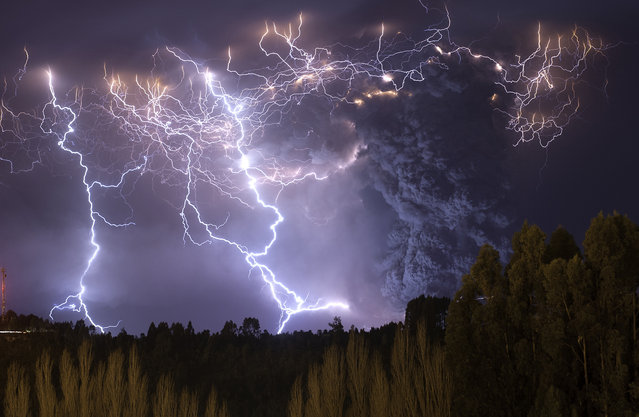
The eruption of Cordon Caulle began on June 4, 2011, located in the Region of Los Rios in Chile. For about 12 months, people and animals became accustomed to living with the daily fall of ash, which also caused problems in the air traffic in South America. The explosions and lightning during first days of the eruption could be seen from hundreds of miles around. This photograph was taken on the second night of eruption from the town of Lago Ranco. (Photo and caption by Francisco Negroni/National Geographic Traveler Photo Contest)

The eruption of Cordon Caulle began on June 4, 2011, located in the Region of Los Rios in Chile. For about 12 months, people and animals became accustomed to living with the daily fall of ash, which also caused problems in the air traffic in South America. The explosions and lightning during first days of the eruption could be seen from hundreds of miles around. This photograph was taken on the second night of eruption from the town of Lago Ranco. (Photo and caption by Francisco Negroni/National Geographic Traveler Photo Contest)

ATTENTION! All pictures are presented in high resolution. To see Hi-Res images – just TWICE click on any picture. In other words, click small picture – opens the BIG picture. Click BIG picture – opens VERY BIG picture.
Details
23 Jun 2013 11:24:00
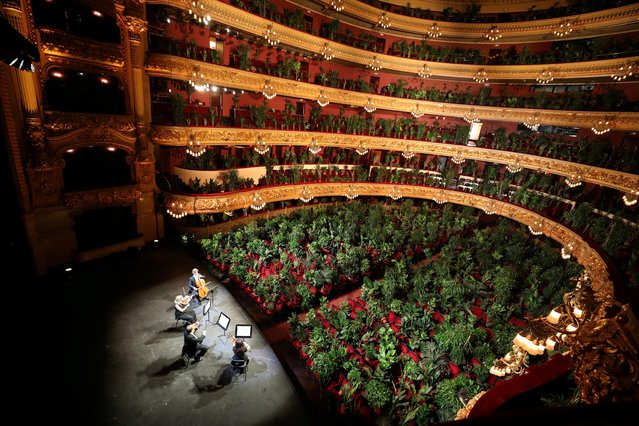
Nursery plants are seen placed in people's seats during a rehearsal as Barcelona's Gran Teatre del Liceu opera reopens its doors with a concert for plants, to raise awareness about the importance of an audience after the coronavirus lockdown, in Barcelona, Spain on June 22, 2020. The Gran Teatre del Liceu reopens its doors, in which the 2,292 seats of the auditorium will be occupied on this occasion by plants. It will be on 22 June, broadcast live online, when the UceLi Quartet string quartet performs Puccini's “Crisantemi” for this verdant public, brought in from local nurseries. (Photo by Nacho Doce/Reuters)

Nursery plants are seen placed in people's seats during a rehearsal as Barcelona's Gran Teatre del Liceu opera reopens its doors with a concert for plants, to raise awareness about the importance of an audience after the coronavirus lockdown, in Barcelona, Spain on June 22, 2020. The Gran Teatre del Liceu reopens its doors, in which the 2,292 seats of the auditorium will be occupied on this occasion by plants. It will be on 22 June, broadcast live online, when the UceLi Quartet string quartet performs Puccini's “Crisantemi” for this verdant public, brought in from local nurseries. (Photo by Nacho Doce/Reuters)
Details
24 Jun 2020 00:07:00