Loading...
Done
Afghanistan: Dogs of War Part 2

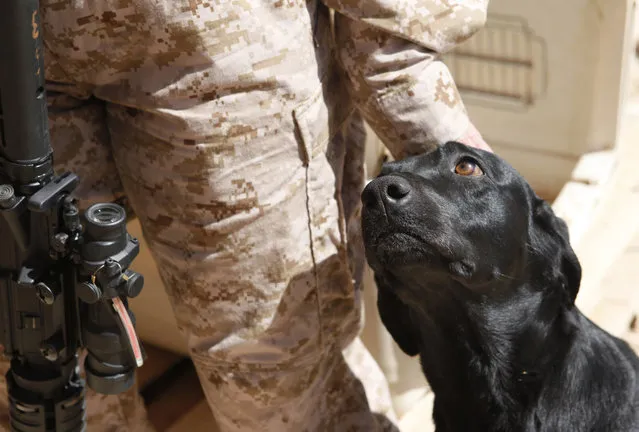
Throughout the course of the long war in Afghanistan, Coalition troops have relied on thousands of military working dogs to help keep them safe, and make their jobs easier. The dogs are trained to detect explosives, to find illegal drugs, to search for missing comrades, or target enemy combatants. Not only are they active on the front lines, but behind the lines they serve as therapy dogs, service dogs, and loyal companions. They also share the same risks as the ground troops, suffering injuries and sometimes death on the battlefields. Gathered here are images of these dogs and their handlers in Afghanistan and back home, from over the past several years, part of the ongoing series here on Afghanistan.
Details
05 Jun 2014 21:10:00
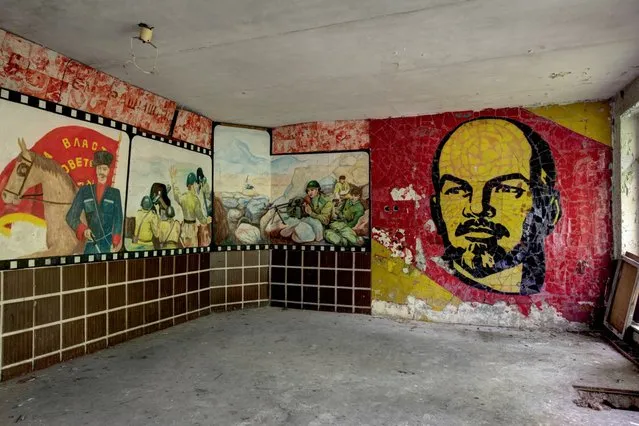
The Soviet Union Abandoned: A Communist Empire In Decay By Rebecca Litchfield

Only the most intrepid urban explorers cross the tattered ruins of the old Iron Curtain to endure the excessive bureaucracy, military paranoia and freezing winds of the East to hunt for the ghosts of an empire. Rebecca Litchfield is one who couldn’t resist the haunting allure of the ruins of the Soviet Union.
Details
21 Jul 2014 11:03:00
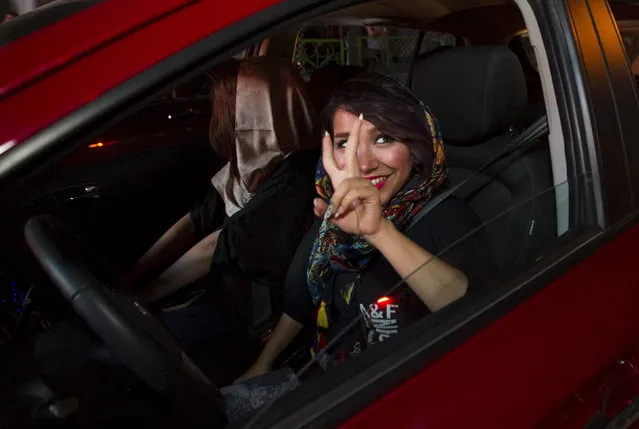
An Iranian woman gestures as she celebrates in the streets following a nuclear deal with major powers, in Tehran July 14, 2015. (Photo by Reuters/TIMA)

An Iranian woman gestures as she celebrates in the streets following a nuclear deal with major powers, in Tehran July 14, 2015. Overcoming decades of hostility, Iran, the United States, and five other world powers struck a historic accord Tuesday to check Tehran's nuclear efforts short of building a bomb. The agreement could give Iran access to billions in frozen assets and oil revenue, stave off more U.S. military action in the Middle East and reshape the tumultuous region. (Photo by Reuters/TIMA)
Details
15 Jul 2015 10:42:00
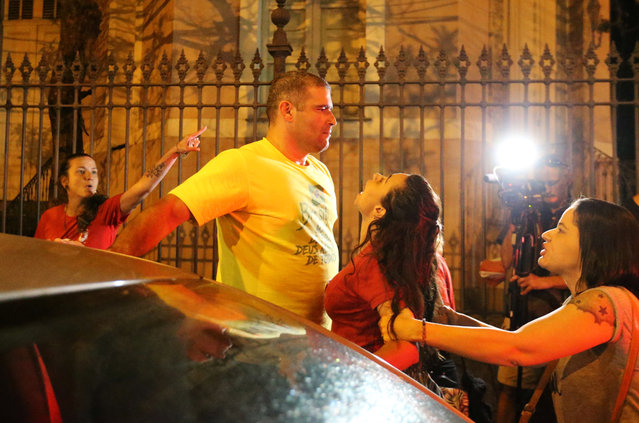
Supporters of Fernando Haddad react to a supporter (in yellow) of Jair Bolsonaro during a runoff election in Rio de Janeiro, Brazil on October 28, 2018. (Photo by Sergio Moraes/Reuters)

Supporters of Fernando Haddad react to a supporter (in yellow) of Jair Bolsonaro during a runoff election in Rio de Janeiro, Brazil on October 28, 2018. Bolsonaro, a brash far-right congressman who has waxed nostalgic for Brazil's old military dictatorship, won the presidency of Latin America's largest nation Sunday as voters looked past warnings that the former army captain would erode democracy and embraced a chance for radical change after years of turmoil. (Photo by Sergio Moraes/Reuters)
Details
30 Oct 2018 00:01:00
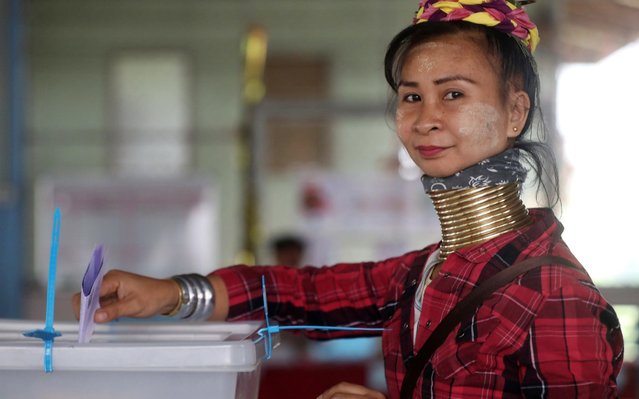
An ethnic Kayan woman, also known as a long neck villager casts her vote for the general election in Mae Hong Son, Thailand, March 24, 2019. (Photo by Ann Wang/Reuters)

An ethnic Kayan woman, also known as a long neck villager casts her vote for the general election in Mae Hong Son, Thailand, March 24, 2019. This is Thailand's first election since a military coup in 2014. Voters head to the polls to elect members of the lower house and Prime Minister. (Photo by Ann Wang/Reuters)
Details
26 Mar 2019 07:48:00
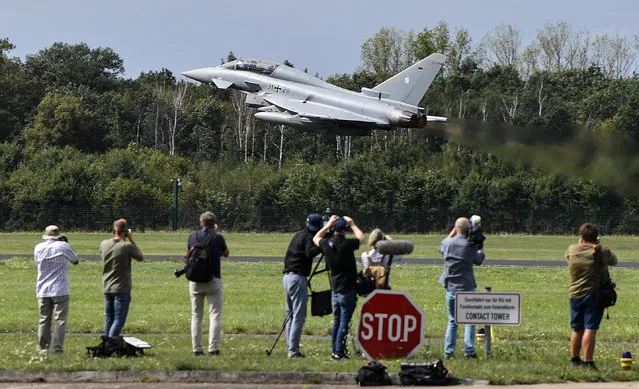
Journalists watch the take off of a German Eurofighter jet at the airbase in Noervenich, Germany, Thursday, August 20, 2020. (Photo by Martin Meissner/AP Photo)

Journalists watch the take off of a German Eurofighter jet at the airbase in Noervenich, Germany, Thursday, August 20, 2020. Pilots from Israel and Germany will fly together the next two weeks during the first joint military Air Force exercises between the two nations in Germany. (Photo by Martin Meissner/AP Photo)
Details
22 Aug 2020 00:07:00
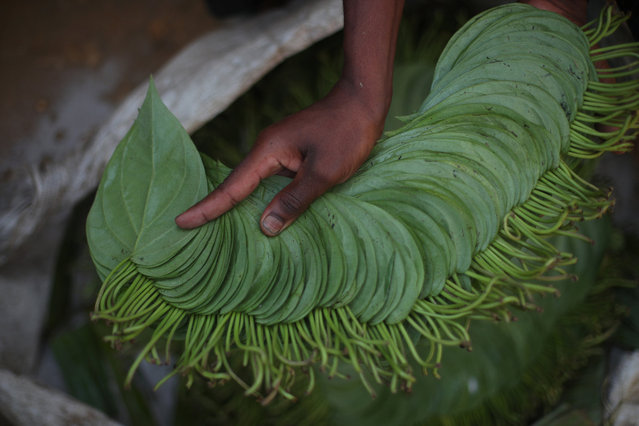
Faruk, 17, a Rohingya refugee trader holds betel leaves which are on sale at a stall in Palong Khali refugee camp near Cox's Bazar, Bangladesh, November 3, 2017. He left his village in Myanmar when the military opened fire towards the Rohingya. “I buy this betel leaf from Palong Khali market, in one bundle there are 160 pieces, I buy it for 80 taka and I sell it for 100 taka. Bangladeshi's and I sell for the same rate in the camp. Outside in the local market it is 80 taka per bundle. My problem is that I don't have money so I can't buy anything to eat, I can't buy fish to eat”, he said. (Photo by Hannah McKay/Reuters)

Faruk, 17, a Rohingya refugee trader holds betel leaves which are on sale at a stall in Palong Khali refugee camp near Cox's Bazar, Bangladesh, November 3, 2017. He left his village in Myanmar when the military opened fire towards the Rohingya. “I buy this betel leaf from Palong Khali market, in one bundle there are 160 pieces, I buy it for 80 taka and I sell it for 100 taka (1 Bangladeshi Taka = 0.012 US Dollar). Bangladeshi's and I sell for the same rate in the camp. Outside in the local market it is 80 taka per bundle. My problem is that I don't have money so I can't buy anything to eat, I can't buy fish to eat”, he said. (Photo by Hannah McKay/Reuters)
Details
27 Nov 2017 08:54:00
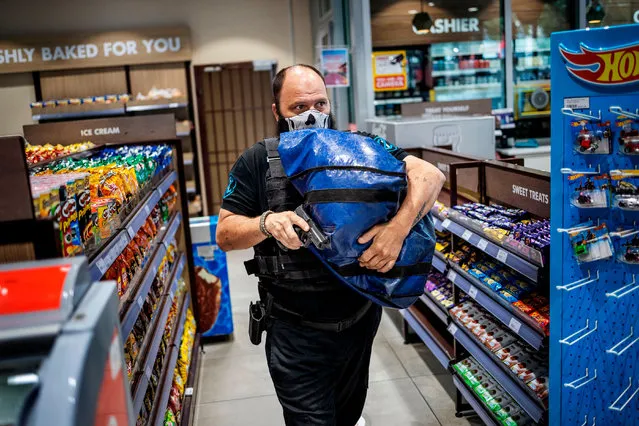
A CIT guard carries his gun handgun while bringing a bag containing cash inside an armoured vehicle during a money collection in Johannesburg's CBD, on December 8, 2020. As the Christmas festive season approaches, cash-in-transit (CIT) companies are gearing up as they continue to be target of crime, with about 3000 money vans traveling daily nationwide. Despite the COVID-19 lockdown, there have been 260 cash-in-transit heist incidents in South Africa this year, with 19 CIT crew members killed. Cash-in-transit heists in the country are often military-style planned operations with criminals recurring to bomb making and assault rifles attacks. (Photo by Michele Spatari/AFP Photo)

A CIT guard carries his gun handgun while bringing a bag containing cash inside an armoured vehicle during a money collection in Johannesburg's CBD, on December 8, 2020. As the Christmas festive season approaches, cash-in-transit (CIT) companies are gearing up as they continue to be target of crime, with about 3000 money vans traveling daily nationwide. Despite the COVID-19 lockdown, there have been 260 cash-in-transit heist incidents in South Africa this year, with 19 CIT crew members killed. Cash-in-transit heists in the country are often military-style planned operations with criminals recurring to bomb making and assault rifles attacks. (Photo by Michele Spatari/AFP Photo)
Details
18 Dec 2020 00:01:00