Loading...
Done
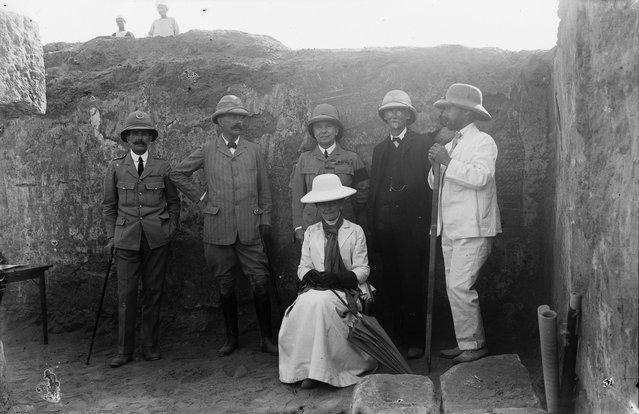
Remarkable discoveries were made, like the decapitated head of a bronze statue of Roman emperor Augustus, sacked from a raid on Roman garrisons further north in Egypt. Here: A group visiting the excavations at Meroë, including (from left) Midwinter Bey, director of Sudan Railways; Lord Kitchener; General Sir Francis Reginald Wingate, Sirdar of the Egyptian Army; Professor Archibald Sayce; John Garstang; and Lady Catherine Wingate, 1911. (Photo by Garstang Museum of Archaeology)

The city of Meroë laid undiscovered for two millennia before British archaeologist John Garstang excavated it in the early 20th century. Garstang took the radical decision to document his discoveries with photography – and immortalised an ancient world. “Meroë: Africa’s Forgotten Empire” is being shown until 14 September at Garstang Museum of Archaeology, Liverpool. Here: A group visiting the excavations at Meroë, including (from left) Midwinter Bey, director of Sudan Railways; Lord Kitchener; General Sir Francis Reginald Wingate, Sirdar of the Egyptian Army; Professor Archibald Sayce; John Garstang; and Lady Catherine Wingate, 1911. (Photo by Garstang Museum of Archaeology)
Details
15 Jun 2016 14:49:00
A model wears a floral headdress at the Royal Horticultural Society's Chelsea Flower show in London, Britain, May 22, 2017. (Photo by Dylan Martinez/Reuters)

A model wears a floral headdress at the Royal Horticultural Society's Chelsea Flower show in London, Britain, May 22, 2017. The prestigious Chelsea Flower Show, held annually since 1913 in the Royal Hospital Chelsea grounds, is open to the public from the 23rd to the 27th of May, 2017. (Photo by Dylan Martinez/Reuters)
Details
25 May 2017 08:31:00
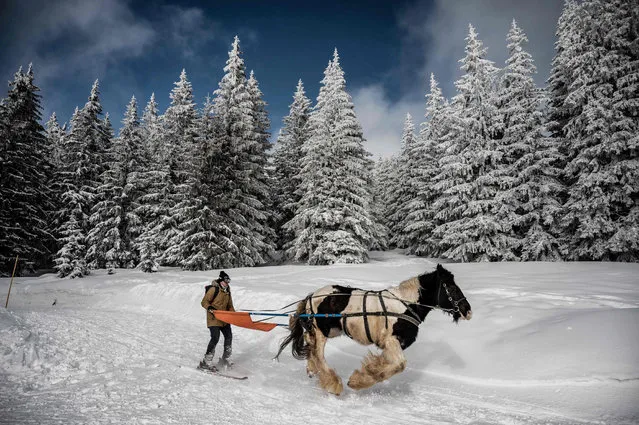
A person practices ski-joering at the Avoriaz resort in the French Alps on February 11, 2021. (Photo by Jeff Pachoud/AFP Photo)

A person practices ski-joering at the Avoriaz resort in the French Alps on February 11, 2021. (Photo by Jeff Pachoud/AFP Photo)
Details
08 Apr 2021 10:41:00
A signing session during the International tattoo convention at Tobacco Dock in east London, England on September 27, 2019. (Photo by Steve Parkins/Rex Features/Shutterstock)

A signing session during the International tattoo convention at Tobacco Dock in east London, England on September 27, 2019. (Photo by Steve Parkins/Rex Features/Shutterstock)
Details
01 Oct 2019 00:07:00
Supporters react as U.S. President Donald Trump walks from Marine One to the White House in Washington, U.S., October 3, 2019. (Photo by Tom Brenner/Reuters)

Supporters react as U.S. President Donald Trump walks from Marine One to the White House in Washington, U.S., October 3, 2019. (Photo by Tom Brenner/Reuters)
Details
06 Oct 2019 00:07:00
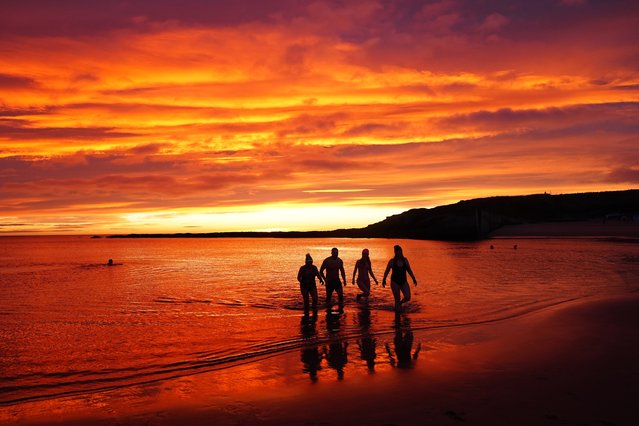
Early morning swimmers at Cullercoats Bay on the north east coast of England on Sunday, December 29, 2024. (Photo by Owen Humphreys/PA Images via Getty Images)

Early morning swimmers at Cullercoats Bay on the north east coast of England on Sunday, December 29, 2024. (Photo by Owen Humphreys/PA Images via Getty Images)
Details
22 Jan 2025 01:02:00
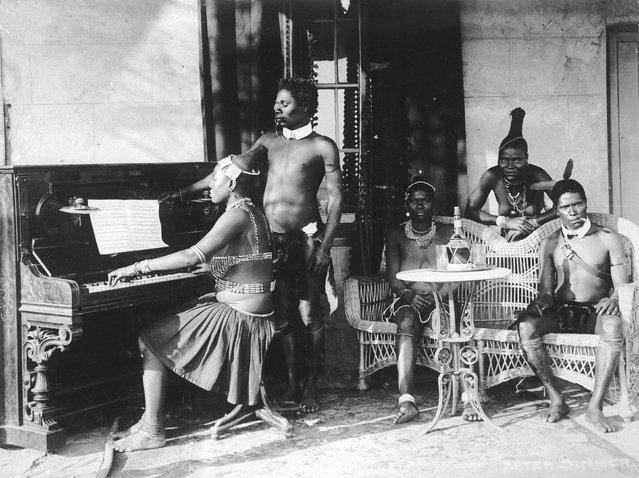
circa 1925:  A Zulu woman playing the piano while a group of others sit and listen.  (Photo by General Photographic Agency/Getty Images)

“The Zulu are the largest South African ethnic group, with an estimated 10–11 million people living mainly in the province of KwaZulu-Natal. Small numbers also live in Zimbabwe, Zambia, and Mozambique. Their language, Zulu, is a Bantu language; more specifically, part of the Nguni subgroup. The Zulu Kingdom played a major role in South African history during the 19th and 20th centuries. Under apartheid, Zulu people were classed as third-class citizens and suffered from state-sanctioned discrimination. They remain today the most numerous ethnic group in South Africa, and now have equal rights along with all other citizens”. – Wikipedia.

Photo: A Zulu woman playing the piano while a group of others sit and listen (to put it briefly, Englishmen scoff over Zulu). South Africa, circa 1925. (Photo by General Photographic Agency)

Details
03 Feb 2014 09:40:00
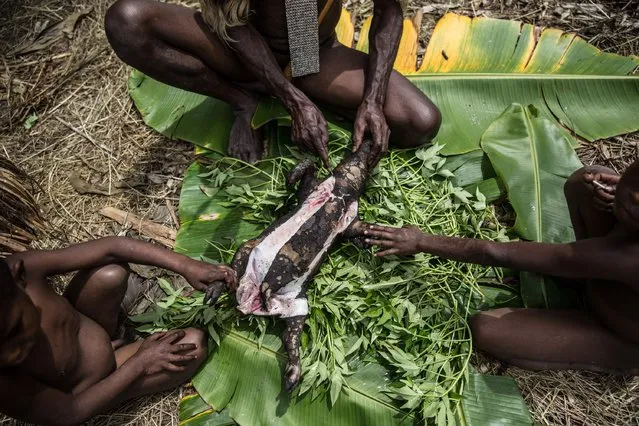
A man from the Dani tribe cuts the head of a pig after cooked by traditional way which is use burned hot stones at Obia Village on August 9, 2014 in Wamena, Papua, Indonesia. The stone-age Dani tribe live a traditional existence in the Baliem Valley, which is situated 1600 metres above sea level in the heart of the Cyclops Mountains. (Photo by Agung Parameswara/Getty Images)

A man from the Dani tribe cuts the head of a pig after cooked by traditional way which is use burned hot stones at Obia Village on August 9, 2014 in Wamena, Papua, Indonesia. The stone-age Dani tribe live a traditional existence in the Baliem Valley, which is situated 1600 metres above sea level in the heart of the Cyclops Mountains. (Photo by Agung Parameswara/Getty Images)
Details
14 Aug 2014 10:30:00