Loading...
Done
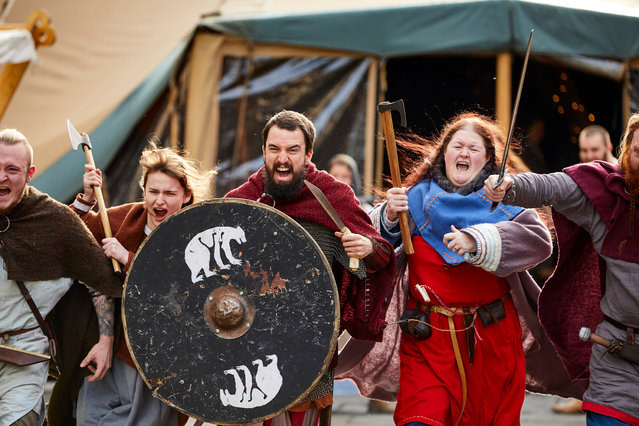
Viking re-enactors representing the rival armies of the Vikings and Anglo-Saxons skirmish near Clifford’s Tower during the Jorvik Viking Festival on February 23, 2019 in York, England. (Photo by Christopher Thomond/The Guardian)

Viking re-enactors representing the rival armies of the Vikings and Anglo-Saxons skirmish near Clifford’s Tower during the Jorvik Viking Festival on February 23, 2019 in York, England. The annual Jorvik Viking Festival held in York is recognised as the largest event of its kind in Europe. This year the festival remembers the role that the Viking women played during those turbulent times. (Photo by Christopher Thomond/The Guardian)
Details
26 Feb 2019 00:05:00
Two women enjoy drinks outside a pub in the soho area of central London on November 4, 2020, on the eve of a second novel coronavirus COVID-19 lockdown in an effort to combat soaring infections. English pubs call last orders at the bar for a month on Wednesday evening, as the country effectively shuts down from November 5, for the second time this year to try to cut coronavirus cases. Prime Minister Boris Johnson insisted that the lockdown for England would end “automatically” in four weeks, as he tried to placate party critics over the spiralling economic fallout. (Photo by Stephen Lock/i-Images)

Two women enjoy drinks outside a pub in the soho area of central London on November 4, 2020, on the eve of a second novel coronavirus COVID-19 lockdown in an effort to combat soaring infections. English pubs call last orders at the bar for a month on Wednesday evening, as the country effectively shuts down from November 5, for the second time this year to try to cut coronavirus cases. Prime Minister Boris Johnson insisted that the lockdown for England would end “automatically” in four weeks, as he tried to placate party critics over the spiralling economic fallout. (Photo by Stephen Lock/i-Images)
Details
06 Nov 2020 00:07:00
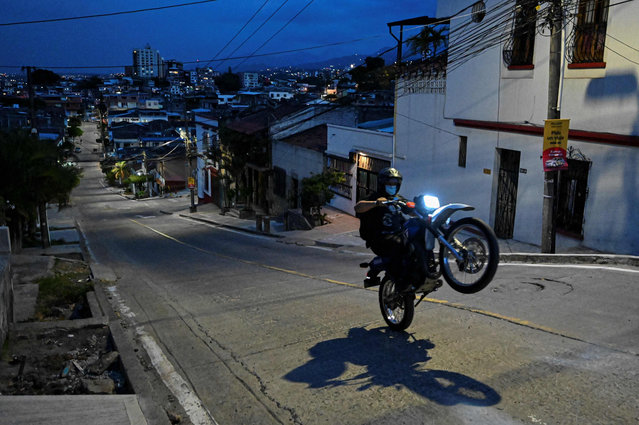
A man rides his motorcycle along an empty street in Cali on April 17, 2021, during a curfew imposed by the government to help curb infections of the novel coronavirus, COVID-19, as weekend partial lockdown takes effect in four Colombian cities. In recent weeks, the Colombian government has imposed, and then tightened, a series of restrictions to stem a third wave of infections that is bringing its health system to the brink of collapse. (Photo by Luis Robayo/AFP Photo)

A man rides his motorcycle along an empty street in Cali on April 17, 2021, during a curfew imposed by the government to help curb infections of the novel coronavirus, COVID-19, as weekend partial lockdown takes effect in four Colombian cities. In recent weeks, the Colombian government has imposed, and then tightened, a series of restrictions to stem a third wave of infections that is bringing its health system to the brink of collapse. (Photo by Luis Robayo/AFP Photo)
Details
19 Apr 2021 10:09:00
A man walks pat sculptures with face masks on along an alley in Beijing on August 3, 2021. (Photo by Noel Celis/AFP Photo)

A man walks pat sculptures with face masks on along an alley in Beijing on August 3, 2021. (Photo by Noel Celis/AFP Photo)
Details
09 Aug 2021 08:30:00
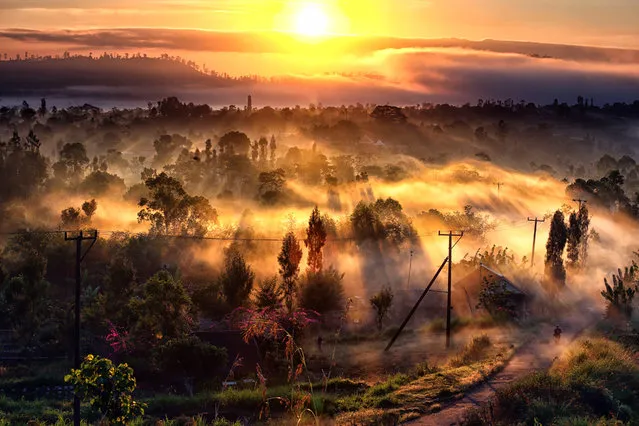
“Misty Morning”. Every morning, people expect sunny weather. Photo location: Bali, Indonesia. (Photo and caption by Henry Adam/National Geographic Photo Contest)

“Misty Morning”. Every morning, people expect sunny weather. Photo location: Bali, Indonesia. (Photo and caption by Henry Adam/National Geographic Photo Contest)
Details
02 Oct 2014 10:43:00
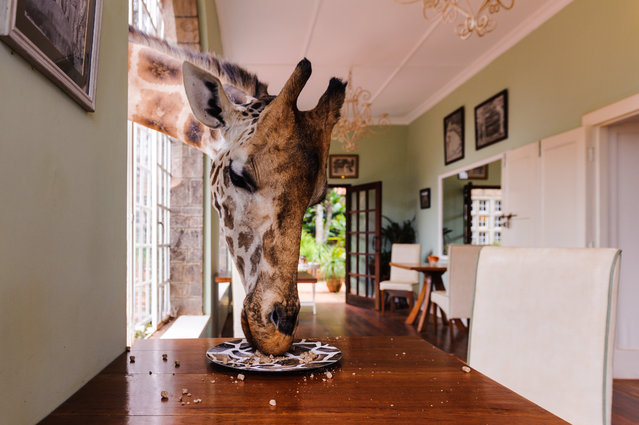
“Don't Leave Any Food On Your Plate”. The giraffes at Nairobi's Giraffe Manor are totally at home with humans. They will eat out of your hand, or even off your plate. Photo location: Giraffe Manor, Nairobi, Kenya. (Photo and caption by Gavin Werbeloff/National Geographic Photo Contest)

“Don't Leave Any Food On Your Plate”. The giraffes at Nairobi's Giraffe Manor are totally at home with humans. They will eat out of your hand, or even off your plate. Photo location: Giraffe Manor, Nairobi, Kenya. (Photo and caption by Gavin Werbeloff/National Geographic Photo Contest)
Details
20 Jun 2014 10:23:00
Ocean voyage

Do you think that history is a science? Well, not exactly. First, and foremost, history is the state's “legend of wars”, it’s official regalia. Of course, public historians are not interested in scientific truth – quite the opposite. In this respect, any attempt to present a state’s history as altruistic and benevolent as possible is welcomed and encouraged – as opposed to any revisionism attempts that may be more accurate. In this matter, Chinese have surpassed us all – they revised in highly creative manner (but rather shamelessly) the technology already invented by Europeans, a process that resulted in oldest state on the planet. Here is an interesting paradox: ask any sinologist about the Middle Kingdom during second century B.C., and he will describe it to you in such a vivid manner as if he has been living there all his life – but as soon as you will ask him to describe Chinese history in the 19-20th centuries… let's say, his eagerness will be greatly diminished. However, we will discuss China in a different article, and in the meantime we will try to understand how exactly historic “legend of wars” is formed and functions – based on a specific and well-known example. A great example is Ferdinand Magellan's first voyage around the world.

Details
14 Nov 2011 09:11:00
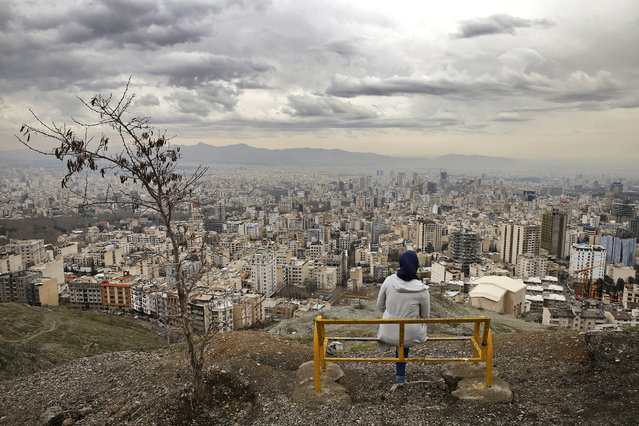
A woman spends her time outdoors to observe the ancient festival of Sizdeh Bedar, an annual public picnic day on the 13th day of the Iranian new year, at the Tochal mountainous area northern Tehran, Iran, Sunday, April, 2, 2017. Sizdeh Bedar, which comes from the Farsi words for “thirteen” and “day out”, is a legacy from Iran's pre-Islamic past that hard-liners in the Islamic Republic never managed to erase from calendars. (Photo by Ebrahim Noroozi/AP Photo)

A woman spends her time outdoors to observe the ancient festival of Sizdeh Bedar, an annual public picnic day on the 13th day of the Iranian new year, at the Tochal mountainous area northern Tehran, Iran, Sunday, April, 2, 2017. Sizdeh Bedar, which comes from the Farsi words for “thirteen” and “day out”, is a legacy from Iran's pre-Islamic past that hard-liners in the Islamic Republic never managed to erase from calendars. (Photo by Ebrahim Noroozi/AP Photo)
Details
21 Apr 2017 07:38:00