Loading...
Done
In this photograph taken on February 15, 2021, doctor Sergen Saracoglu (L) and nurse Yilzdiz Ayten (C) from the Bahcesaray public hospital vaccination team, arrive at the village of Guneyyamac in eastern Turkey, as part of an expedition to vaccinate residents of 65 years old or above with Sinovac's CoronaVac Covid-19 vaccine. Turkey's population of more than 83 million is spread out across Europe and Asia and covers some seemingly impregnable terrain. The vaccination effort with China's CoronaVac jab kicked off with a bang in mid-January when Turkey inoculated more than half a million people in the first few days. But it slowed down considerably when doctors left the big cities and tried to reach remote places such as Imamli and Ozbeyli – two ethnically Kurdish hamlets of a few hundred herders and farmers each. (Photo by Bulent Kilic/AFP Photo)

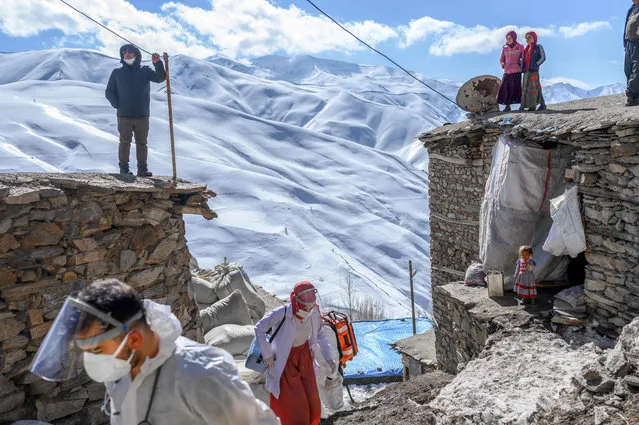
In this photograph taken on February 15, 2021, doctor Sergen Saracoglu (L) and nurse Yilzdiz Ayten (C) from the Bahcesaray public hospital vaccination team, arrive at the village of Guneyyamac in eastern Turkey, as part of an expedition to vaccinate residents of 65 years old or above with Sinovac's CoronaVac Covid-19 vaccine. (Photo by Bulent Kilic/AFP Photo)
Details
18 Mar 2021 09:32:00
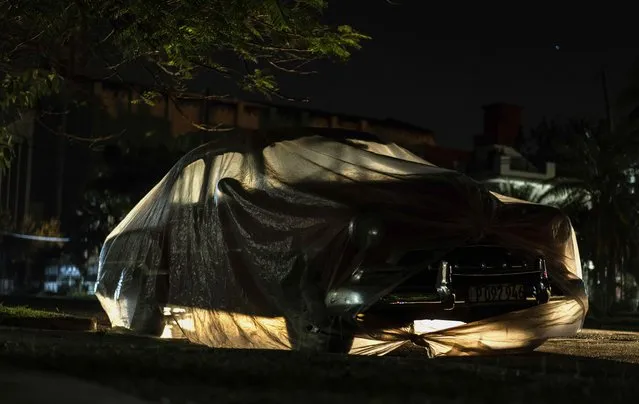
A classic American car is wrapped in plastic to prevent sea salt from corroding it in Havana, Cuba, Tuesday, March 2, 2021. Vintage cars in Cuba are part of daily life with most classic cars being used as taxis and to transport tourists. (Photo by Ramon Espinosa/AP Photo)

A classic American car is wrapped in plastic to prevent sea salt from corroding it in Havana, Cuba, Tuesday, March 2, 2021. Vintage cars in Cuba are part of daily life with most classic cars being used as taxis and to transport tourists. (Photo by Ramon Espinosa/AP Photo)
Details
31 Mar 2021 08:31:00
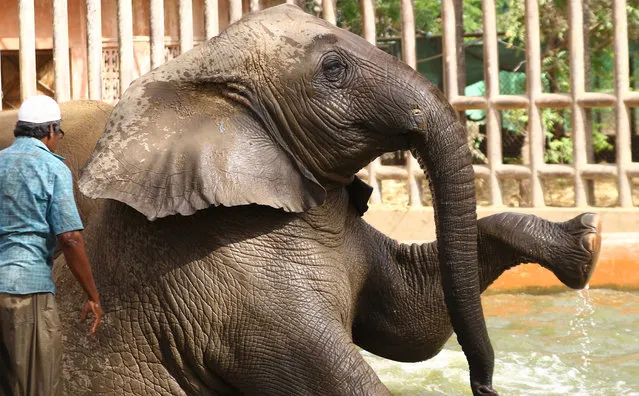
An elephant cools off at a zoo in Karachi, Pakistan, 31 March 2021. Caretakers at Karachi's zoo were working to keep animals cool during a​ heatwave affecting southern Pakistan. (Photo by Shahzaib Akber/EPA/EFE)

An elephant cools off at a zoo in Karachi, Pakistan, 31 March 2021. Caretakers at Karachi's zoo were working to keep animals cool during a​ heatwave affecting southern Pakistan. (Photo by Shahzaib Akber/EPA/EFE)
Details
18 Apr 2021 09:15:00
Kang Na-ra, a North Korean defector who is now a beauty YouTuber, points at her lips after putting on a lipstick made by North Korea, in Seoul, South Korea, June 11, 2019. (Photo by Kim Hong-Ji/Reuters)

Kang Na-ra, a North Korean defector who is now a beauty YouTuber, points at her lips after putting on a lipstick made by North Korea, in Seoul, South Korea, June 11, 2019. (Photo by Kim Hong-Ji/Reuters)
Details
06 Dec 2019 00:05:00
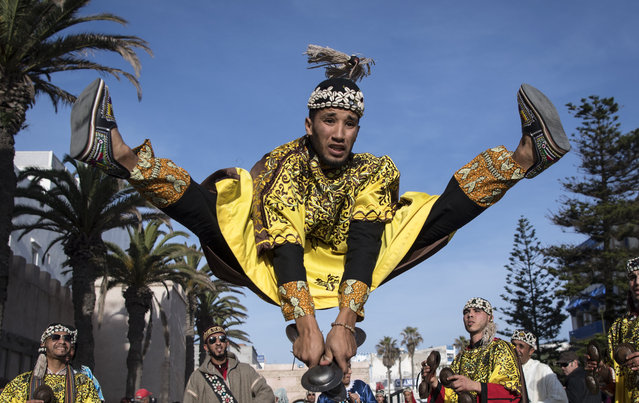
A Gnawa traditional group performs in the city of Essaouira on December 14, 2019, to celebrate the decision of adding the Gnawa culture to UNESCO's list of Intangible Cultural Heritage of Humanity. Gnawa culture, a centuries-old Moroccan practice rooted in music, African rituals and Sufi traditions, was added to UNESCO's list of Intangible Cultural Heritage of Humanity earlier in the week. Gnawa refers to a “set of musical productions, fraternal practices and therapeutic rituals where the secular mixes with the sacred”, according to the nomination submitted by Morocco. Often dressed in colourful outfits, Gnawa musicians play the guenbri, a type of lute with three strings, accompanied by steel castanets called krakebs. (Photo by Fadel Senna/AFP Photo)

A Gnawa traditional group performs in the city of Essaouira on December 14, 2019, to celebrate the decision of adding the Gnawa culture to UNESCO's list of Intangible Cultural Heritage of Humanity. Gnawa culture, a centuries-old Moroccan practice rooted in music, African rituals and Sufi traditions, was added to UNESCO's list of Intangible Cultural Heritage of Humanity earlier in the week. Gnawa refers to a “set of musical productions, fraternal practices and therapeutic rituals where the secular mixes with the sacred”, according to the nomination submitted by Morocco. Often dressed in colourful outfits, Gnawa musicians play the guenbri, a type of lute with three strings, accompanied by steel castanets called krakebs. (Photo by Fadel Senna/AFP Photo)
Details
18 Dec 2019 00:05:00
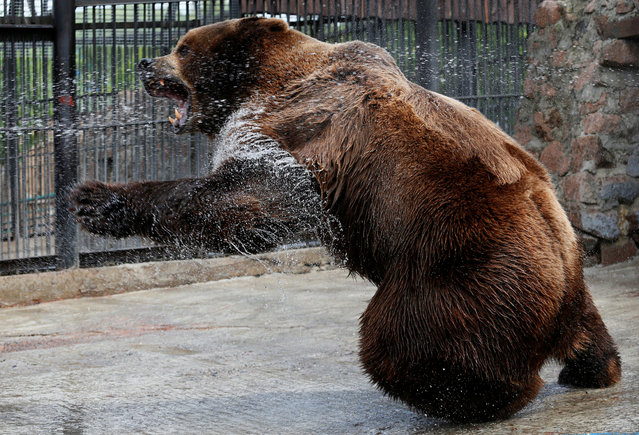
Buyan, a male Siberian brown bear, cools down under a stream of water sprayed by an employee in an enclosure on a hot summer day, at the Royev Ruchey zoo in Krasnoyarsk, Russia on June 14, 2019. (Photo by Ilya Naymushin/Reuters)

Buyan, a male Siberian brown bear, cools down under a stream of water sprayed by an employee in an enclosure on a hot summer day, at the Royev Ruchey zoo in Krasnoyarsk, Russia on June 14, 2019. (Photo by Ilya Naymushin/Reuters)
Details
09 Jan 2020 00:05:00
Julia Marino of USA in action during the final run of the snowboard slopestyle competition at the Laax Open, in Laax, Switzerland, 17 January 2020. (Photo by Gian Ehrenzeller/EPA/EFE/Rex Features/Shutterstock)

Julia Marino of USA in action during the final run of the snowboard slopestyle competition at the Laax Open, in Laax, Switzerland, 17 January 2020. (Photo by Gian Ehrenzeller/EPA/EFE/Rex Features/Shutterstock)
Details
20 Jan 2020 00:01:00
A patient solves a rubik's cube at a temporary hospital converted from “Wuhan Livingroom” in central China's Hubei Province on February 10, 2020. In face of the outbreak of the novel coronavirus pneumonia epidemic, Wuhan authorities have transformed public venues such as exhibition centers and gymnasiums into temporary hospitals. The hospitals have a large capacity of treating patients with mild symptoms and play an important role in isolating the source of infection and cutting off the routes of infection during epidemic prevention. The first batch of patients was hospitalized on Feb. 5. (Photo by Chine Nouvelle/SIPA Press/Rex Features/Shutterstock)

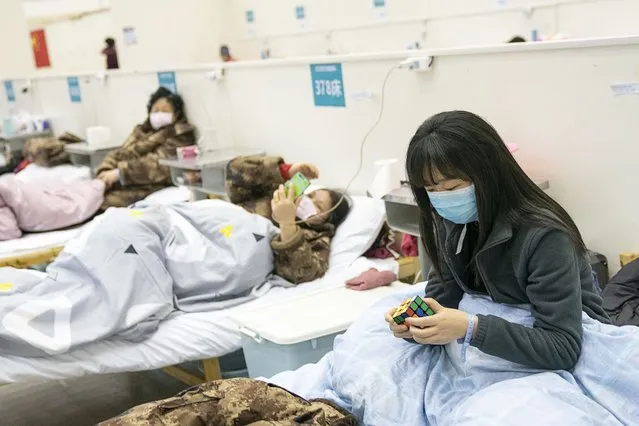
A patient solves a rubik's cube at a temporary hospital converted from “Wuhan Livingroom” in central China's Hubei Province on February 10, 2020. In face of the outbreak of the novel coronavirus pneumonia epidemic, Wuhan authorities have transformed public venues such as exhibition centers and gymnasiums into temporary hospitals. The hospitals have a large capacity of treating patients with mild symptoms and play an important role in isolating the source of infection and cutting off the routes of infection during epidemic prevention. The first batch of patients was hospitalized on Feb. 5. (Photo by Chine Nouvelle/SIPA Press/Rex Features/Shutterstock)
Details
17 Feb 2020 00:07:00