Loading...
Done
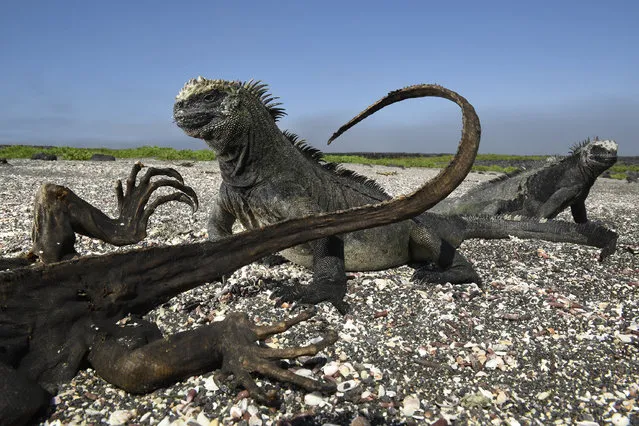
Galapagos – Rocking the Cradle: Four major ocean currents converge along the Galapagos archipelago, creating the conditions for an extraordinary diversity of animal life, April 25, 2016. The islands are home to at least 7,000 flora and fauna species, of which 97 percent of the reptiles, 80 percent of the land birds, 50 percent of the insects and 30 percent of the plants are endemic. The local ecosystem is highly sensitive to the changes in temperature, rainfall and ocean currents that characterize the climatic events known as El Niño and La Niña. These changes cause marked fluctuations in weather and food availability. Many scientists expect the frequency of El Niño and La Niña to increase as a result of climate change, making the Galapagos a possible early-warning location for its effects. (Photo by Thomas P. Peschak for National Geographic/World Press Photo)

Galapagos – Rocking the Cradle: Four major ocean currents converge along the Galapagos archipelago, creating the conditions for an extraordinary diversity of animal life, April 25, 2016. The islands are home to at least 7,000 flora and fauna species, of which 97 percent of the reptiles, 80 percent of the land birds, 50 percent of the insects and 30 percent of the plants are endemic. (Photo by Thomas P. Peschak for National Geographic/World Press Photo)
Details
16 Apr 2018 00:01:00
Nova Scotia Duck Tolling retriever Torrey competes in the 10th annual Petco Unleashed surfing dog contest at Imperial Beach, California August 1, 2015. (Photo by Mike Blake/Reuters)

Nova Scotia Duck Tolling retriever Torrey competes in the 10th annual Petco Unleashed surfing dog contest at Imperial Beach, California August 1, 2015. Proceeds raised at the event go to benefit the San Diego Humane Society. (Photo by Mike Blake/Reuters)
Details
02 Aug 2015 13:28:00
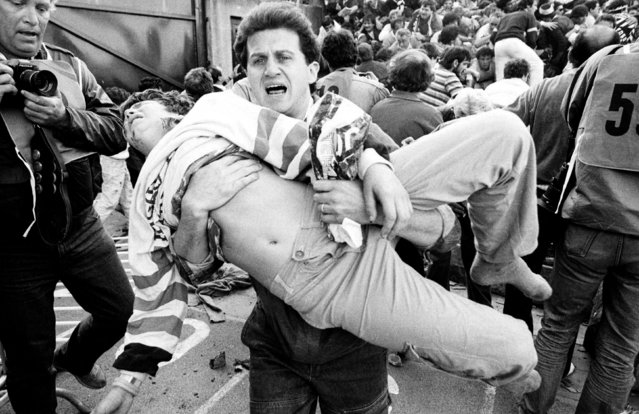
An injured soccer fan is carried to safety by a friend after a wall collapsed during violence between fans before the European Cup final between Juventus and Liverpool at the Heysel stadium in Brussels, May 29, 1985. 39 people died, and a further 600 were injured. (Photo by Nick Didlick/Reuters)

Reuters multi-award winning photographers are celebrated here in a three part retrospective on the 30th anniversary of the service's launch. They have captured dramatic images illustrating the human tragedy of natural disaster and war as well as the fallout of economic events across the continents, creating iconic images, recognised around the world. Here: an injured soccer fan is carried to safety by a friend after a wall collapsed during violence between fans before the European Cup final between Juventus and Liverpool at the Heysel stadium in Brussels, May 29, 1985. 39 people died, and a further 600 were injured. (Photo by Nick Didlick/Reuters)
Details
15 Feb 2015 13:43:00
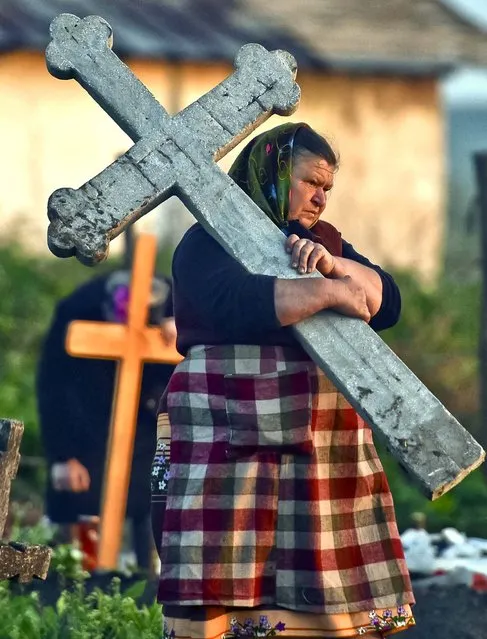
A woman carries a stone cross in a cemetery in the village of Copaciu, southern Romania, on May 2, 2013.  As part of a Holy Week tradition, Romanians visit, on Maundy Thursday, the graves of their loved ones, light fires and share food with community members in memory of the departed. Orthodox worshipers celebrate Easter on May 5. (Photo by Andreea Alexandru/ Mediafax)

A woman carries a stone cross in a cemetery in the village of Copaciu, southern Romania, on May 2, 2013. As part of a Holy Week tradition, Romanians visit, on Maundy Thursday, the graves of their loved ones, light fires and share food with community members in memory of the departed. Orthodox worshipers celebrate Easter on May 5. (Photo by Andreea Alexandru/ Mediafax)
Details
06 May 2013 12:12:00
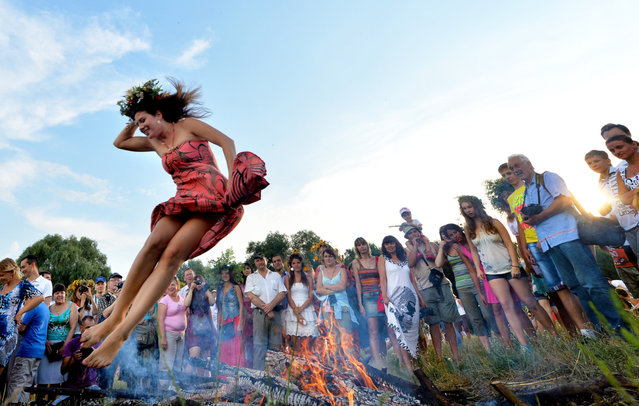
A girl jumps over a campfire while celebrating Ivan Kupala Night, a traditional Slavic holiday not far from Kiev on July 6, 2013. During the celebration, originating in pagan times, people plait wreaths, jump over fires, and swim naked. (Photo by Sergei Supinsky/AFP Photo)

A girl jumps over a campfire while celebrating Ivan Kupala Night, a traditional Slavic holiday not far from Kiev on July 6, 2013. During the celebration, originating in pagan times, people plait wreaths, jump over fires, and swim naked. (Photo by Sergei Supinsky/AFP Photo)
Details
13 Jul 2013 11:59:00
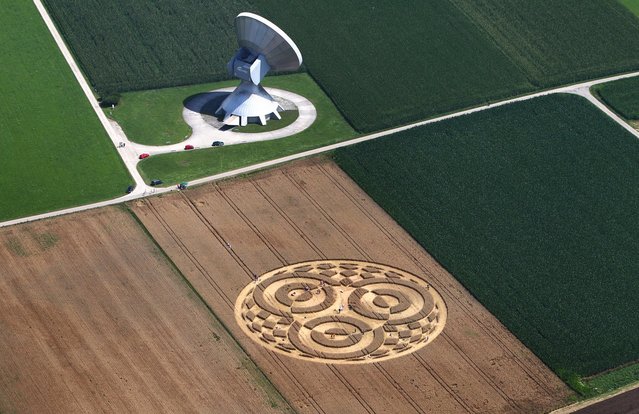
People walk through crop circles in a cornfield near Raisting, Germany, on July 28, 2014. (Photo by Karl-Josef Hildenbrand/DPA)

People walk through crop circles in a cornfield near Raisting, Germany, on July 28, 2014. According to media reports, a balloonist had discovered the circle some days ago. Since then, hundreds of people came to the field to watch it, however it is unclear who did create the pattern. (Photo by Karl-Josef Hildenbrand/DPA)
Details
02 Aug 2014 14:29:00
A street artist dances tango in Buenos Aires, Argentina, Tuesday, January 20, 2015. Tango is a partner dance that originated in the 1890's along the Rio de la Plata, the border between Uruguay and Argentina. UNESCO approved in 2009, a joint proposal by the two nations to include the dance in its Intangible Cultural Heritage List. (Photo by Rodrigo Abd/AP Photo)

A street artist dances tango in Buenos Aires, Argentina, Tuesday, January 20, 2015. Tango is a partner dance that originated in the 1890's along the Rio de la Plata, the border between Uruguay and Argentina. UNESCO approved in 2009, a joint proposal by the two nations to include the dance in its Intangible Cultural Heritage List. (Photo by Rodrigo Abd/AP Photo)
Details
23 Jan 2015 12:56:00
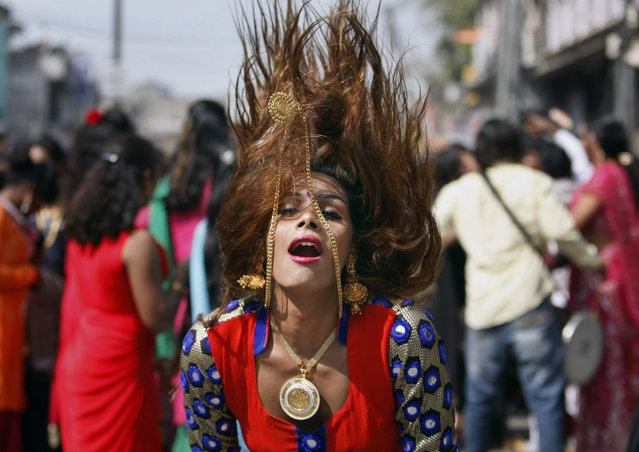
A eunuch dances during a rally to mark the congregation of thousands of eunuchs from different parts of India, in Jammu, India, Friday, March 13, 2015. The term eunuchs is used in India to describe transvestites, transsexuals and others who identify themselves as neither male nor female but as a member of a third gender. They traditionally survive by begging, dancing at weddings or blessing newborn babies and are frequently subjected to discrimination. (Photo by Channi Anand/AP Photo)

A eunuch dances during a rally to mark the congregation of thousands of eunuchs from different parts of India, in Jammu, India, Friday, March 13, 2015. The term eunuchs is used in India to describe transvestites, transsexuals and others who identify themselves as neither male nor female but as a member of a third gender. They traditionally survive by begging, dancing at weddings or blessing newborn babies and are frequently subjected to discrimination. (Photo by Channi Anand/AP Photo)
Details
21 Mar 2015 12:33:00