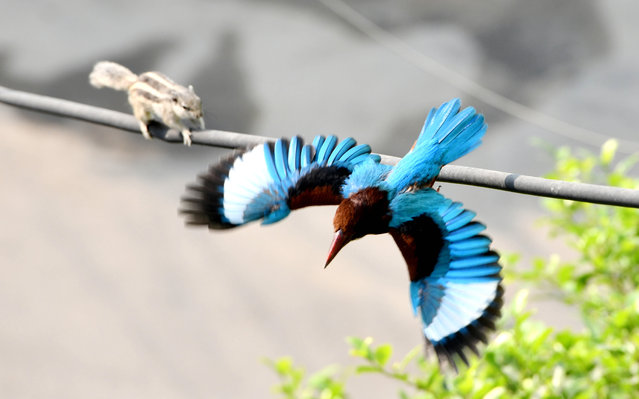
A squirrel crawls along an electrical cable as a kingfisher takes off from it in New Delhi, India, October 24, 2020. (Photo by Chine Nouvelle/SIPA Press/Rex Features/Shutterstock)
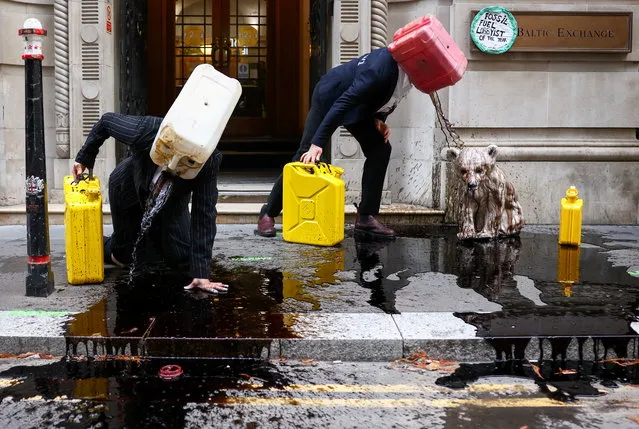
Activists from the climate action group Ocean Rebellion perform a stunt outside The Baltic Exchange building, in London, Britain on November 16, 2020. (Photo by Henry Nicholls/Reuters)
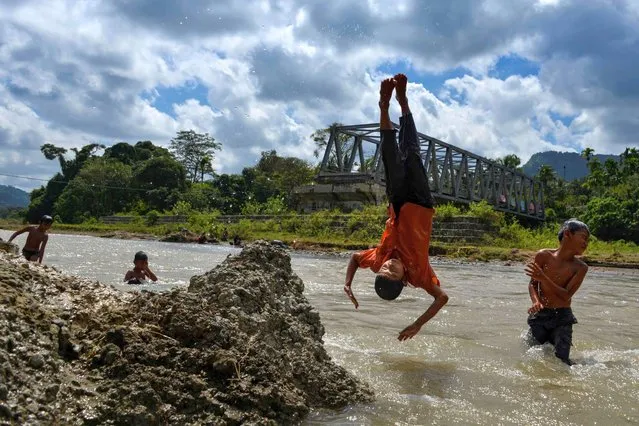
Students on their way home from school play in a river which has risen due to recent seasonal rains, in a remote village in Panca, Aceh province on January 22, 2021. (Photo by Chaideer Mahyuddin/AFP Photo)
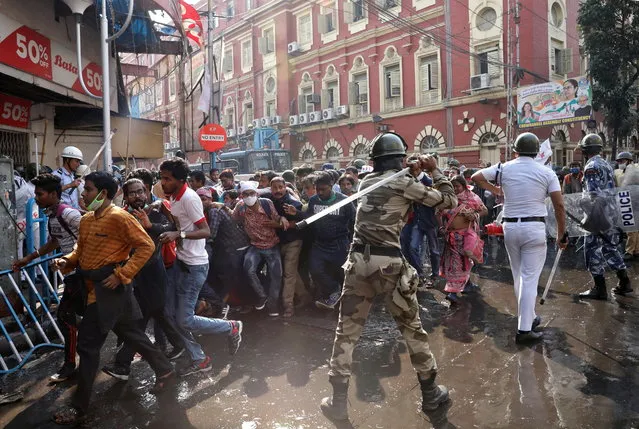
Police officers wield their batons against activists from various student unions during a protest march demanding jobs and better education facilities, in Kolkata, India, February 11, 2021. (Photo by Rupak De Chowdhuri/Reuters)
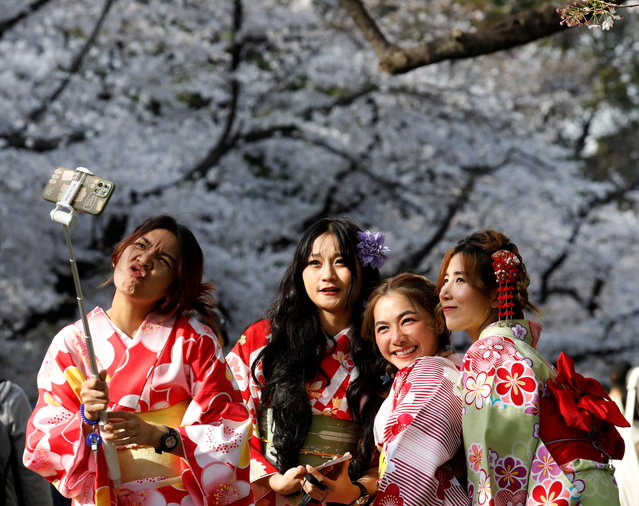
Kimono-clad women from Thailand take selfies among blooming cherry blossoms at Ueno Park in Tokyo, Japan on March 27, 2021. (Photo by Kim Kyung-Hoon/Reuters)
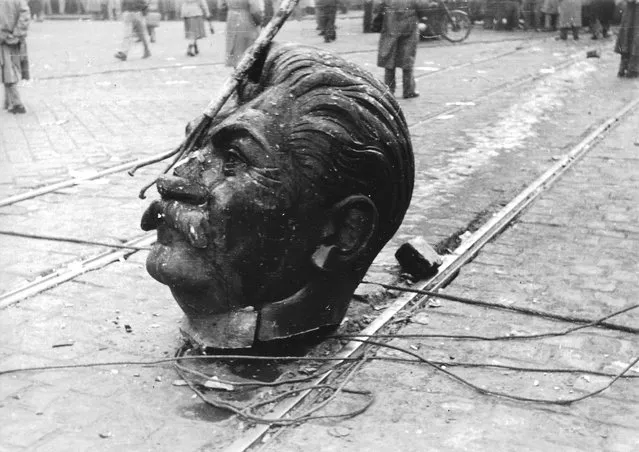
Josef Stalin's head is left in a Budapest street after a statue to the communist dictator was torn from its plinth during the Hungarian Revolution in 1956. (Photo by Robert Hofbauer/Radio Free Europe/Radio Liberty)
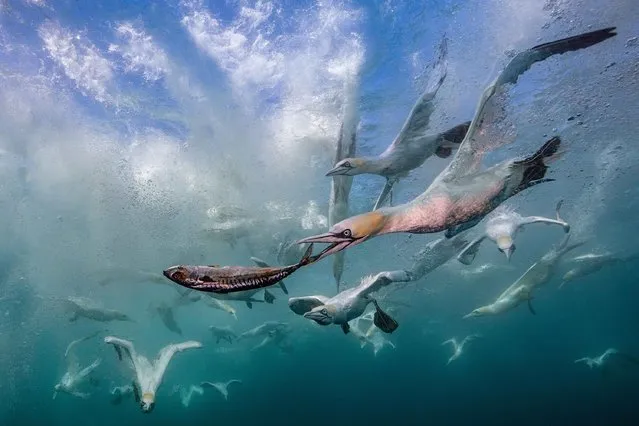
Hundreds of gannets dive for mackerel off the coast of Shetland, Northern Isles of Scotland on July 2020, where they plunge into the water from heights of up to 100ft at speeds of 60mph. (Photo by David Keep/The Times)
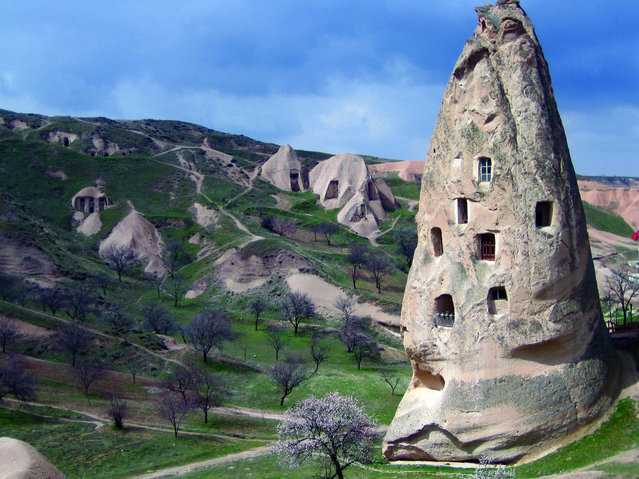
Cappadocia is a historical region in Central Anatolia, largely in Nevşehir Province, in Turkey.
In the time of Herodotus, the Cappadocians were reported as occupying the whole region from Mount Taurus to the vicinity of the Euxine (Black Sea). Cappadocia, in this sense, was bounded in the south by the chain of the Taurus Mountains that separate it from Cilicia, to the east by the upper Euphrates and the Armenian Highland, to the north by Pontus, and to the west by Lycaonia and eastern Galatia.