Personal trainer, Denise Austin, and Katie Austin arrive at the ESPY Awards at the Microsoft Theater on Wednesday, July 13, 2016, in Los Angeles. (Photo by Jordan Strauss/Invision/AP Photo)
Singer Dua Lipa poses for photographers upon arrival at the amfAR, Cinema Against AIDS, benefit at the Hotel du Cap-Eden-Roc, during the 72nd international Cannes film festival, in Cap d'Antibes, southern France, Thursday, May 23, 2019. (Photo by Joel C. Ryan/Invision/AP Photo)
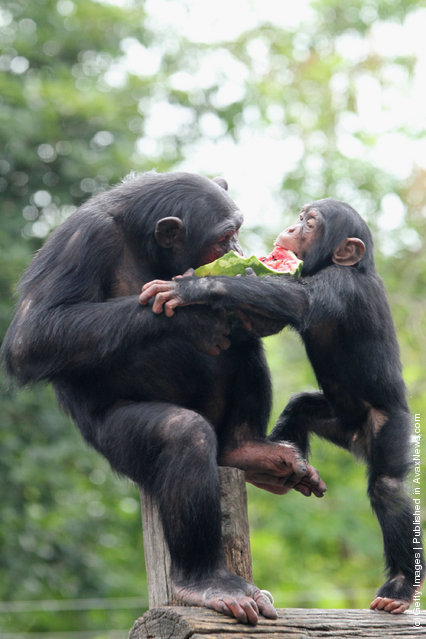
Two chimpanzees share a piece of watermelon at Taronga Zoo on December 23, 2010 in Sydney, Australia. (Photo by Rick Stevens/Taronga Zoo via Getty Images)
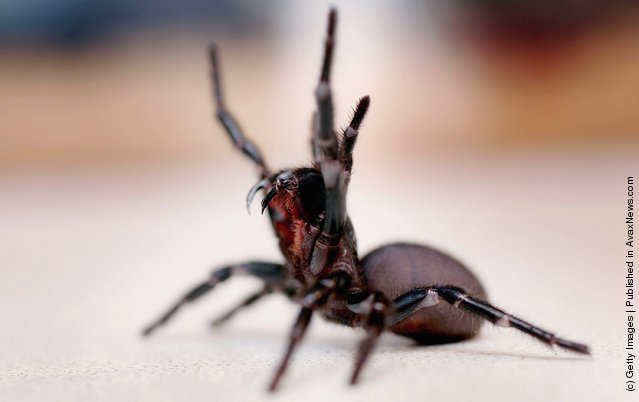
A Funnel Web spider is pictured at the Australian Reptile Park January 23, 2006 in Sydney, Australia. The Funnel Web is one of Australia's deadliest animals, with a venom that is packed with at least 40 different toxic proteins. A bite from a Funnel Web causes massive electrical over-load in the body's nervous system. Finally, fatalities occur from either heart attack or a pulmonary oedema, where the capillaries around the lungs begin to leak fluid and the patient effectively drowns. Death can come as quickly as two hours after a bite if no medical treatment is sought. Due to advances in anti-venom, there has been no death from a Funnel Web bite in Australia since 1980. Australia is home to some of the most deadly and poisonous animals on earth. (Photo by Ian Waldie/Getty Images)
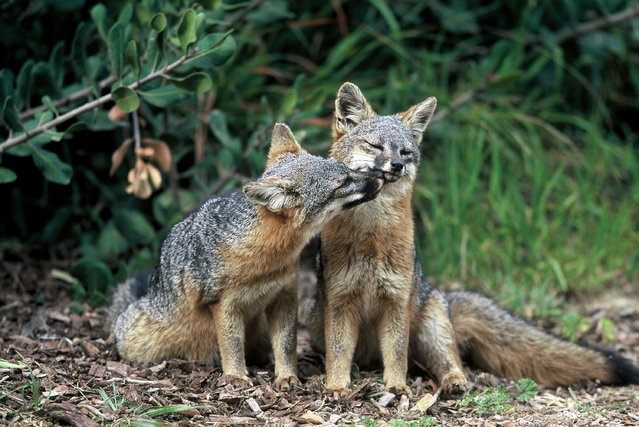
This undated photo provided by the U.S. Fish and Wildlife Service shows two island foxes in Channel Islands National Park, Calif. Three fox subspecies native to California's Channel Islands were removed from the list of endangered species Thursday, August 11, 2016, in what federal officials have called the fastest recovery of any mammal listed under the Endangered Species Act. (Photo by Chuck Graham/U.S. Fish and Wildlife Service via AP Photo)
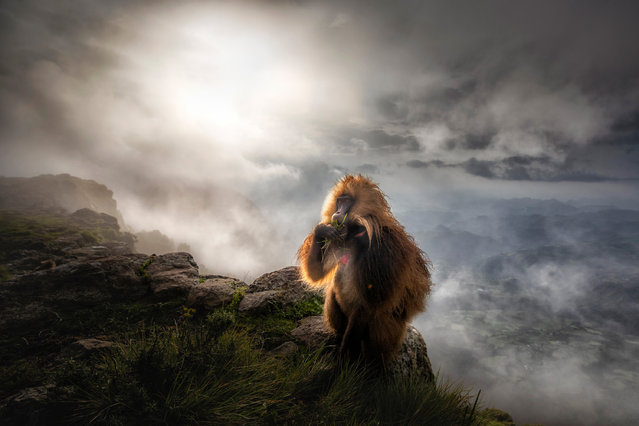
Highly commended, mammals: Gelada after the storm – Marco Gaiotti (Italy). “Gelada baboons are the only monkey species in the world that feed on grasses. They are native to the tableland of Ethiopia. Every morning large family groups wander from their sleeping places in the steep rock face, up to 1,000 metres high, to the feeding grounds at the tablelands. This image clearly depicts their feeding strategy: they pull out bunches of grass, sort the stalks and then lift them to their mouth. This shot was taken towards the end of the rainy season after a heavy storm”. (Photo by Marco Gaiotti/2019 GDT European Wildlife Photographer of the Year)
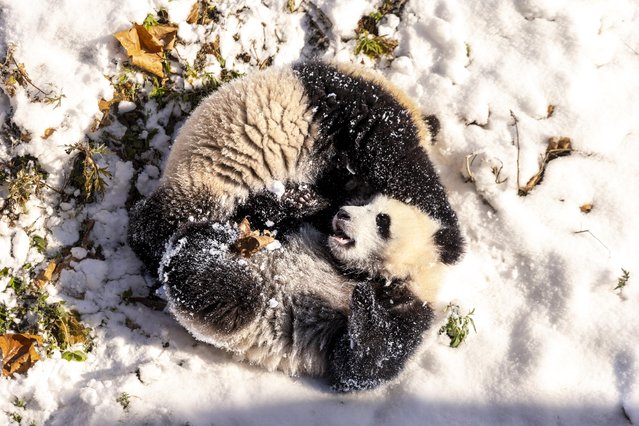
Giant pandas play in the snow at the Shenshuping Base of China Conservation and Research Center for the Giant Panda on January 13, 2022 in Aba Tibetan and Qiang Autonomous Prefecture, Sichuan Province of China. (Photo by Chen Xianlin/VCG via Getty Images)