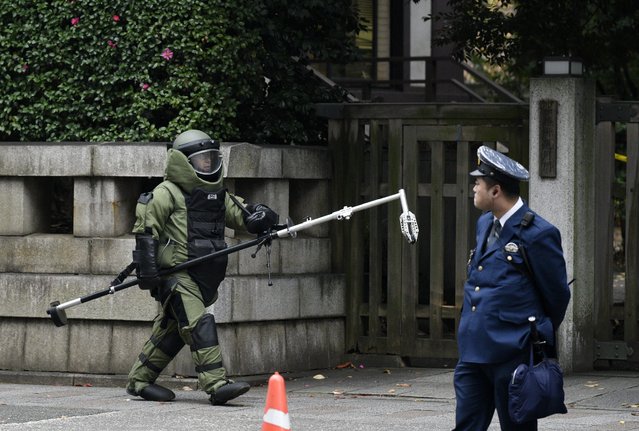
A bomb squad member wearing heavy equipment leaves the explosion site at the Yasukuni shrine precints in Tokyo, Japan, 23 November 2015. More than 100 police, firefighters and officials gathered at the site after an explosion was heard in the toilets of the Yasukuni Shrine, a controversial war shrine in the capital Tokyo. Local media reports said police found possible traces of an explosion, as well as batteries and wires at the shrine. There were no reports of injuries. (Photo by Franck Robichon/EPA)
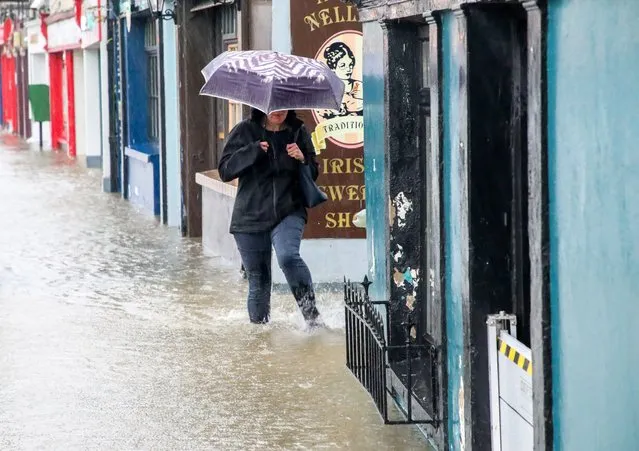
A woman wades throug a flooded Main Street as she makes her way to work in Carrigaline, Co. Cork, Ireland on October 18, 2023. (Photo by David Creedon/The Irish Times)
A young Sikh boy shouts religious slogans during a procession ahead of the birth anniversary of Guru Nanak in Jammu, India, Wednesday, November 21, 2018. The birth anniversary of Guru Nanak, founder of Sikhism and first Sikh guru, will be marked on Nov. 23. (Photo by Channi Anand/AP Photo)
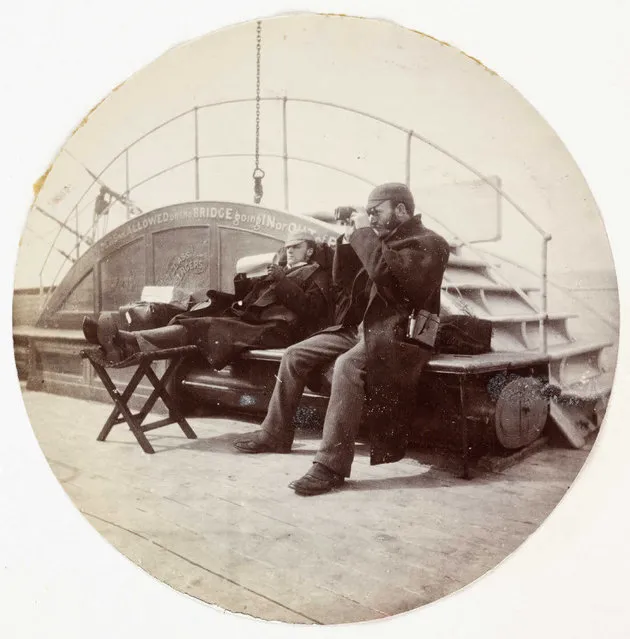
“Today, we take photography for granted. Anyone can take a photograph simply by pressing a button. Yet, it was not always so simple. The invention of photography was announced in 1839, but during its first fifty years taking a photograph was a complicated and expensive business. In 1888, all this was to change following the appearance of a camera that was to revolutionize photography. Popular photography can properly be said to have started 120 years ago with the introduction of the Kodak”. – The UK National Media Museum. Photo: Two men on the deck of a ship, about 1890. (Photo by Collection of National Media Museum/Kodak Museum)
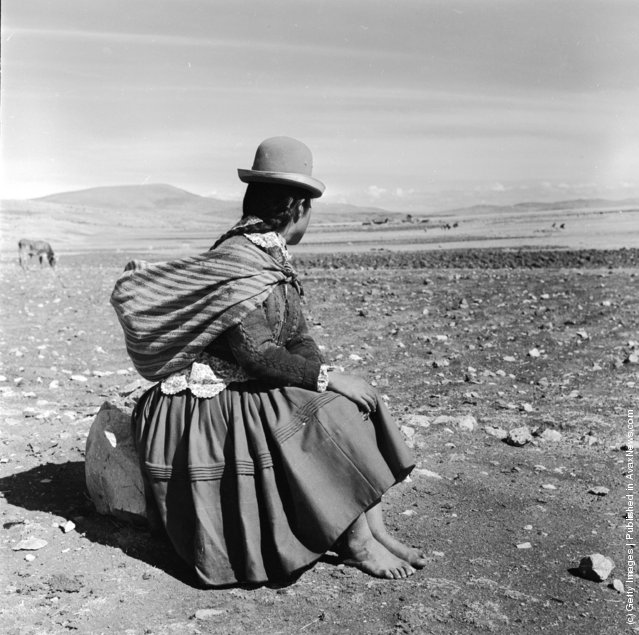
Burdened with a shawl full of her belongings, a woman stops for a rest on the road between Julaca and Puno in Peru. (Photo by Three Lions/Getty Images). Circa 1955
Lucie Clayton instructs pupils in the art of correct posture by balancing a glass and book on their heads at her finishing school in Old Cavendish Street, London. (Photo by William Vanderson/Fox Photos/Getty Images). 25th November 1936
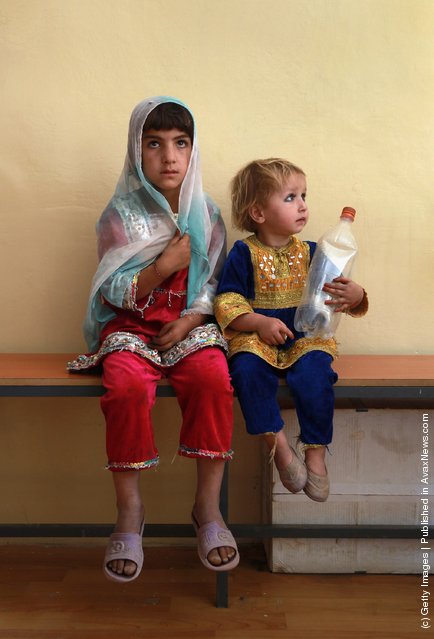
Afghan children wait as their mothers receive treatment at a USAID-funded health center on September 7, 2011 in Farza, Afghanistan. Almost 10 years after the 9/11 attacks and the U.S. invasion of Afghanistan, the U.S. government funds some of 500 Afghan health facilities nationwide, most run by non-governmental organizations contracted by the Afghan Ministry of Public Health. (Photo by John Moore/Getty Images)