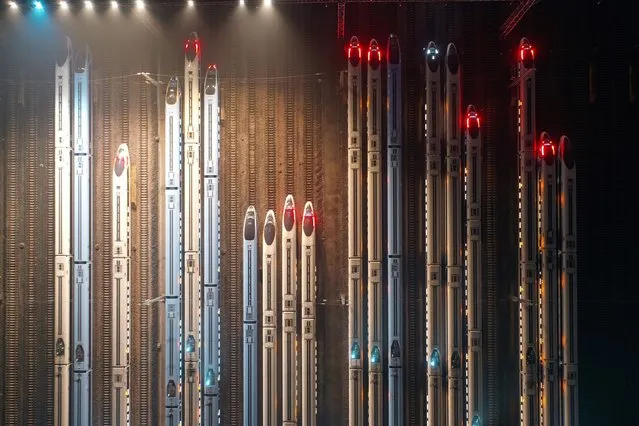
This aerial photo shows bullet trains parked at a station in preparation for the upcoming Lunar New Year travel peak in Nanjing, in eastern China's Jiangsu province on January 27, 2021, as authorities have encouraged people to stay put during the Spring Festival to curb the spread of of COVID-19 coronavirus. (Photo by AFP Photo/China Stringer Network)
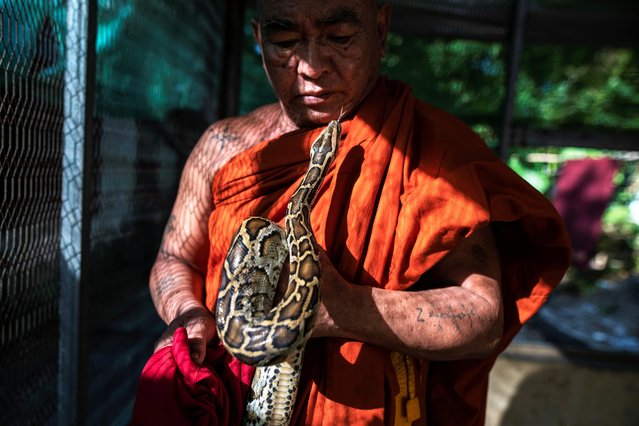
Buddhist monk Wilatha holds a rescued Burmese python at his monastery that has turned into a snake sanctuary on the outskirts of Yangon, Myanmar, November 26, 2020. Wilatha is trying to play a part in saving scores of snakes that might otherwise be killed or destined for the black market. (Photo by Shwe Paw Mya Tin/Reuters)
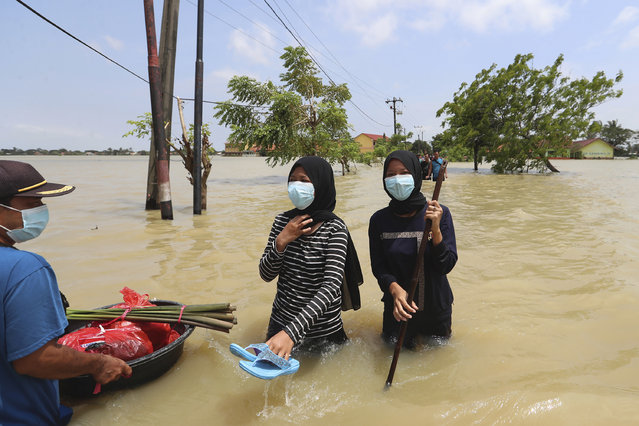
Indonesian men carry their belongings as they wade through the water at a flooded neighborhood following heavy rains in Bekasi, Indonesia, Monday, February 22, 2021. Thousands of residents are being evacuated on the outskirts of Indonesia’s capital amid flooding after the Citarum River embankment broke. (Photo by Achmad Ibrahim/AP Photo)
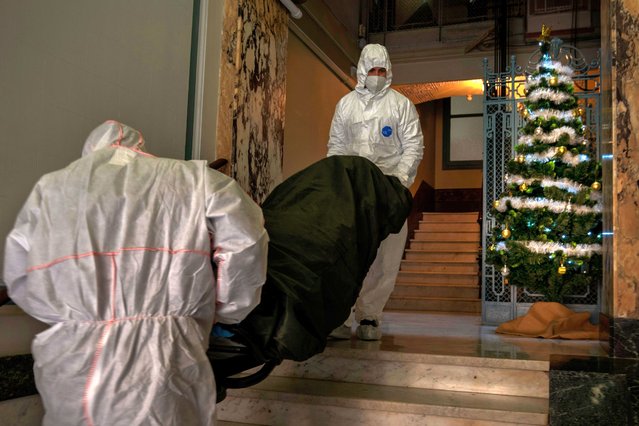
Mortuary workers walk past a Christmas tree as they remove the body of an elderly person who died of COVID-19 from a nursing home in downtown Barcelona, Spain, Wednesday, December 23, 2020. (Photo by Emilio Morenatti/AP Photo)
Syrian refugee and Olympic swimmer Yusra Mardini is pictured during a training session in a pool at the Olympic park in Berlin, Germany on April 26, 2018. (Photo by Fabrizio Bensch/Reuters)
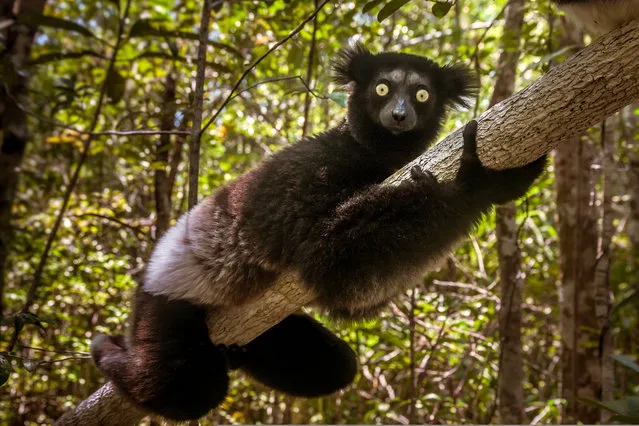
The secretive indri (Indri indri) of Madagascar, the largest living lemur. It is also critically endangered and highly evolutionarily distinct with no close relatives, which makes its branch one of most precarious on the mammal evolutionary tree. In the likely event that the indri goes extinct, we will lose 19m years of unique evolutionary history from the mammal tree of life. (Photo by Pierre-Yves Babelon/Aarhus University)
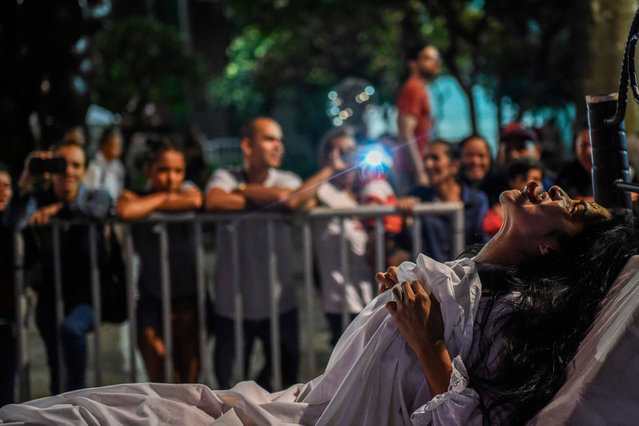
A reveler performs during the Myths and Legends parade in Medellin, Antioquia department, Colombia on December 8, 2018. (Photo by Joaquín Sarmiento/AFP Photo)