Loading...
Done
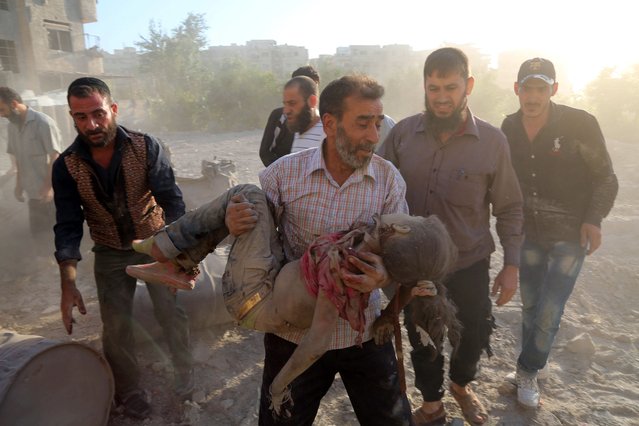
A Syrian man carries the body of a girl following a reported airstrike on Kafr Batna, in the rebel-held Eastern Ghouta area, on the outskirts of the capital Damascus, on September 30, 2016. Air raids on several rebel-held towns in the Eastern Ghouta region killed at least 17 people including eight children, the Syrian Observatory for Human Rights monitor said. (Photo by Amer Almohibany/AFP Photo)

A Syrian man carries the body of a girl following a reported airstrike on Kafr Batna, in the rebel-held Eastern Ghouta area, on the outskirts of the capital Damascus, on September 30, 2016. Air raids on several rebel-held towns in the Eastern Ghouta region killed at least 17 people including eight children, the Syrian Observatory for Human Rights monitor said. (Photo by Amer Almohibany/AFP Photo)
Details
01 Oct 2016 10:33:00
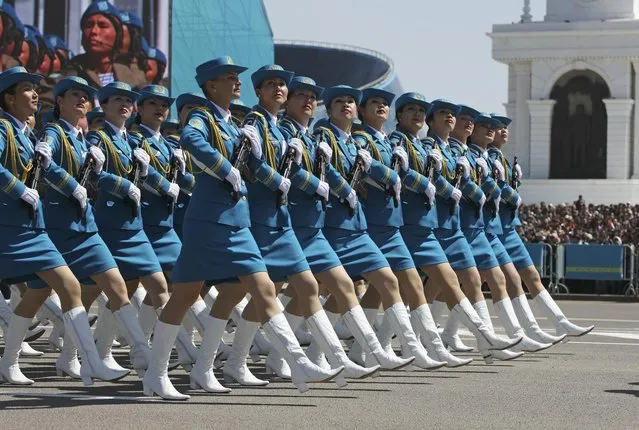
Kazakh troops march during a parade of the armed forces to mark the Defender of the Fatherland Day in Astana, May 7, 2014. (Photo by Mukhtar Kholdorbekov/Reuters)

Kazakh troops march during a parade of the armed forces to mark the Defender of the Fatherland Day in Astana, May 7, 2014. (Photo by Mukhtar Kholdorbekov/Reuters)
Details
24 Sep 2014 12:31:00
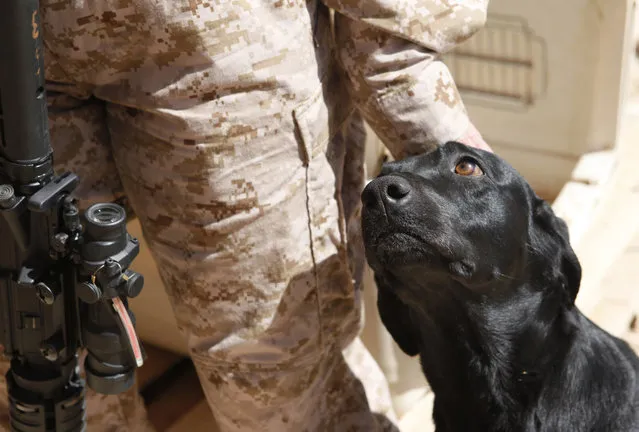
Afghanistan: Dogs of War Part 2

Throughout the course of the long war in Afghanistan, Coalition troops have relied on thousands of military working dogs to help keep them safe, and make their jobs easier. The dogs are trained to detect explosives, to find illegal drugs, to search for missing comrades, or target enemy combatants. Not only are they active on the front lines, but behind the lines they serve as therapy dogs, service dogs, and loyal companions. They also share the same risks as the ground troops, suffering injuries and sometimes death on the battlefields. Gathered here are images of these dogs and their handlers in Afghanistan and back home, from over the past several years, part of the ongoing series here on Afghanistan.
Details
05 Jun 2014 21:10:00
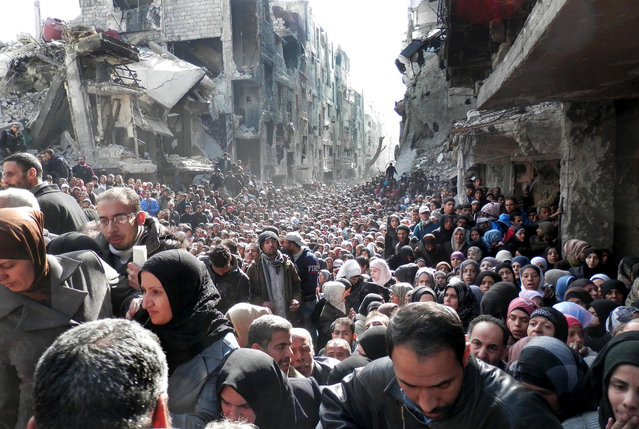
In this January 31, 2014 file photo released by the United Nations Relief and Works Agency for Palestine Refugees in the Near East (UNRWA), shows residents of the besieged Palestinian camp of Yarmouk, queuing to receive food supplies, in Damascus, Syria. That year, the U.N. was able to deliver food to about five percent of people in besieged areas including Yarmouk, while today estimates show the organization is reaching less than one percent. (Photo by UNRWA via AP Photo)

In this January 31, 2014 file photo released by the United Nations Relief and Works Agency for Palestine Refugees in the Near East (UNRWA), shows residents of the besieged Palestinian camp of Yarmouk, queuing to receive food supplies, in Damascus, Syria. That year, the U.N. was able to deliver food to about five percent of people in besieged areas including Yarmouk, while today estimates show the organization is reaching less than one percent. (Photo by UNRWA via AP Photo)
Details
07 Feb 2016 06:36:00
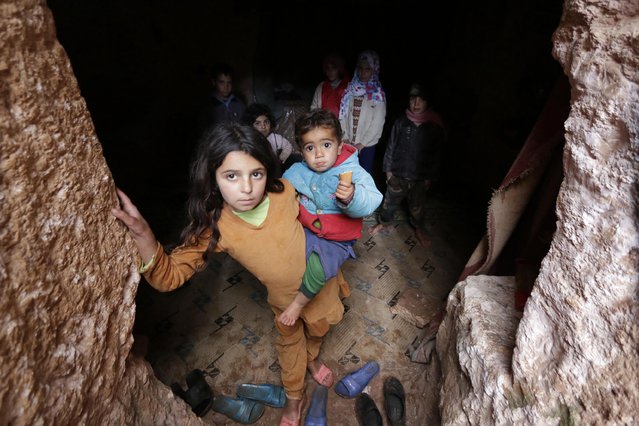
Mariam, a 9-year-old girl, carries her brother as she stands with other children at an underground ancient cemetery in Jabal al-Zawiya in the southern countryside of Idlib November 26, 2014. (Photo by Khalil Ashawi/Reuters)

Mariam, a 9-year-old girl, carries her brother as she stands with other children at an underground ancient cemetery in Jabal al-Zawiya in the southern countryside of Idlib November 26, 2014. Residents are using ancient caves and cemeteries as underground shelters to hide in during shelling from forces loyal to President Bashar al-Assad. Picture taken November 26, 2014. (Photo by Khalil Ashawi/Reuters)
Details
28 Nov 2014 11:51:00
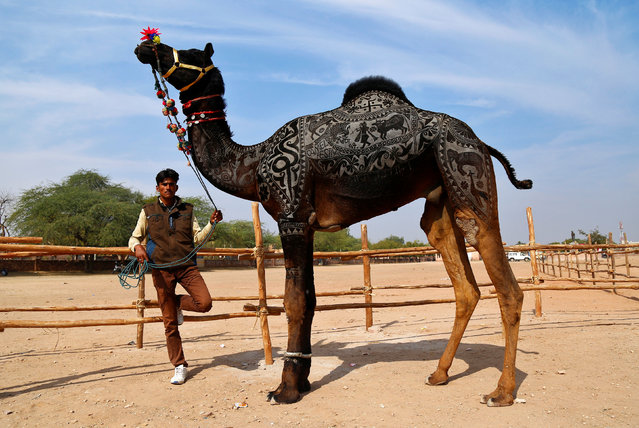
A man waits with his camel to take part in a camel decoration competition at the Nagaur Cattle Fair, where animals like camels, cows, horses, and bulls are brought to be sold or traded, in Nagaur, in the desert state of Rajasthan, India February 2, 2017. (Photo by Himanshu Sharma/Reuters)

A man waits with his camel to take part in a camel decoration competition at the Nagaur Cattle Fair, where animals like camels, cows, horses, and bulls are brought to be sold or traded, in Nagaur, in the desert state of Rajasthan, India February 2, 2017. (Photo by Himanshu Sharma/Reuters)
Details
08 Feb 2017 00:06:00
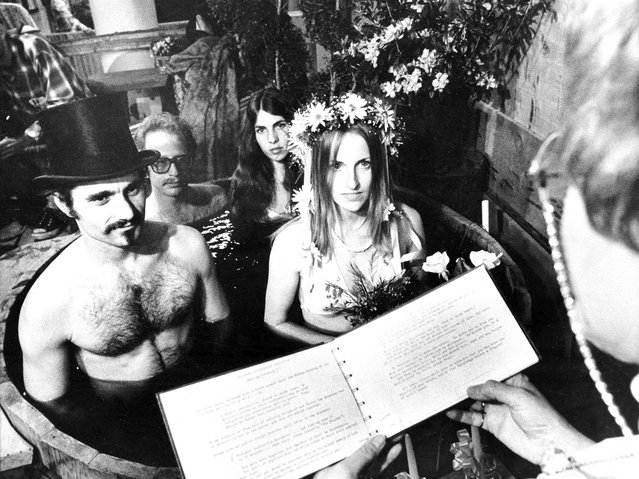
The first legal wedding ceremony in history was performed in a hot tub when Leslie Davis, 23, and Richard Bustardo, 29, got married during the Backyard Living Show in Los Angeles, March 26, 1975. The ceremony was held in a five-foot hot tub, with the bride wearing a bikini and the groom attired in swimming trunks and top hat. In background is best man Arnold Holland and bridesmaid Bonnie Heckenbach, who joined the couple in the same hot tub. Officiating is Betty Jane Shaw, left. (Photo by Harold Filan/AP Photo)

The first legal wedding ceremony in history was performed in a hot tub when Leslie Davis, 23, and Richard Bustardo, 29, got married during the Backyard Living Show in Los Angeles, March 26, 1975. The ceremony was held in a five-foot hot tub, with the bride wearing a bikini and the groom attired in swimming trunks and top hat. In background is best man Arnold Holland and bridesmaid Bonnie Heckenbach, who joined the couple in the same hot tub. Officiating is Betty Jane Shaw, left. (Photo by Harold Filan/AP Photo)
Details
06 Feb 2025 02:54:00
Galapagos – Rocking the Cradle: Four major ocean currents converge along the Galapagos archipelago, creating the conditions for an extraordinary diversity of animal life, April 25, 2016. The islands are home to at least 7,000 flora and fauna species, of which 97 percent of the reptiles, 80 percent of the land birds, 50 percent of the insects and 30 percent of the plants are endemic. The local ecosystem is highly sensitive to the changes in temperature, rainfall and ocean currents that characterize the climatic events known as El Niño and La Niña. These changes cause marked fluctuations in weather and food availability. Many scientists expect the frequency of El Niño and La Niña to increase as a result of climate change, making the Galapagos a possible early-warning location for its effects. (Photo by Thomas P. Peschak for National Geographic/World Press Photo)

Galapagos – Rocking the Cradle: Four major ocean currents converge along the Galapagos archipelago, creating the conditions for an extraordinary diversity of animal life, April 25, 2016. The islands are home to at least 7,000 flora and fauna species, of which 97 percent of the reptiles, 80 percent of the land birds, 50 percent of the insects and 30 percent of the plants are endemic. (Photo by Thomas P. Peschak for National Geographic/World Press Photo)
Details
16 Apr 2018 00:01:00