Loading...
Done
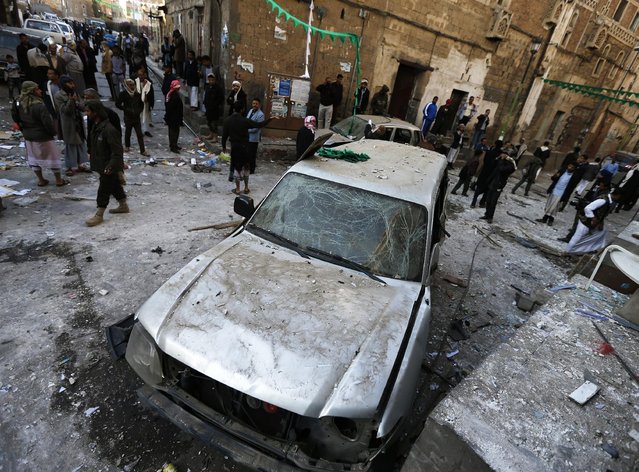
People gather at the site of a bomb explosion in Sanaa December 23, 2014. Five bombs exploded on Tuesday in Sanaa's old quarter, where many supporters of the Shi'ite Muslim Houthi group live, killing at least one person and wounding another, a Yemeni security official said. (Photo by Khaled Abdullah/Reuters)

People gather at the site of a bomb explosion in Sanaa December 23, 2014. Five bombs exploded on Tuesday in Sanaa's old quarter, where many supporters of the Shi'ite Muslim Houthi group live, killing at least one person and wounding another, a Yemeni security official said. No one has claimed responsibility for the attacks, but the Houthis have been fighting the Sunni Islamist militant al Qaeda group and allied tribesmen since its gunmen captured Sanaa in September and forced the resignation of a government they had long seen as corrupt. (Photo by Khaled Abdullah/Reuters)
Details
24 Dec 2014 13:55:00
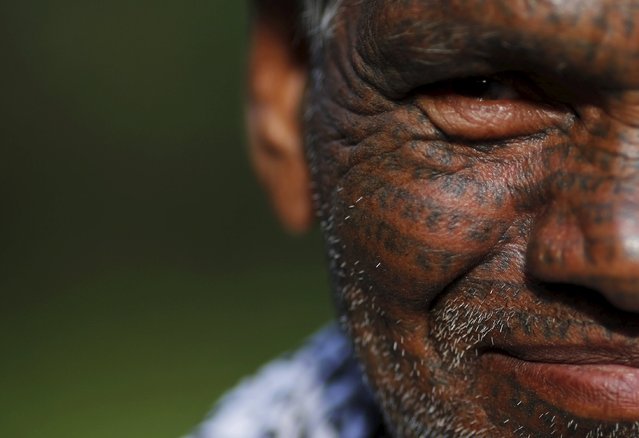
Tiharu Ram, 70, a follower of Ramnami Samaj, who has tattooed the name of the Hindu god Ram on his face, poses for a picture outside his house in the village of Chandlidi, in the eastern state of Chhattisgarh, India, November 16, 2015. (Photo by Adnan Abidi/Reuters)

Tiharu Ram, 70, a follower of Ramnami Samaj, who has tattooed the name of the Hindu god Ram on his face, poses for a picture outside his house in the village of Chandlidi, in the eastern state of Chhattisgarh, India, November 16, 2015. Denied entry to temples and forced to use separate wells, low-caste Hindus in the eastern state of Chhattisgarh first tattooed their bodies and faces more than 100 years ago as an act of defiance and devotion. (Photo by Adnan Abidi/Reuters)
Details
14 Jan 2016 08:05:00
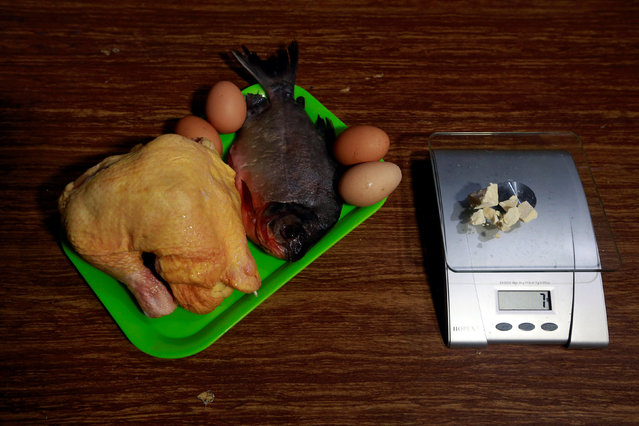
Chicken, fish and eggs lie next to coca paste worth $14,000 Colombian pesos at a local store in Guyabero Region, Guaviare, Colombia, May 24, 2016. (Photo by John Vizcaino/Reuters)

Chicken, fish and eggs lie next to coca paste worth $14,000 Colombian pesos at a local store in Guyabero Region, Guaviare, Colombia, May 24, 2016. As the government nears a historic peace deal with the rebels of the Revolutionary Armed Forces of Colombia (FARC), the nation's authorities are struggling to tame an increase in farming of coca, the raw material used to make cocaine. In the Guyabero Region, where many people work on coca plantations, locals barter coca paste to buy groceries at the local shop. (Photo by John Vizcaino/Reuters)
Details
03 Jun 2016 12:46:00
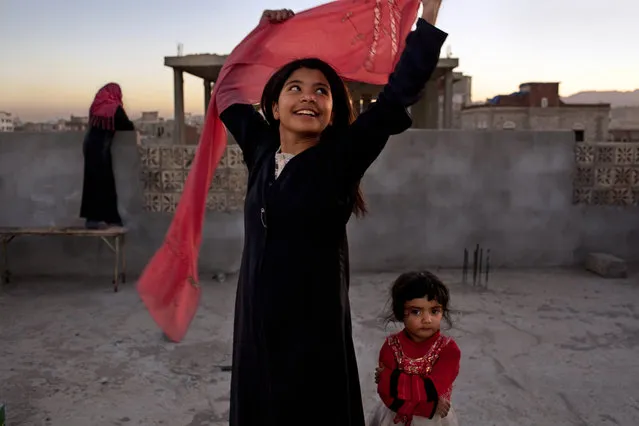
Some of the most powerful narratives of the past decade have been produced by a forward-thinking generation of women photojournalists as different as the places and the subjects they have covered. National Geographic's “Women of Vision” exhibit features the work of 11 photographers and is on display at the Fernbank Museum of Natural History in Atlanta until January 3, 2016. (Photo by Stephanie Sinclair/National Geographic)

Some of the most powerful narratives of the past decade have been produced by a forward-thinking generation of women photojournalists as different as the places and the subjects they have covered. National Geographic's “Women of Vision” exhibit features the work of 11 photographers and is on display at the Fernbank Museum of Natural History in Atlanta until January 3, 2016. Here: Nujood Ali stunned the world in 2008 by obtaining a divorce at age 10 in Yemen, striking a blow against forced marriage. (Photo by Stephanie Sinclair/National Geographic)
Details
11 Dec 2015 08:05:00
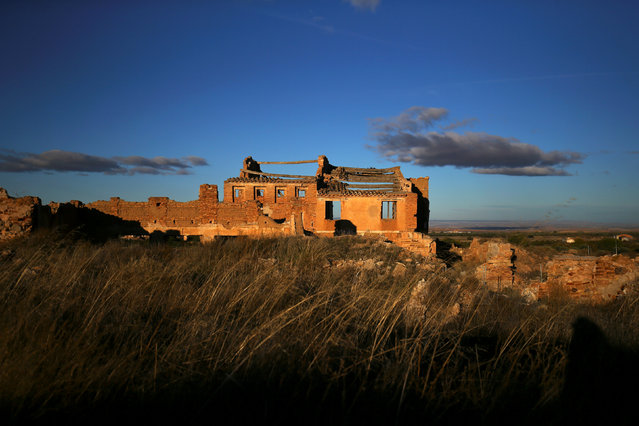
Ruins of a building are seen in the old village of Belchite, in northern Spain, November 13, 2016. (Photo by Andrea Comas/Reuters)

Ruins of a building are seen in the old village of Belchite, in northern Spain, November 13, 2016. Almost 80 years ago Tomas Ortin fled under the cover of night from his home in the small town of Belchite on Spain's northern plains to escape with hundreds of others from one of the bloodiest battles of the country's civil war. At 94 years old, Ortin now lives just across the road from Belchite, which has lain in ruins since Republican forces attacked it, a symbol of the destruction caused by the 1936-1939 war in which an estimated 500,000 people died. (Photo by Andrea Comas/Reuters)
Details
30 Nov 2016 12:31:00
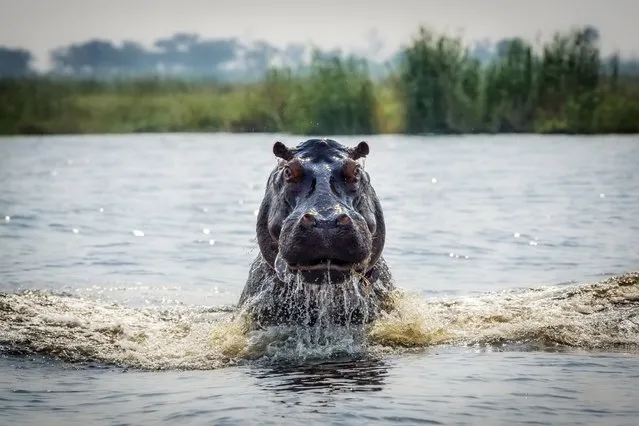
“Hippo Chase”. As we approached the camp the Selinda Reserve of northern Botswana our boat passed by a hippo resting in the water. I turned around to look back at the boat's wake and saw the hippo charging after us! The hippo must've been tired from an all-nighter because he was angry. (Photo and caption by Curtis Simmons/National Geographic Photo Contest)

“Hippo Chase”. As we approached the camp the Selinda Reserve of northern Botswana our boat passed by a hippo resting in the water. I turned around to look back at the boat's wake and saw the hippo charging after us! The hippo must've been tired from an all-nighter because he was angry. He rose way up out of the water three times trying to chase our boat! He was coming at us with such force that he created a wake of his own. Photo location: Selinda Reserve of northern Botswana. (Photo and caption by Curtis Simmons/National Geographic Photo Contest)
Details
06 Nov 2014 08:59:00
Aerial Views by  Ken Hong Leung

H. Leung has been acclaimed since 1952 for his brilliant artistic style. A master of oil on canvas, he achieves a haunting quality in his works that absorbs the viewer’s emotions like an irresistible melody. His brush, like a wand, seems to weave a sense of enchantment. In his landscapes and waterside villages, visions of Shangri-La come to mind, superbly mixed with subtle orchestrations of peacefulness and drama.

Technique is both a creative and expressive force in the art of H. Leung. Distinctively semi-abstract, his images allow the viewer’s eye to supply what is merely suggested. This very involving result adds power not only to the impact of his designs, it increases the joy that owning his works provides.
Details
26 Aug 2012 12:10:00
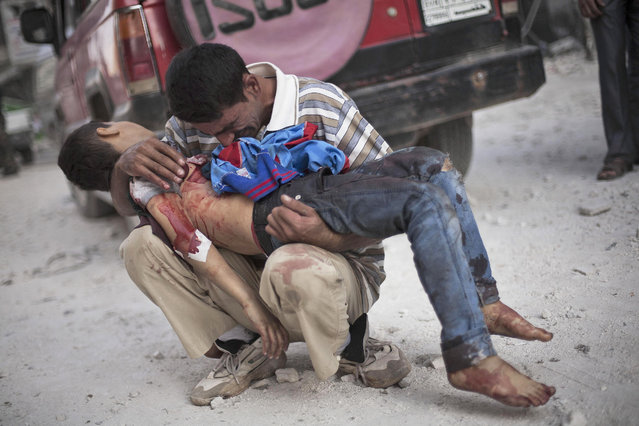
A Syrian man cries while holding the body of his son, killed by the Syrian Army, near Dar El Shifa hospital in Aleppo, Syria, Wednesday, October 3, 2012. (Photo by Manu Brabo/AP Photo)

Manu Brabo was born in Spain in 1981. After studying Photography in The School of Arts and Crafts in Oviedo, he moved to Madrid where he started Journalism in Carlos III University while he was working as a photographer for several humble newspapers and agencies. In 2011, Manu was held captive and then released by by Libyan forces. Brabo, along with fellow AP photographers were awarded the 2013 Pulitzer Prize for Breaking News Photography. Here: a Syrian man cries while holding the body of his son, killed by the Syrian Army, near Dar El Shifa hospital in Aleppo, Syria, Wednesday, October 3, 2012. (Photo by Manu Brabo/AP Photo)
Details
27 Oct 2015 08:04:00